AI · alternatives · 2026

24 alternatives to A protocol for sharing knowledge via semantic lookup with use in LLMs
A great way to enhance chatbots is to allow them to look up information for context, typically using a vectordb. If you have writings you would like to share with others, you can offer a server that allows others to do semantic lookup, and that way anyone can have a chatbot which can pull from your writing. The goal of this project is to have a protocol that makes that easy. Strictly speaking, the protocol is for semantic retrieval and doesn't require using LLMs although LLMs are the motivating application. For far more details and how to get a demo up and running, see the readme.
This project provides a protocol for semantic lookup that enables people to share their written content with chatbots and other applications. Users can run a server offering semantic retrieval from their writings… Below are 24 products that do a similar job, ranked by how close each is in meaning and then by launch-day votes. Prices are shown for the 2 we have checked on their own sites, 2 of them free or with a free tier. A protocol for sharing knowledge via semantic lookup with use in LLMs launched in 2024; newer entries below may have overtaken it.
- 1

I built this tool because I wanted a way to just take a bunch of URLs or domains, and query their content in RAG applications. It takes away the pain of crawling, extracting content, chunking, vectorizing, and updating periodically. I'm curious to see if it can be useful to others. I meant to launch this six months ago but life got in the way...
2024 · embedding.io · its alternatives →
- 2

Hey everyone, I've been hacking on this idea with a friend as we've been using chatgpt and other AI tools in our day to day work and find ourselves copy/pasting to each other frequently. We often share chatgpt links with each other, but it's been frustrating that they are read-only and we can't pickup the conversation or both talk to an LLM with shared context. We built a shared chatroom to explore what it'd be like to talk with multiple LLMs and humans in the same chat, and so far it feels pretty cool, but we're curious if anyone else would find it useful as well. Right now you can: -…
2025 · chord.chat · its alternatives →
- 3IB
We show the potential of modern, embedded graph databases in the browser by demonstrating a fully in-browser chatbot that can perform Graph RAG using Kuzu (the graph database we're building) and WebLLM, a popular in-browser inference engine for LLMs. The post retrieves from the graph via a Text-to-Cypher pipeline that translates a user question into a Cypher query, and the LLM uses the retrieved results to synthesize a response. As LLMs get better, and WebGPU and Wasm64 become more widely adopted, we expect to be able to do more and more in the browser in combination with LLMs, so a lot of…
2025 · blog.kuzudb.com · its alternatives →
- 4
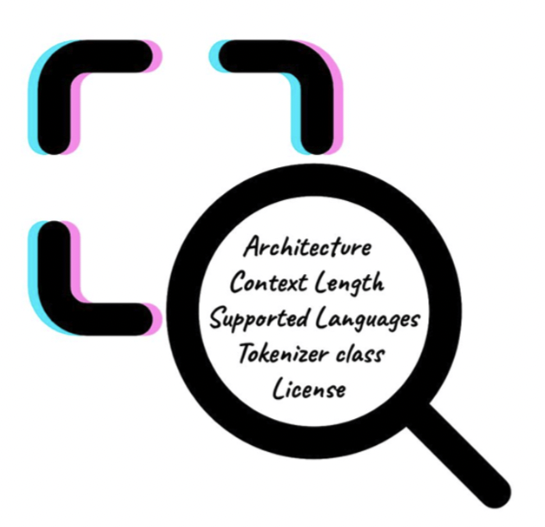
- 5

Hey HN! We're Paul, Preston, and Daniel from Zep. We've just open-sourced Graphiti, a Python library for building temporal Knowledge Graphs using LLMs. Graphiti helps you create and query graphs that evolve over time. Knowledge Graphs have been explored extensively for information retrieval. What makes Graphiti unique is its ability to build a knowledge graph while handling changing relationships and maintaining historical context. At Zep, we build a memory layer for LLM applications. Developers use Zep to recall relevant user information from past conversations without including the entire…
2024 · github.com · its alternatives →
- 6

I shipped a wiki layer for AI agents that uses markdown + git as the source of truth, with a bleve (BM25) + SQLite index on top. No vector or graph db yet. It runs locally in ~/.wuphf/wiki/ and you can git clone it out if you want to take your knowledge with you. The shape is the one Karpathy has been circling for a while: an LLM-native knowledge substrate that agents both read from and write into, so context compounds across sessions rather than getting re-pasted every morning. Most implementations of that idea land on Postgres, pgvector, Neo4j, Kafka, and a dashboard. I…
Apr 2026 · github.com · its alternatives →
- 7WS
We’ve trained a generative AI model to browse the web and answer questions/retrieve code snippets directly. Unlike ChatGPT, it has access to primary sources and is able to cite them when you hover over an answer (click on the text to go to the source being cited). We also show regular Bing results side-by-side with our AI answer. The model is an 11-billion parameter T5-derivative that has been fine-tuned on feedback given on hundreds of thousands of searches done (anonymously) on our platform. Giving the model web access lessens its burden to need to store a snapshot of human knowledge…
2022 · beta.sayhello.so · its alternatives →
- 8
 LLM Gatewayfree tier▲296
I built an OpenAI-compatible LLM gateway that routes requests to OpenAI, Anthropic, Ollama, vLLM, llama-server, SGLang... anything that speaks /v1/chat/completions. Single Go binary, one YAML config file, no infrastructure. It does the things you'd expect from this kind of gateway... semantic routing via a three-layer cascade (keyword heuristics, embedding similarity, LLM classifier) that picks the best model when clients omit the model field, weighted round-robin load balancing across local inference servers with health checks and failover. The part I think is most…
2025 · llmgateway.io · its alternatives →
- 9

ThoughtDAG indexes local agent conversations across tools, finds the turns relevant to your work, and turns them into editable context graphs.
Aug 2026 · chenxiachan.github.io · its alternatives →
- 10KG
Hi HN! My latest side project is knowledge graph that maps the French culinary network using data extracted from restaurant reviews from LeFooding.com. The project uses LLMs to extract structured information from unstructured text. Some technical aspects you may be interested in: - Used structured generation to reliably parse unstructured text into a consistent schema - Tested multiple models (Mistral-7B-v0.3, Llama3.2-3B, gpt4o-mini) for information extraction - Created an interactive visualization using gephi-lite and Retina (WebGL) - Built (with Claude) a simple Flask web app to clean and…
2025 · theophilecantelob.re · its alternatives →
- 11SB
Find information, resources and relevant links for 2mb.codes. This domain may be for sale.
2024 · 2mb.codes · its alternatives →
- 12IM
As a grad student (and an ADHDer), I had trouble doing literature review systematically. To combat this, I made a website that finds similar papers using the meaning of the thing I am looking for. I used MixedBread's [^1] embedding model to generate vectors from the abstracts. I store and search similar vectors using Milvus [^2] and finally use Gradio [^3] to serve the frontend. I update the vector database weekly by pulling the metadata dataset from Kaggle [^4]. To speed up the search process on my free oracle instance, I binarise the embeddings and use Hamming distance as a metric. I would…
2024 · papermatch.mitanshu.tech · its alternatives →
- 13

Learn how to build semantic search systems. From machine transition to question-answering.
2021 · pinecone.io · its alternatives →
- 14

I've built an advanced RAG (Retrieval-Augmented Generation) pipeline from scratch to demystify the complex mechanics of modern LLM-powered Question Answering systems. This repository features: -- An implementation of a sub-question query engine from scratch to answer complex user questions. -- Illustrative explanations that unveil the inner workings of the system. -- An analysis of the challenges I faced while working with the system, like prompt engineering and cost estimation. -- Qualitative comparison with similar frameworks like LlamaIndex, offering a broader perspective. Key Takeaway:…
2023 · github.com · its alternatives →
- 15
 Humans vs LLMs▲138
Hi HN, We just launched [AI Page Ready](https://aipageready.com) — a tool to check if your web pages are discoverable and understandable by AI tools like ChatGPT, Claude, Gemini, and Perplexity. It runs 40+ checks across six areas: Discoverability & Crawlability, Structured Data & Semantics, Content Quality, Answer-Ready Formatting, Accessibility & Rendering, and Deep AI LLM-specific checks. Would love your feedback — especially if you work in eCommerce, SEO, content, SaaS, or are trying to get traffic from AI tools. (Also open to ideas on what else to add to the tool!)
2025 · aipageready.com · its alternatives →
- 16

Hey HN, I made Browser-Use, an open-source tool that lets (all Langchain supported) LLMs execute tasks directly in the browser just with function calling. It allows you to build agents that interact with web elements using natural language prompts. We created a layer that simplifies website interaction for LLMs by extracting xPaths and interactive elements like buttons and input fields (and other fancy things). This enables you to design custom web automation and scraping functions without manual inspection through DevTools. Hasn't this been done a lot of times? Good question, as a general…
2024 · github.com · its alternatives →
- 17

It’s written in Python and I call it GoalChain. It lets you build a conversation flow graph that the user traverses. When there’s enough input it spits out a dictionary with the defined fields. Otherwise it will jump state to state as led by the user. It was fun to write, and it’s surprisingly effective if you keep in mind you’re prompt-engineering every string and field name. README.md has a mini-tutorial. Would be cool to get some ideas for how to build it further and what improvements I could make.
2024 · github.com · its alternatives →
- 18
 Twigg▲157
Hi HN, we’re Jamie and Matti, co-founders of Twigg. During our master’s we continually found the same pain points cropping up when using LLMs. The linear nature of typical LLMs interfaces - like ChatGPT and Claude - made it really easy to get lost without any easy way to visualise or navigate your project. Worst of all, none of them are well suited for long term projects. We found ourselves spending days using the same chat, only for it to eventually break. Transferring context from one chat to another is also cumbersome. We decided to build something more intuitive to the ways humans think.…
Oct 2025 · twigg.ai · its alternatives →
- 19

TL;DR: Vector-based RAG performs poorly for many real-world applications like codebase chats, and you should consider 'language maps'. Part of our mission at Mutable.ai is to make it much easier for developers to build and understand software. One of the natural ways to do this is to create a codebase chat, that answer questions about your repo and help you build features. It might seem simple to plug in your codebase into a state-of-the-art LLM, but LLMs have two limitations that make human-level assistance with code difficult: 1. They currently have context windows that are too small to…
2024 · twitter.com · its alternatives →
- 20

I keep running in the same problem of each AI app “remembers” me in its own silo. ChatGPT knows my project details, Cursor forgets them, Claude starts from zero… so I end up re-explaining myself dozens of times a day across these apps. The deeper problem 1. Not portable – context is vendor-locked; nothing travels across tools. 2. Not relational – most memory systems store only the latest fact (“sticky notes”) with no history or provenance. 3. Not yours – your AI memory is sensitive first-party data, yet you have no control over where it lives or how it’s queried. Demo video:…
2025 · github.com · its alternatives →
- 21
 Largemem▲10
We’re building Largemem, (https://largemem.com) a shared knowledge base where groups upload and maintain a common set of documents (PDFs, scans, audio) and query them conversationally. Each group has its own persistent knowledge base. We parse content into chunks, extract entities, and combine vector search with a lightweight knowledge graph, so answers can synthesize information across multiple documents and across the group’s shared context - not just retrieve isolated snippets. We would love to hear your feedback!
Nov 2025 · largemem.com · its alternatives →
- 22

Excited to share a project I’ve been building for months! Would love to receive honest feedback :) My motivation: AI is clearly going to be the interface for data. But earlier attempts (text-to-SQL, etc.) fell short — they treated it like magic. The space has matured: teams now realize that AI + data needs structure, context, and rules. So I built a product to help teams deliver “chat with data” solutions fast with full control and observability (agent tracing, quality scores, etc) — am I wrong? The product allows you to connect any LLM to any data source with centralized context…
2025 · github.com · its alternatives →
- 23

A repository that contains models, datasets, and fine-tuning techniques for DB-GPT, with the purpose of enhancing model performance in Text-to-SQL - eosphoros-ai/DB-GPT-Hub
2023 · github.com · its alternatives →
- 24

G'day, HN! I'm one of the maintainers of `llm`. I've been working alongside a trusty group of contributors to bring this project to life, and we're now at a point where we're ready to share it with the world. Large language models (LLMs) are taking the computing world by storm due to their emergent abilities that allow them to perform a wide variety of tasks, including translation, summarization, code generation, and even some degree of reasoning. However, the ecosystem around LLMs is still in its infancy, and it can be difficult to get started with these models. `llm` is a one-stop shop for…
2023 · github.com · its alternatives →
Also compare
- Turn any website into a knowledge base for LLMs alternatives
- Chord - AI Group Chats alternatives
- In-Browser Graph RAG with Kuzu-WASM and WebLLM alternatives
- LLM Explorer alternatives
- Graphiti – LLM-Powered Temporal Knowledge Graphs alternatives
- A Karpathy-style LLM wiki your agents maintain (Markdown and Git) alternatives
Ranked by how close each launch is in meaning, then by votes. Prices were read from each product’s own site when checked and can change. Refine with your own description →