AI · alternatives · 2026

24 alternatives to AskAIBase
Memory infrastructure for AI coding agents
Below are 24 products that do a similar job, ranked by how close each is in meaning and then by launch-day votes. Prices are shown for the 2 we have checked on their own sites, 2 of them free or with a free tier.
- 1
 Question Base▲453
Turn Slack into a knowledge base with generative AI
2023 · questionbase.com · its alternatives →
- 2

- 3
 Query Memory▲100
One API for all documents your AI agents need
Mar 2026 · querymemory.com · its alternatives →
- 4

Continual learning for every coding agent on your team.
2025 · deeplake.ai · its alternatives →
- 5

- 6

- 7
 Openbasefree▲216
Manage your team of AI agents by voice, from anywhere
Jul 2026 · openbase.cloud · its alternatives →
- 8

- 9

Open Source Context Infrastructure for AI Agents
May 2026 · ravbyte-ai.github.io · its alternatives →
- 10
 Make0 Brain▲82
A memory store that works across all of your AI agents.
11d ago · make0.ai · its alternatives →
- 11
 Eggshell▲74
Local memory for AI agents to reuse work, spend fewer tokens
Sep 2026 · github.com · its alternatives →
- 12

- 13

An OKF-backed Model Context Protocol (MCP) server delivering persistent long-term memory and SQLite FTS5 search for AI agents. - fellowgeek/mcp-memory
Aug 2026 · github.com · its alternatives →
- 14

- 15

An agent that remembers across sessions can keep its memory as curated markdown files, as an auto-mined structured store, or as trained experience.
Aug 2026 · pinglin.tw · its alternatives →
- 16

- 17

We built an open sourced coordination layer for AI agents working on the same repository. Detects work duplication and design conflicts early
Aug 2026 · twing.dev · its alternatives →
- 18
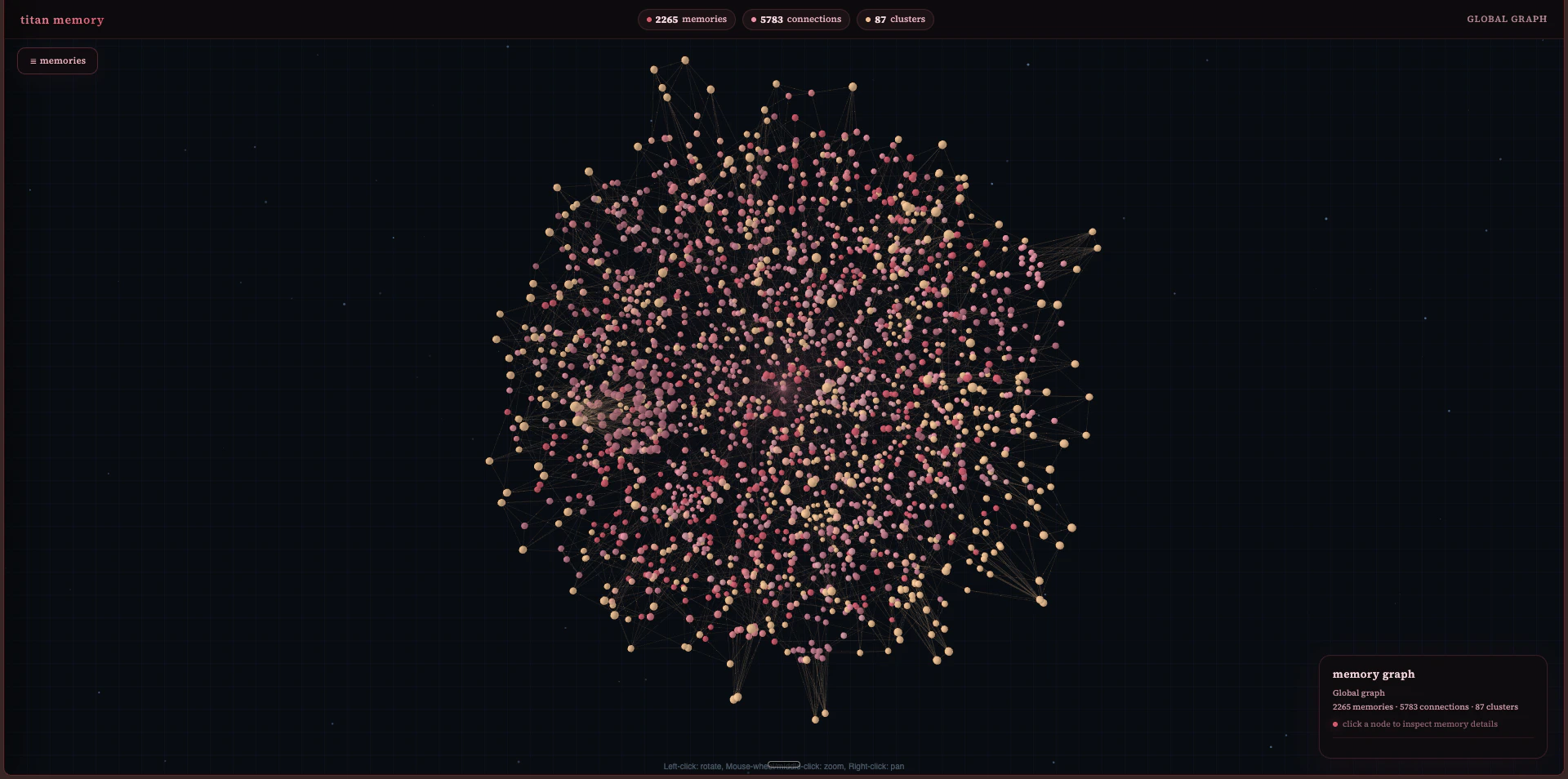
A Persistent evolutionary memory layer for AI agents
May 2026 · titanmemz.in · its alternatives →
- 19

- 20

Markdown based AI agent memory with semantic search, hybrid retrieval, and offline-first sync between agents. - sqliteai/sqlite-memory
Apr 2026 · github.com · its alternatives →
- 21
 AO2 Memory▲17
Portable context for every AI. Never explain yourself twice.
Jun 2026 · ao2.ai · its alternatives →
- 22CA
Codebased combines Tree Sitter for code awareness (find functions, data structures, constants, etc. not just lines of code), full-text search using SQLite, and semantic search using OpenAI embeddings + FAISS. Despite being implemented in Python, supporting semantic search, making multiple API calls for embedding and re-ranking, it is faster than ripgrep for runng searches against the Linux kernel (takes ~1 second vs. ~2 seconds, obviously depends on system, temperature, time of day, tidal forces, etc.) Up next: - A Perplexity-like agent for interpreting results, making multiple follow-up…
2024 · codebased.sh · its alternatives →
- 23

Long-term memory for AI coding agents (Claude Code, Codex, opencode) as a tree of plain files - gonzaroman/IHMT-MEMORY
9d ago · github.com · its alternatives →
- 24

Memory + judgment for AI coding agents (local, MIT)
May 2026 · projectmem.dev · its alternatives →
Also compare
Ranked by how close each launch is in meaning, then by votes. Prices were read from each product’s own site when checked and can change. Refine with your own description →