Alternatives
Products that do what Global Particle does
The High-Tech Guestbook for the Globe
- 1GA
Google released an API in May to get fetch 3D Tiles of anywhere on Earth. Using this in standard 3D engines like Blender is tricky because (1) the tiles are in a geographic coordinate system (2) you get a lot of little tiles at varying quality levels I wanted to simplify this so all you need to do is get an API key, select a map region and a zoom level, and get one combined glTF file that you can throw into any engine. Especially if you're just prototyping and want to see how this data looks in your engine before investing in figuring out all the nuances of the API & coordinate system. (Note…
2023 · github.com
- 2
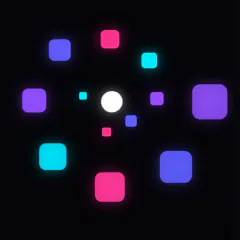
Transform Static Images Into Dynamic Particle Experiences
13d ago · particle-studios.vercel.app
- 3

- 4MA
The concept for metiq.space came after playing Global Magnates with friends and realizing how fragmented live global data is. ships, aircraft, satellites, ports, weather, hazards, infrastructure, cyber, and public datasets all exist, but they usually live in separate tools and maps. The goal was to build one interactive 3D globe where live public data could be visualized by latitude, longitude, and altitude. Surface data stays on the globe, while aircraft, satellites, and other above surface things can be represented in actual 3D space instead of being flattened onto a map. The outcome is an…
Jun 2026 · metiq.space
- 5

- 6
- 7

- 8DP
I had this idea where you would see realtime photos on a map, right now this is simply using cat pics, not sure where to take it from here but maybe it's useful to someone. :) GitHub: https://github.com/stagas/worldsnap
2025 · worldsnap.surge.sh
- 9

- 10
- 11AS
The little particles will gravitate to your cursor (or touch location), and can even enter stable orbits if the conditions are right! Mainly an excuse for me to experiment with wasm and WebGL, but it makes for a surprisingly good fidget toy.
2024 · aestuans.github.io
- 12
- 13MA
Hello HN! I’m excited to share this open-source community mashup showing the power and possibility of combining 3D Gaussian splat scans with traditional mesh-based 3D tiles maps in the browser. As you've probably seen on HN a bunch lately, Gaussian splats are a new method to allow custom 3D scans of scenes and objects [1] and Google Maps 3D Tiles API are the same 3D buildings and street views your familiar with in Google Earth or Google Maps, and recently they’ve been made available for inclusion in web apps. Combining splats + 3d map mixes highly detailed real-world custom micro-scans with…
2024 · maps-and-splats.glitch.me
- 14

- 15

- 16

- 17

- 18MMapipedia▲61
A web platform I've written to make it easy for people to share goespatial time series data and display it on animated heatmaps. There's also a social media component that allows you to write comments, follow, share and like data sets that you want to engage with. You can also download the CSV data and embed animations into your own websites. People uploading datasets can also choose to make money by accepting donations. Please check out the home page for more details: https://mapipedia.com Here are some samples of things created with the platform (press the play button to start…
2019
- 19

- 20

- 21
- 22EW
2020 · exophysics.net
- 23NR
This is a service I've built to provide equirectangular cloud maps of the whole Earth, updated every 3 hours, for free. It's based on infrared and visible light data from EUMETSAT, processed to enhance the clouds and try to reduce the impact of surface temperatures on the final image. I built it because it's surprisingly hard to find these kinds of images in a format that's useful to developers and hobbyists. I was building a 3D ISS tracker and wanted to include live clouds but couldn't find anything good, so I got sidetracked, and here we are.
2023 · github.com
- 24IR
This weekend's coding session was dedicated to recreating Jeffery Ventrella's "Particle Life". As you can imagine, I had a lot of fun with it. I recently saw this here on Hacker News and found it strange that I’d never come across it before. Source code: https://github.com/vnglst/particle-life The color palette is by Alex Cristache. https://twitter.com/AlexCristache/status/1791122643816431930
2024 · particle-life.koenvangilst.nl

Ranked by how close each launch is in meaning, then by votes. Refine with a description →