Alternatives
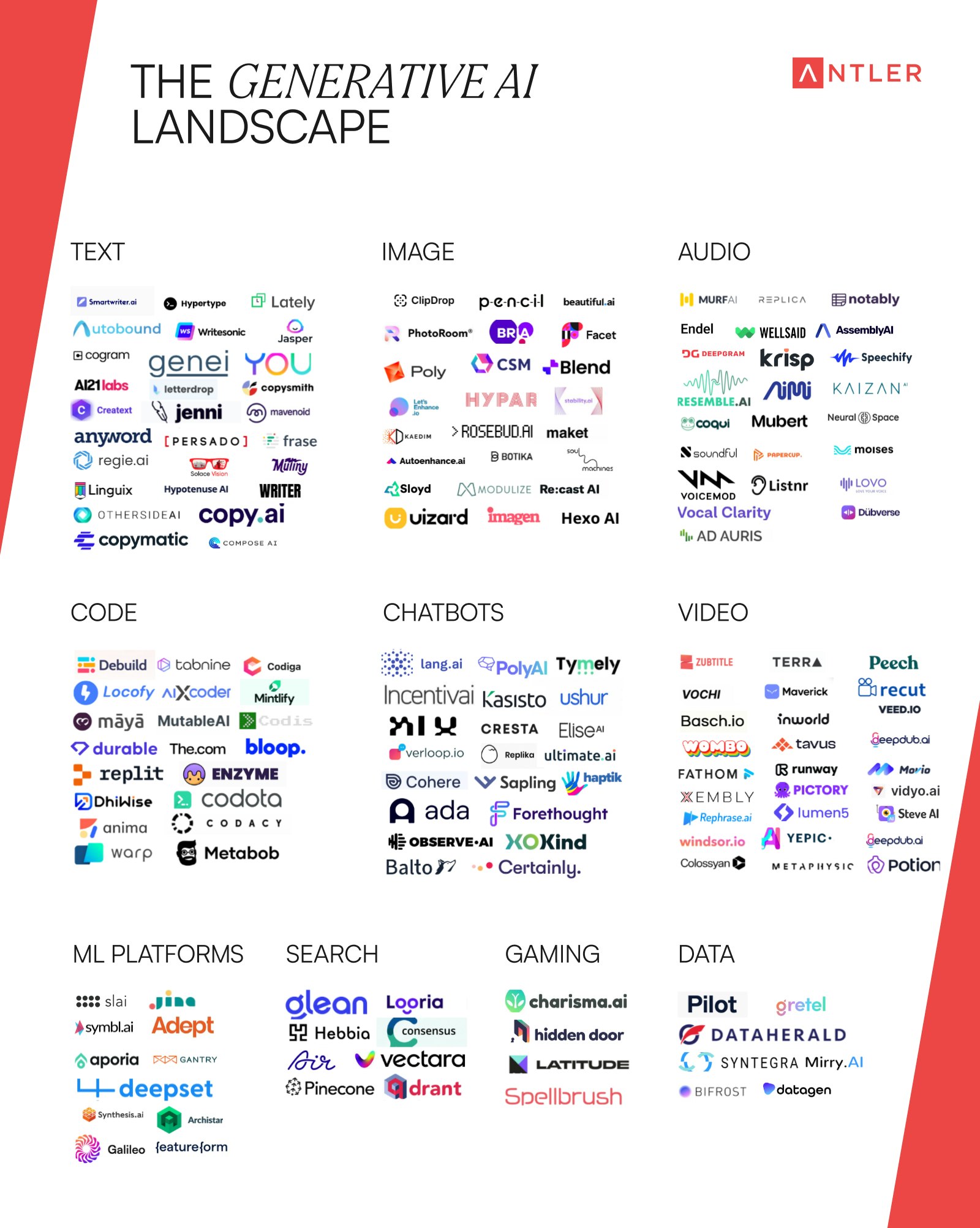
Products that do what Practical Challenges in Generative AI does
Hallucinations, risks & AI limitations explained for 2026
- 1

Turn PDFs into courses with AI without irrelevant additions
2025
- 2

- 3

- 4

- 5

- 6
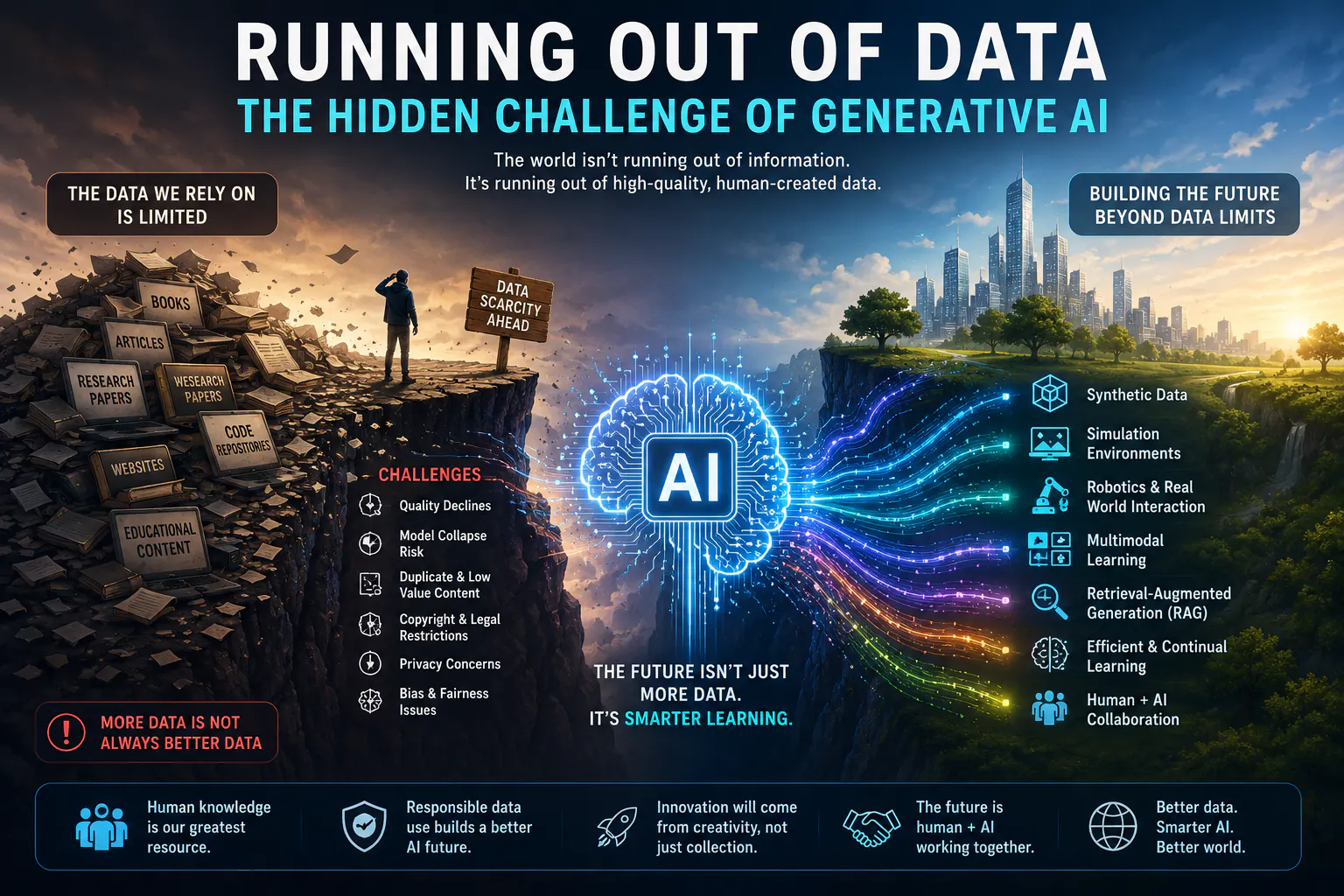
Is AI running out of high-quality training data?
26d ago · khayyamshah2007.blogspot.com
- 7

- 8
- 9

- 10

- 11

- 12WB
Hi everyone, We have been developing a platform to enable professionals to build AI assistants to help them through their work. After a few months, we realized people are trying to sell basic functionalities that can be built from scratch in a couple of hours. Due to this, individuals who are not familiar with the current SOTA are misinformed about the potential of generative models. So, we decided to open up some of our most popular templates as standalone tools for free to empower individuals and set a solid standard for what people should expect. We believe the barrier to accessing…
2024 · join.modularmind.app
- 13
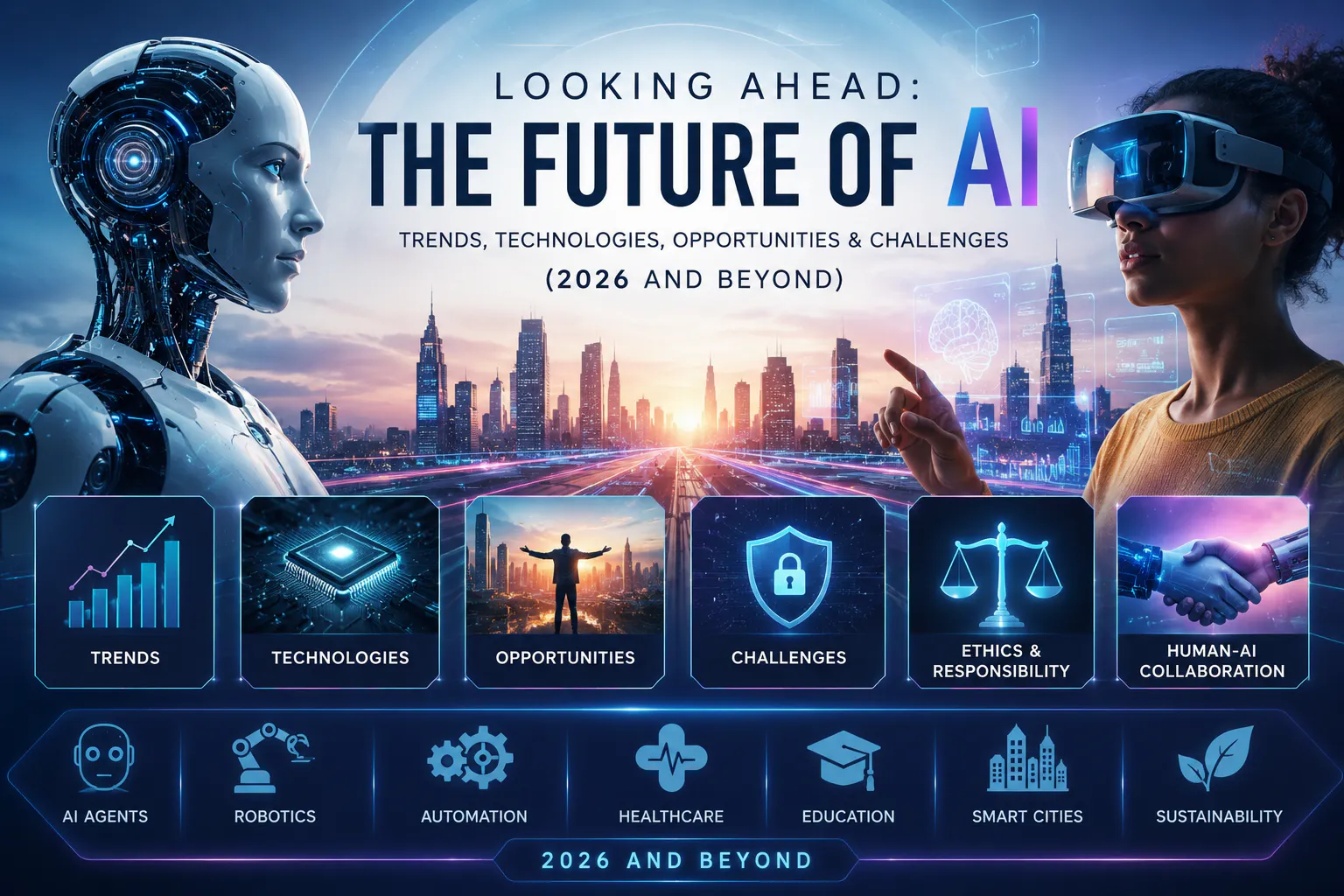
Trends, Technologies & Opportunities Beyond 2026
11d ago · khayyamshah2007.blogspot.com
- 14
- 15AH
This paper formally defines where current AGI hits a structural wall — not a technical one. It shows that no amount of scaling, reinforcement learning, or recursive optimization will break through three deep epistemological and formal constraints: 1. Semantic Closure — An AI system cannot generate outputs that require meaning beyond its internal frame. 2. Non-Computability of Frame Innovation — New cognitive structures cannot be computed from within an existing one. 3. Statistical Breakdown in Open Worlds — Probabilistic inference collapses in environments with heavy-tailed uncertainty.…
2025
- 16IB
Hi all, I'm sure some of the best engineers out here are having a hard time standing out nowadays. It's hard to evaluate and improve your skills, when AI is writing the code. Especially when a junior dev is sitting by your side and "accomplishing" 2x more than you. I didn't like this reality where the line between real talent and AI slop is blurring, so I decided to create a challenge, purely for the community, that is made to truly give a stage for talented devs to stand out in the age of AI. We encourage devs to bring their agents with them, because the challenge is built to not be…
May 2026 · theincidentchallenge.com
- 17HC
May 2026 · github.com
- 18IB
Hi HN, I'm the creator of this project. For the past months, I've been working on building an AI agent that could move beyond simple generation and tackle inventive challenges autonomously. The core idea was to create a system with a "metacognitive loop"—the ability to recognize when it's stuck on a fundamental problem and then launch a sub-mission to solve that specific bottleneck before continuing. The linked article is a deeper introduction to the system's architecture and a snapshot from a recent run. I tried to design it to be evidence-grounded and self-critical to avoid the pitfalls of…
2025 · robw1se.substack.com
- 19BG
Hi HN, My name is Othmane and I’ve been in the ML field (building and shipping models) for the last ~5years. Today, as many people out there, I come across new AI tools every week. However I was a bit surprised to see little to no mention of established AI vendors that existed before chatGPT and how most use cases are heavily biased toward content generation (text/image) or conversational AI (chatbots). I built a tool that helps you find the right AI solution/provider based on your use case. It uses a curated database of 100+ solutions from established vendors. It covers things…
2023 · preview.steerlab.ai
- 20IB
Hello everyone, I doubt this would be relevant to the kind of person who uses HN, but I thought I could share for some feedback. I built this site because there is a whole world of people who believe in new age spirituality and I am very much one of them. It is a site where you get the users gender their goals and their images and use AI and psychology to generate images of them in the process of achieving their goals. I am so deeply struggling with how to get this highly on Google. I don't even know if that is important anymore. What are your suggestions with distribution and getting in…
2025 · visionboardsai.com
- 21LC
Prompt instructions like 'never do X' don't hold up in production. LLMs ignore them when context gets long or users push hard. Limits sits between your agent and the real world. Every action — database writes, API calls, refunds — gets intercepted and checked against your rules before it executes. Deterministically. No LLM involved in enforcement. Three modes: Conditions: hard rules on structured data Guideance: validate LLM output before it reaches the user and give the agent chance to reason and retry Guardrails: scan for PII, toxicity, prompt injection etc One line to integrate: npm…
Feb 2026 · limits.dev
- 227D
hi all. i’ve been shipping a small open project that tries to answer that question with evidence, not vibes. in 70 days it reached \~800 stars. the core claim is simple: many AI failures are not noise. they repeat because the geometry and ordering underneath are stable. if so, we should be able to name each failure mode, set acceptance targets, and stop shipping the same bug twice. ### what it is * a compact Problem Map of 16 reproducible failure modes in RAG and agents. * each item has a minimal fix and measurable gates. examples: * Semantic ≠ Embedding: metric and normalization mismatch.…
2025 · github.com
- 23IM
Atrophy is an iOS self-report quiz aimed at software engineers who use LLMs heavily enough at work to wonder if they're trending toward AI over-reliance or some form of AI psychosis. I built it because I noticed a pattern: formerly AI-skeptical coworkers now open every standup or design discussion with "I asked Claude..." or "Claude told me..." for technical problems and design decisions. I've felt the same pull myself to delegate every task or problem to AI. It's easy to lean on these tools for almost any amount of critical thinking or problem solving, and I'm worried about what it means…
May 2026 · apps.apple.com
- 24FM
Hi HN, We've been frustrated with how confidently LLMs hallucinate—a dangerous flaw in high-stakes domains like health and medicine. The standard "I am not an expert" disclaimer feels insufficient since we all ignore those statements. Our approach is a RAG/agentic system built to solve this. It runs on ~40M+ scientific papers, but goes beyond simple retrieval. A multi-agent workflow decomposes queries, cross-references claims against multiple sources, and synthesizes answers, ensuring every key statement is cited directly from the literature. Beyond the literature, our agent system has…
2025 · my-openhealth.com
Ranked by how close each launch is in meaning, then by votes. Refine with a description →