Alternatives
Products that do what ScalaHosting does
Faster, secure VPS with SPanel at reasonable costs.
- 1

- 2SO
2016 · static.land
- 3LT
hey guys. the other day i was migrating hosting providers and i just needed something not too heavy and convenient to spin up my backups for awhile and realised there is almost nothing out there. kimchi hasn't been updated for years and cockpit is heavy. so here's something i came up with in a couple hours because of a sudden urge, nothing fancy just basic creation with cloud init, lifecycle management and image/storage, but it's modern-ish and it compiles to a 8.4mb binary inclusive of the embedded web UI, CLI and API, and only dep is libvirt.
Sep 2025 · github.com
- 4AA
Hey HN! This is Adil, Salman and Jose and and we’re behind archgw [1]. An intelligent proxy server designed as an edge and AI gateway for agents - one that natively know how to handle prompts, not just network traffic. We’ve made several sweeping changes so sharing the project again. A bit of background on why we’ve built this project. Building AI agent demos is easy, but to create something production-ready there is a lot of repeat low-level plumbing work that everyone is doing. You’re applying guardrails to make sure unsafe or off-topic requests don’t get through. You’re clarifying vague…
2025 · github.com
- 5

- 6LH
2019 · github.com
- 7LA
2018 · github.com
- 8BA
2020 · github.com
- 9
- 10IG
Hey HN, For years, my local development setup has been a fragile mess of tools that never quite played nicely together. On my mac, it was a constant battle with Homebrew services starting (or not starting) on boot, conflicting PHP and Node versions managed by `asdf` or `nvm`, and a collection of `docker-compose.yml` files that I'd copy-paste and tweak for every single project. The cognitive load was just too high. Setting up SSL was another chore involving `mkcert`. Sharing a quick demo with a colleague meant firing up ngrok. And if I wanted to run two projects that needed different versions…
Oct 2025 · servbay.com
- 11SA
Hi guys, we're Wilhem from Paris and Jean-Daniel from Tokyo, software engineers with a passion for all things cloud (IaaS, PaaS, SaaS). We recently decided to tackle the problem of Capacity Planning with Stacktical, a Scalability Prediction service (https://stacktical.com). For a decade, we've been observing our clients and colleagues trying to nail down their strategy using repeated cycles of defining, collecting and interpreting load testing campaigns. It's funny how most people don't realize how demanding the work of infrastructure managers and their teams really is... While…
2016
- 12NS
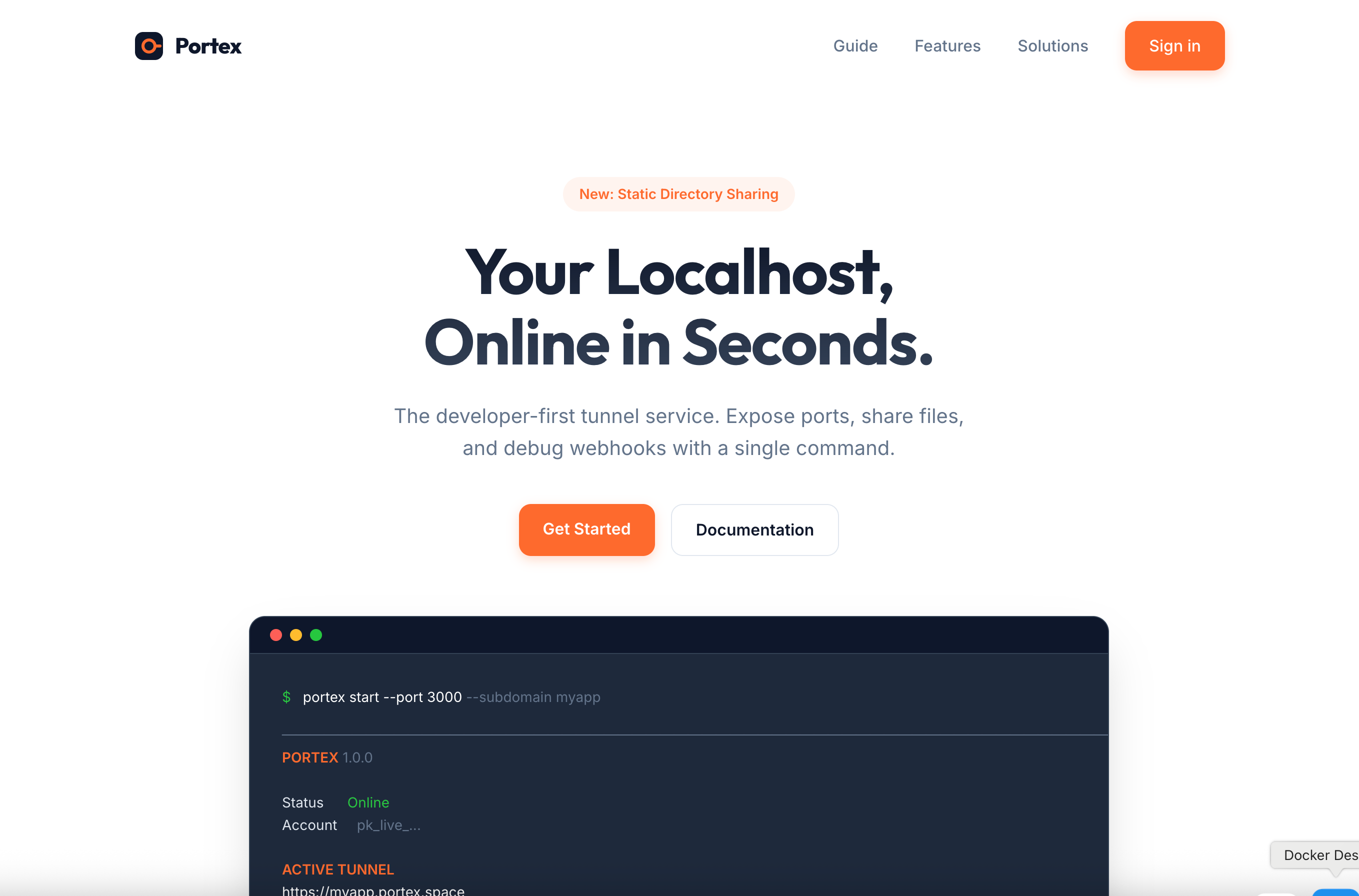
2013 · ngrok.com
- 13WB
Over the past few months, as we scaled our internal AI Agents, we hit a dead end: Running LLM-generated arbitrary code in Docker is basically running naked on security due to container escape risks. But using full traditional VMs takes minutes to boot and eats too much memory to support high-density concurrency. We loved the developer experience of SaaS sandboxes on the market, but they are closed-source, expensive, and have too high a barrier to entry for self-hosting. So, our team decided to build our own. After months of grinding, using RustVMM and KVM, we built a blazing-fast,…
Apr 2026 · github.com
- 14PF
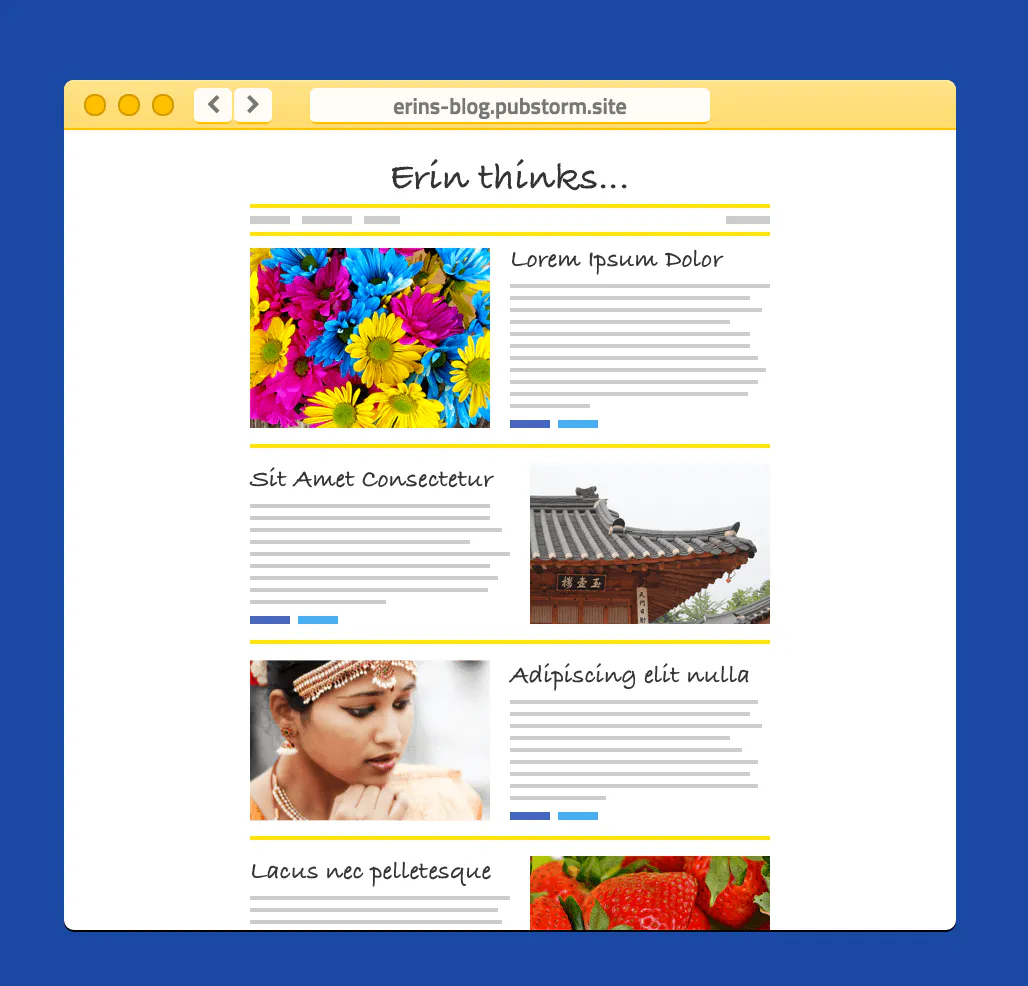
2016 · pubstorm.com
- 15IB
The only way to go fast is full YOLO mode in your coding agent. I've got the local sandbox figured out (pro tip: Incus VMs work great) but I wanted to keep my agents from doing things like inadvertently blowing up my cloud services or chasing a prompt to POST to some random website. I struggle most with this on my side projects where my permission model isn't quite as robust as it is at the office. I started with a firewall on the Incus container but every time the agent needed access to something new, I was poking more holes in it - and it didn't differentiate between HTTP verbs. I've been…
Jul 2026 · trollbridge.dev
- 16LV
Hello HN! We've been working on a new hypervisor https://kwarantine.xyz that can run strongly isolated containers. This is still a WIP, but we wanted to give the community an idea about our approach, its benefits, and various use cases it unlocks. Today, VMs are used to host containers, and make up for the lack of strong security as well as kernel isolation in containers. This work adds this missing security piece in containers. We plan on launching a free private beta soon. Meanwhile, we'd deeply appreciate any feedback, and happy to answer any questions here or on our slack…
2021
- 17TR
Hi HN, Today I'm showcasing Trunchbull, a benchmarking platform designed for authoring benchmarks and running them against different models. We have direct support for benchmarks that use the harbor authoring system, custom tool authoring via the vercel ai sdk and configuration limits. We've also already imported terminalbench 2.0, as a sort of proof of concept that our harbor task orchestrator works, although you currently need a paid account as we are provisioning sandbox environments. I've made several popular benchmarks publicly available for testing. You dont need an account or your…
25d ago · trunchbull.dev
- 18WB
We’ve been building a Cloud-Managed Hypervisor that makes running applications on your own servers as effortless as the public cloud. Over my career I’ve watched the transition from on-prem to public cloud. The cloud paradigm shift is as much about empowering engineers as it is about elastic infrastructure, but the tooling for on-prem and private clouds is at best heavyweight and at worst stuck in the last century. We've tackled some interesting problems in the process of building this, such as providing a cloud-style metadata service from our platform. We’d love for you to read our story…
2023 · gallium.cloud
- 19IB
There are plenty of ways to deploy your apps. PaaS options like Vercel or Netlify are convenient but can get pricey as projects scale. VPS hosting is cheaper, but setting it up (Linux, networking, SSL, etc.) can be daunting. That’s why glueh-wyy-huet (https://github.com/glueh-wyy-huet) and I (https://github.com/biersoeckli) built QuickStack during our bachelor studies at Eastern Switzerland University of Applied Sciences. QuickStack simplifies deployment by letting you deploy directly from a Git repo or Docker registry to any VPS. It’s free, open source, and…
2025 · quickstack.dev
- 20MA
Hi HN, We’re building Mist, a lightweight, self-hosted PaaS for running and managing applications on your own servers. We started Mist because we wanted a middle ground between raw VPS management and heavy, all-in-one platforms. Existing PaaS solutions often felt too complex or resource-intensive for small servers, homelabs, and side projects. We wanted something that keeps the PaaS experience but stays simple and predictable. Our goals with Mist are: - A simple PaaS to deploy and manage apps on your own infrastructure - HTTPS, routing, and app access handled automatically - Low resource…
Jan 2026 · trymist.cloud
- 21HP
2017 · medium.baqend.com
- 22
- 23CC
If you had to build a context window manager in 24h, would you stick to the existing model or come up with something better? Here's what I did: 1. Built a proxy that intercepts Codex's calls to OpenAI and rewrites them on the fly. 2. Replayed 3,807 rounds of SWE-bench Verified traces through it: avg prompt 44k → 6k tokens (-87%). 3. Posted it to HN to get the next reduction applied to my confidence interval — starting with the inevitable "How about accuracy?" npx -y pando-proxy · github.com/human-software-us/pando-proxy
Apr 2026 · npmjs.com
- 24RM
Hi HN!!! I am localhost, lol, and I am launching RootManagedServices, a managed service provider focused on small and mid-sized organizations. After years of watching MSP relationships stall over opaque pricing, alert fatigue, and weak security baselines, we’re trying to do it differently: automation-first operations, measurable outcomes, and real transparency. What’s different about our approach Automation by default. We standardize device/identity baselines and recurring tasks with policy + scripts, aiming to cut busywork tickets and MTTR. Wherever sensible we use reproducible configs…
Sep 2025 · rootmanagedservices.com
Ranked by how close each launch is in meaning, then by votes. Refine with a description →