AI · alternatives · 2026

24 alternatives to Unstract(AGPL) – Launch LLM-powered APIs to structure unstructured docs
Hello HN! One of the most common uses of LLMs is to go beyond what traditional RPA or IDP can do when it comes to structuring unstructured documents. However, there are a lot of challenges in getting this done right from extraction of text data from PDFs, scanned images or other formats, prompt engineering, evaluation and integration with existing systems. This very specific use case is where Unstract can help teams move really fast, leveraging LLMs. By doing the heavy-lifting in this fast-changing ecosystem it lets engineers concentrate on implementing core business workflow automations.…
Unstract is an open-source platform for extracting and structuring data from unstructured documents like PDFs and scanned images using large language models. It handles text extraction, prompt engineering, and system… Below are 24 products that do a similar job, ranked by how close each is in meaning and then by launch-day votes. Unstract(AGPL) – Launch LLM-powered APIs to structure unstructured docs launched in 2024; newer entries below may have overtaken it.
- 1

Hello HN! One of the most common uses of LLMs is to go beyond what traditional RPA or IDP can do when it comes to structuring unstructured documents. However, there are a lot of challenges in getting this done right from extraction of text data from PDFs, scanned images or other formats, prompt engineering, evaluation and integration with existing systems. This very specific use case is where Unstract can help teams move really fast, leveraging LLMs. By doing the heavy-lifting in this fast-changing ecosystem it lets engineers concentrate on implementing core business workflow automations.…
2024 · unstract.com · its alternatives →
- 2

Hi HackerNews, Lately, I have seen an explosion in posts offering paid APIs/services to get unstructured data into LLMs (i.e. langchain extract, ragflow, unstructured, unstract, just to name a few) and I have been largely disappointed by them, either because they fail to implement multimodal support, fail to give good context for "really tricky" PDFs / Word docs / Powerpoints, or are just plain difficult to use. In light of all these posts I figured I'd share my solution that has been working smoothly for me and my clients. I put it up on GitHub for free so you can check it…
2024 · github.com · its alternatives →
- 3

- 4

Built a tool for transforming unstructured data into structured outputs using language models (with 100% adherence). If you're facing problems getting GPT to adhere to a schema (JSON, XML, etc.) or regex, need to bulk process some unstructured data, or generate synthetic data, check it out. We run our own tuned model (you can self-host if you want), so, we're able to have incredibly fine grained control over text generation. Repository: https://github.com/automorphic-ai/trex Playground: https://automorphic.ai/playground
2023 · automorphic.ai · its alternatives →
- 5

- 6

Improved file parsing for LLM’s. Contribute to Filimoa/open-parse development by creating an account on GitHub.
2024 · github.com · its alternatives →
- 7

Almost exactly 1 year ago, I submitted something to HN about using Llama2 (which had just come out) to improve the output of Tesseract OCR by correcting obvious OCR errors [0]. That was exciting at the time because OpenAI's API calls were still quite expensive for GPT4, and the cost of running it on a book-length PDF would just be prohibitive. In contrast, you could run Llama2 locally on a machine with just a CPU, and it would be extremely slow, but "free" if you had a spare machine lying around. Well, it's amazing how things have changed since then. Not only have models gotten a lot better,…
2024 · github.com · its alternatives →
- 8

- 9

I built this tool because I wanted a way to just take a bunch of URLs or domains, and query their content in RAG applications. It takes away the pain of crawling, extracting content, chunking, vectorizing, and updating periodically. I'm curious to see if it can be useful to others. I meant to launch this six months ago but life got in the way...
2024 · embedding.io · its alternatives →
- 10
 Instill VDP▲130
Open source unstructured data ETL for AI first applications
2024 · instill-ai.com · its alternatives →
- 11

Hey HN! We're excited to announce the launch of Tonic Textual, the secure data lakehouse for LLMs. Simply stated, Tonic Textual allows you to build generative AI systems on your own unstructured data without having to spend time extracting and standardizing your data. In minutes you can build automated, scalable unstructured data pipelines that extract, centralize, standardize, and enrich data from your documents into an AI-optimized format ready for embedding, fine-tuning, and ingesting into a vector database. While in-flight, we also scan for sensitive information and protect it via…
2024 · tonic.ai · its alternatives →
- 12

This started out as a weekend hack with gpt-4-mini, using the very basic strategy of "just ask the ai to ocr the document". But this turned out to be better performing than our current implementation of Unstructured/Textract. At pretty much the same cost. I've tested almost every variant of document OCR over the past year, especially trying things like table / chart extraction. I've found the rules based extraction has always been lacking. Documents are meant to be a visual representation after all. With weird layouts, tables, charts, etc. Using a vision model just make sense! In…
2024 · github.com · its alternatives →
- 13

Documind is an open-source tool that turns documents into structured data using AI. What it does: - Extracts specific data from PDFs based on your custom schema - Returns clean, structured JSON that's ready to use - Works with just a PDF link + your schema definition Just run npm install documind to get started.
2024 · github.com · its alternatives →
- 14
 folio▲74
hi HN! a couple of months ago I had to analyze a few thousand audio recordings to help identify issues with customer support. i was able to get some raw high-level initial results with python scripts invoking LLM APIs, but they were too general and unhelpful. writing basic prompts is easy, but tuning them and making them specific enough to ensure no faint signal is missed is hard. you need to iterate through the data with an initial prompt, segment the data into different buckets, chain another prompt for each bucket etc. Then you need to constantly review the raw data to tweak the prompts…
Apr 2026 · usefolio.ai · its alternatives →
- 15

I've developed a Python API service that uses GPT-4o for OCR on PDFs. It features parallel processing and batch handling for improved performance. Not only does it convert PDF to markdown, but it also describes the images within the PDF using captions like `[Image: This picture shows 4 people waving]`. In testing with NASA's Apollo 17 flight documents, it successfully converted complex, multi-oriented pages into well-structured Markdown. The project is open-source and available on GitHub. Feedback is welcome.
2024 · github.com · its alternatives →
- 16

Hey HN, I made Browser-Use, an open-source tool that lets (all Langchain supported) LLMs execute tasks directly in the browser just with function calling. It allows you to build agents that interact with web elements using natural language prompts. We created a layer that simplifies website interaction for LLMs by extracting xPaths and interactive elements like buttons and input fields (and other fancy things). This enables you to design custom web automation and scraping functions without manual inspection through DevTools. Hasn't this been done a lot of times? Good question, as a general…
2024 · github.com · its alternatives →
- 17

open-source agentic AI data assistant for the next generation of AI + Data products. - eosphoros-ai/DB-GPT
2023 · github.com · its alternatives →
- 18
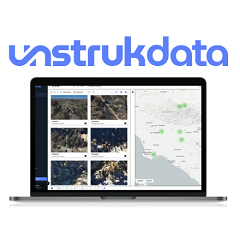
Search, visualize and analyze spatial and unstructured data
2022 · portal.unstruk.ai · its alternatives →
- 19UD
Hey HN! I’m the founder of Unify, and we’ve just released our Model Hub, which provides a collection of LLM endpoints with live runtime benchmarks all plotted across time: https://unify.ai/hub A key finding is that static tabular runtime benchmarks for LLMs simply do not work. It’s necessary to take a time-series perspective, and plot the variations through time. We currently have 21 models provided by: Anyscale, Perplexity AI, Replicate, Together AI, OctoAI, Mistral AI and OpenAI, with more on the roadmap. We test across different regions (Asia, US, Europe), with varied…
2024 · its alternatives →
- 20

Hi, I was a corporate lawyer for many years working with a lot of financial services and insurance companies. In practicing law, I noticed there was a lot of repetition in the tasks I was working on even as a highly paid attorney that could be automated. I wanted to solve the problem of dealing with a lot information and data in a practical way, using AI. This motivated me to start AI Bloks/LLMWare with my husband, who had a deep background in software and is a very early adopter of AI. We have been on this journey with our open source project LLMWare for the past 4 months, producing a…
2024 · github.com · its alternatives →
- 21

Anara is the AI workspace for research. Search your library and the web, then write with every claim cited to its source. 4× more accurate than general AI.
2023 · unriddle.ai · its alternatives →
- 22

- 23

We’re Robin, Louis, and Thomas. Pipelex is a DSL and a Python runtime for repeatable AI workflows. Think Dockerfile/SQL for multi-step LLM pipelines: you declare steps and interfaces; any model/provider can fill them. Why this instead of yet another workflow builder? - Declarative, not glue code: you state what to do; the runtime figures out how. - Agent-first: each step carries natural-language context (purpose, inputs/outputs with meaning) so LLMs can follow, audit, and optimize. Our MCP server enables agents to run pipelines but also to build new pipelines on demand. - Open…
Oct 2025 · github.com · its alternatives →
- 24

G'day, HN! I'm one of the maintainers of `llm`. I've been working alongside a trusty group of contributors to bring this project to life, and we're now at a point where we're ready to share it with the world. Large language models (LLMs) are taking the computing world by storm due to their emergent abilities that allow them to perform a wide variety of tasks, including translation, summarization, code generation, and even some degree of reasoning. However, the ecosystem around LLMs is still in its infancy, and it can be difficult to get started with these models. `llm` is a one-stop shop for…
2023 · github.com · its alternatives →
Also compare
- Unstract – AGPL, LLM-powered Fivetran/Twilio for unstructured docs alternatives
- I just open sourced my document/website extractor for Vision-LLMs alternatives
- l1m.io alternatives
- Structured output from LLMs without reprompting alternatives
- Tonic Textual alternatives
- Beyond text splitting – improved file parsing for LLMs alternatives
Ranked by how close each launch is in meaning, then by votes. Prices were read from each product’s own site when checked and can change. Refine with your own description →