Dev tools · alternatives · 2026

24 alternatives to Weaviate – Build your own generative health search engine
We are super excited to release our latest open-source demo, Healthsearch. This demo decodes user reviews of supplements and performs semantic- and generative search on them, retrieving the most related products for specific health effects, and leveraging Large Language Models to generate product and review summaries. The demo can understand natural language queries and derive all search filters directly from the context of your query.
Healthsearch is an open-source demo that searches supplement products using natural language queries and semantic search technology. It analyzes user reviews to find products matching specific health effects and… Below are 24 products that do a similar job, ranked by how close each is in meaning and then by launch-day votes. Weaviate – Build your own generative health search engine launched in 2023; newer entries below may have overtaken it.
- 1

- 2WS
We’ve trained a generative AI model to browse the web and answer questions/retrieve code snippets directly. Unlike ChatGPT, it has access to primary sources and is able to cite them when you hover over an answer (click on the text to go to the source being cited). We also show regular Bing results side-by-side with our AI answer. The model is an 11-billion parameter T5-derivative that has been fine-tuned on feedback given on hundreds of thousands of searches done (anonymously) on our platform. Giving the model web access lessens its burden to need to store a snapshot of human knowledge…
2022 · beta.sayhello.so · its alternatives →
- 3
 ChatGPT Health▲410
ChatGPT designed for health and wellness
Jan 2026 · openai.com · its alternatives →
- 4IM
As a grad student (and an ADHDer), I had trouble doing literature review systematically. To combat this, I made a website that finds similar papers using the meaning of the thing I am looking for. I used MixedBread's [^1] embedding model to generate vectors from the abstracts. I store and search similar vectors using Milvus [^2] and finally use Gradio [^3] to serve the frontend. I update the vector database weekly by pulling the metadata dataset from Kaggle [^4]. To speed up the search process on my free oracle instance, I binarise the embeddings and use Hamming distance as a metric. I would…
2024 · papermatch.mitanshu.tech · its alternatives →
- 5
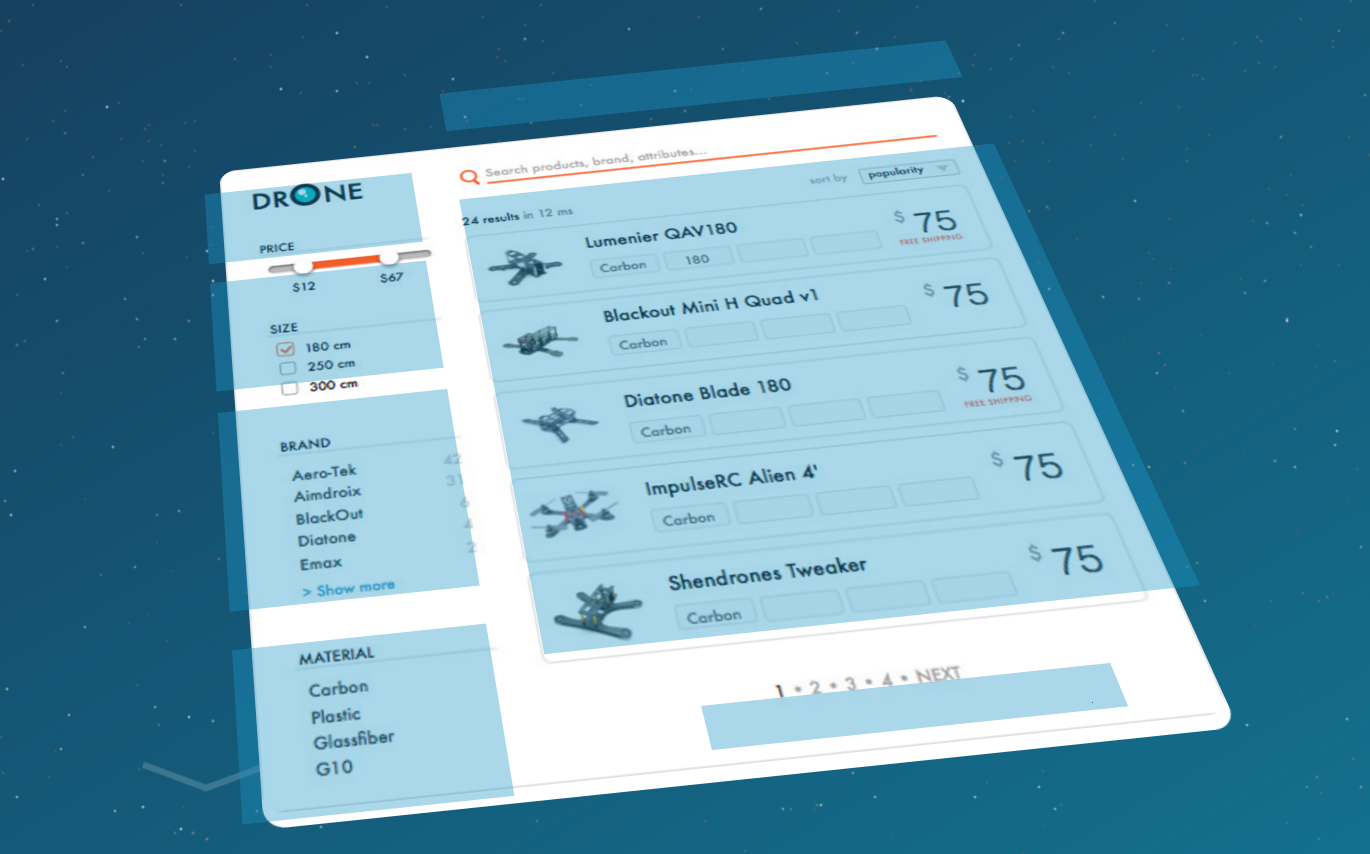
JavaScript UI library for building great search experiences
2015 · community.algolia.com · its alternatives →
- 6

Hi HN, As a researcher, I often found myself struggling with the limitations of keyword-based search when exploring PubMed papers. To address this, I created PubMed Search (https://www.pubmedisearch.com/), a tool that leverages a vector database to enable semantic search across medical research literature. Some key features: * Daily updates to ensure access to the latest articles * Semantic search using latest & greatest embedding models * Some additional useful info about the papers (tldr, journal, publication date, etc.) Hope you find it useful!
2024 · pubmedisearch.com · its alternatives →
- 7

Build accurate & deep healthcare search fast
2022 · docone.stoplight.io · its alternatives →
- 8
 Meilisearch AI▲241
Boost relevance and UX with fast hybrid and semantic search
2025 · meilisearch.com · its alternatives →
- 9

Hi HN, I am Jiayuan, and I'm here to introduce a tool we've been building over the past few months: Devv (https://devv.ai). In simple terms, it is an AI-powered search engine specifically designed for developers. Now, you might ask, with so many AI search engines already available—Perplexity, You.com, Phind, and several open-source projects—why do we need another one? We all know that Generative Search Engines are built on RAG (Retrieval-Augmented Generation)[1] combined with Large Language Models (LLMs). Most of the products mentioned above use indexes from general search engines…
2024 · devv.ai · its alternatives →
- 10
 GoSearch Free▲163
GoSearch is the newest AI-powered enterprise search solution — by the makers of GoLinks, a YCombinator company. Available now at gosearch.ai! If you’re still reading, check out our other new product that just launched: GoProfiles.io, the only AI-powered HR platform.
2025 · gosearch.ai · its alternatives →
- 11

Hey HN, we're Lennert and Rauf. We’re building Airweave (https://github.com/airweave-ai/airweave), an open-source tool that lets agents search and retrieve data from any app or database. Here’s a general intro: https://www.youtube.com/watch?v=EFI-7SYGQ48, and here’s a longer one that shows more real-world use cases, examples of how Airweave is used by Cursor (0:33) and Claude desktop (2:04), etc.: https://youtu.be/p2dl-39HwQo A couple of months ago we were building agents that interacted with different apps and were frustrated when they…
2025 · github.com · its alternatives →
- 12

Health recommendations for your app through ChatGPT
2023 · tryterra.co · its alternatives →
- 13

We built a search engine that shows you the most engaging stories/topics being shared across Twitter, Facebook, Linkedin, and Google+. We crawled over 15 million articles the past 3 months, retrieved the total number of Facebook likes, tweets, Google+’s etc and built a search index around it. Here's what our infrastructure looks like: Rails/Redis: We use the Sidekiq gem as a message queue. We have hundreds of workers that do the crawling, data mining, and number crunching. ElasticSearch: We built the search index using ElasticSearch, with the data imported from our Postgres…
2013 · buzzsumo.com · its alternatives →
- 14
 MediSearch▲65
Get an instant answer to your medical questions
2023 · medisearch.io · its alternatives →
- 15
Crowdsourcing remedies and supplements that work or don't
2021 · summaryhealth.com · its alternatives →
- 16AO
2011 · science.io · its alternatives →
- 17

- 18

- 19

healthHackers® - insights from health pioneers plus wellness product reviews
2013 · healthhackers.org · its alternatives →
- 20

Hi HN, I’m a solo dev building a clinical search engine to help my wife (a resident physician) and her colleagues. The Problem: Current tools (UpToDate/OpenEvidence) are expensive, slow, or increasingly heavy with pharma ads. The Solution: I built Evidex to be a clean, privacy-first alternative. Search Demo (GIF): https://imgur.com/a/zoUvINt Technical Architecture (Search-Based RAG): Instead of using a traditional pre-indexed vector database (like Pinecone) which can serve stale data, I implemented a Real-time RAG pattern: Orchestrator: A Node.js backend performs…
Dec 2025 · getevidex.com · its alternatives →
- 21LU
2017 · learnsearch.xyz · its alternatives →
- 22

Components for building search UIs
2018 · opensource.appbase.io · its alternatives →
- 23
 Rejoy Health▲79
Hi HN, We’re the team behind Rejoy Health, an AI search engine built specifically for doctors. We launched it to solve a frustrating but critical problem: Clinicians spend too much time searching through dense PDFs, outdated databases, and fragmented resources to find reliable answers to clinical questions, especially at the point of care. With a new medical paper published every ~30 seconds, it’s impossible to keep up. Rejoy lets doctors ask questions in plain language (e.g. “How do I manage atrial fibrillation in elderly patients?”) and get trusted, evidence-based answers with linked…
2021 · rejoyhealth.com · its alternatives →
- 24SR
Searchkit - UI Widgets for Elasticsearch. React, Vue & Javascript supported
2016 · searchkit.co · its alternatives →
Also compare
Ranked by how close each launch is in meaning, then by votes. Prices were read from each product’s own site when checked and can change. Refine with your own description →