Zanki – AI powered spaced repetition to teach kids to read
I’m excited to launch Zanki today. Zanki is a flashcard and collectible sticker app to helps kids learn to read. Zanki is phonics based and focuses on teaching phonetic sounds and sound blending. To keep kids motivated, I’m using [this excellent sticker LoRA](https://huggingface.co/artificialguybr/StickersRedmond) to generate reward stickers and to add imagery to the cards. Silly “story cards” are intermixed with review sessions to illustrate the letter sounds and keep kids engaged. I’m using a slightly modified spaced repetition algorithm to set a review schedule once a…
In plain words
Zanki is a flashcard app designed to teach children to read using phonics-based instruction. The app focuses on phonetic sounds and sound blending, with story cards interspersed between review sessions to maintain engagement. Children earn collectible AI-generated stickers as rewards. The app employs a modified spaced repetition algorithm to schedule reviews of learned sounds. Built for early readers, Zanki aims to balance educational content with entertainment value through its collectible sticker system.
written from the facts on this page · September 2026
From the sources
In the maker’s words, at launch
I’m excited to launch Zanki today. Zanki is a flashcard and collectible sticker app to helps kids learn to read. Zanki is phonics based and focuses on teaching phonetic sounds and sound blending. To keep kids motivated, I’m using [this excellent sticker LoRA](https://huggingface.co/artificialguybr/StickersRedmond) to generate reward stickers and to add imagery to the cards. Silly “story cards” are intermixed with review sessions to illustrate the letter sounds and keep kids engaged. I’m using a slightly modified spaced repetition algorithm to set a review schedule once a kid learns a sound. I built Zanki to help my son (4 YO) practice his letter sounds and learn to read starter words. Other apps felt overproduced and more like entertainment than education. I wanted something that struck the right balance between fun and learning and collectible stickers has been working well. There’s lots of directions this can go, I’ve experimented with other types of cards (colors, shapes, numbers, etc.) and want to go deeper on personalization and tailoring the content to child’s interests on any given day. This type of content generation would be impossible without LLMs! Tech: Zanki is written in Elixir and deployed to fly.io. It’s a Phoenix LiveView app and works best on a mobile browser (technically it can be bookmarked as a PWA but the xp needs work!). Content: Replicate + Huggingface + OpenAI are doing a bunch of the content gen heavy lifting. I used multi-step AI pipelines to generate all of the text content, the image prompts, images, and text to speech. I’m working on fine-tuning a story generation model to get better results.
Does a similar job
all alternatives →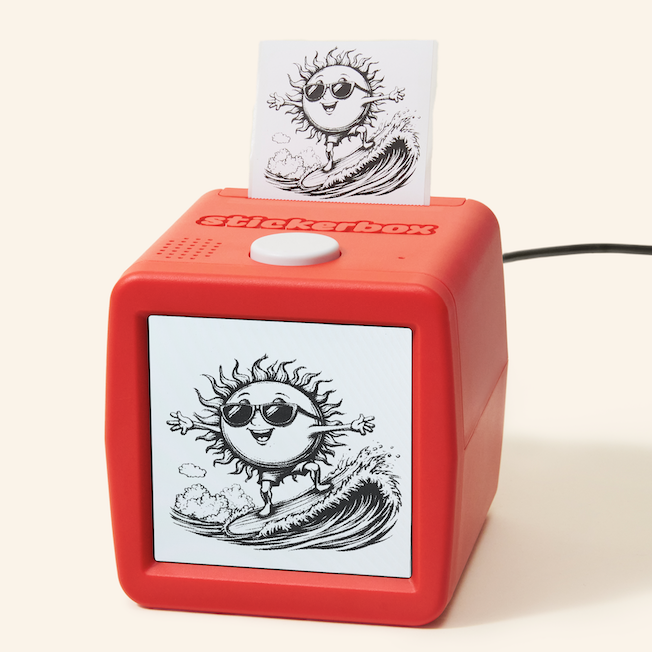




More ai this month
the category →
I trained a 125M-parameter transformer to autocomplete piano performances in real time (~108 notes/sec on an iPhone 15). The idea is basically GitHub Copilot or Tabnine, except instead of prompting it with code, you prompt it by playing a few notes on a MIDI piano. The model then continues what you played, entirely on-device. The app is free if anyone wants to try it. Happy to answer questions about the model, training, Core ML, or the many things that didn't work.
AI · 17d ago · simedw.com
 Astute▲585
Automate your B2B brand going viral, with new media creators
AI · 19d ago · company-app.joinastute.com


Hey HN, Henry from Cactus here! We previously released Cactus Needle, a 14MB agentic LLM for tool call, device use, and structured extraction for phones, wearables, smart homes, small robots and microcontrollers. We got really great feedback here, and have now incorporated the suggestions to release Needle 2. The whole model is a single 14MB binary that runs a full session in 28MB of RAM; 45m parameters at 2bit compression. Needle hits 500 tokens/sec decode speed on a Raspberry Pi 5, sits between 400-1,500 tokens/sec on VR devices like Meta Quest 3S and Apple Vision Pro, and ranges…
AI · 27d ago · cactuscompute.com