AI · alternatives · 2026

24 alternatives to ctxbudgeter
Control what AI agents know before they act
Below are 24 products that do a similar job, ranked by how close each is in meaning and then by launch-day votes. Prices are shown for the 1 we have checked on their own sites, 1 of them free or with a free tier.
- 1
 Context Gateway▲220
We built an open-source proxy that sits between coding agents (Claude Code, OpenClaw, etc.) and the LLM, compressing tool outputs before they enter the context window. Demo: https://www.youtube.com/watch?v=-vFZ6MPrwjw#t=9s. Motivation: Agents are terrible at managing context. A single file read or grep can dump thousands of tokens into the window, most of it noise. This isn't just expensive — it actively degrades quality. Long-context benchmarks consistently show steep accuracy drops as context grows (OpenAI's GPT-5.4 eval goes from 97.2% at 32k to 36.6% at 1M…
Mar 2026 · github.com · its alternatives →
- 2
 AI Context Flow▲431
Reusable AI Memory for Smarter Prompts Anywhere
Nov 2025 · chromewebstore.google.com · its alternatives →
- 3

- 4
 tablo▲124
A tiny cat that watches your AI coding agents for you
Jul 2026 · tablo-cat.netlify.app · its alternatives →
- 5
 N71free tier, from $49/mo▲141
Give all your AI agents one shared context
Jul 2026 · n71.ai · its alternatives →
- 6

- 7IB
I released ContextChat, an AI chat designed to be context-centric, helping you stay focused and productive by giving you control over the information your AI sees. You can import websites, files, and public/private GitHub repos to give the AI full knowledge of your projects. Unlike other chatbots, ContextChat lets you easily switch between project contexts, so you get relevant answers and avoid the noise. It's pay-per-use, giving you flexibility and control over costs and free models are available so you can try it for free with no monthly subscriptions. Let me know your feedback!
2025 · contextch.at · its alternatives →
- 8
 Contextberg▲102
Turn your work into AI agent memory, served over MCP
May 2026 · contextberg.com · its alternatives →
- 9
 Preloop▲121
Hey HN, I’m Yannis, co-founder of Preloop. We’ve built a proxy for the Model Context Protocol (MCP) that lets you add human approval gates to your AI agents without changing your agent code. We’re building agents that use tools (Claude Desktop, Cursor, etc.), but we were terrified to give them write-access to sensitive systems (Stripe, Prod DBs, AWS). We didn't want to rewrite our agents to wrap every tool call in complex "ask_user" logic, especially since we use different agent runtimes. We built Preloop as a middleware layer. It acts as a standard MCP server proxy.You point your agent to…
Jan 2026 · preloop.ai · its alternatives →
- 10
 Deep Work Plan▲114
Models matter. Context matters more. Give your agent a plan.
Jun 2026 · deepworkplan.com · its alternatives →
- 11
 Context Overflow▲109
Hey HN, After using a bunch of agents, my friend and I noticed a major issue: an agent could spend a bunch of time solving a tricky task, but when the session ended all that knowledge vanishes. Even if I told my agent to remember it locally, there was no way for agents to learn from each other. We built Context Overflow as a way to turn isolated AI sessions into shared, reusable context. With Context Overflow, agents can: - Search through past solutions when starting a task - Ask questions when they get stuck - Share findings when they solve a non-trivial problem We support a variety of ways…
Mar 2026 · ctxoverflow.dev · its alternatives →
- 12

- 13

Instant recall for coding agents. Search the history already on your machine. Git blame, but for agent sessions.
Apr 2026 · ctx.rs · its alternatives →
- 14

- 15

A directory of Context Plugins, one per API. Each one grounds your coding agent in the API’s real specification, so what it writes is ready for production.
Sep 2026 · context.apimatic.io · its alternatives →
- 16

The context manager and skills library for marketing teams
Apr 2026 · promptr.ai · its alternatives →
- 17
- 18

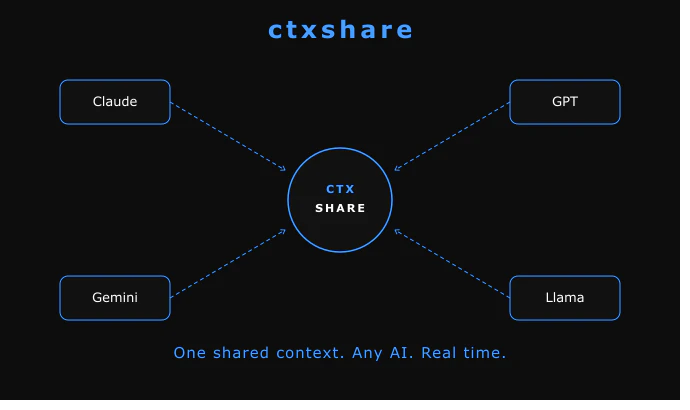
AI agents accumulate stale tool results — file reads, web fetches, bash outputs — in their context window. Every one sits there for the entire conversation, consuming tokens and degrading quality. The standard fix is auto-compaction: wait until full, then drop content indiscriminately. Context Surgeon gives the agent three operations — evict, replace, and restore — so it can manage its own context. It works as a transparent local proxy that intercepts API requests, assigns IDs to content blocks, and applies eviction directives before forwarding. The agent calls the tools via bash. The proxy…
Apr 2026 · github.com · its alternatives →
- 19
 ctx▲4
ctx▲4Keep your AI coding sessions alive.Never lose context again.
Jun 2026 · github.com · its alternatives →
- 20

Most devs using AI coding tools don't even imagine how much information they put in the context window - tools, MCPs, tool responses, active skills - all of which take up some real estate. Sometimes updating a tool description or trimming api response can give significant savings - and profiler helps to measure that
Jun 2026 · github.com · its alternatives →
- 21

Calculate LLM tokens & costs before you send
Jan 2026 · context-budget-planner-qyosh00ed-thibauds-projects-31e2cfb7.vercel.app · its alternatives →
- 22
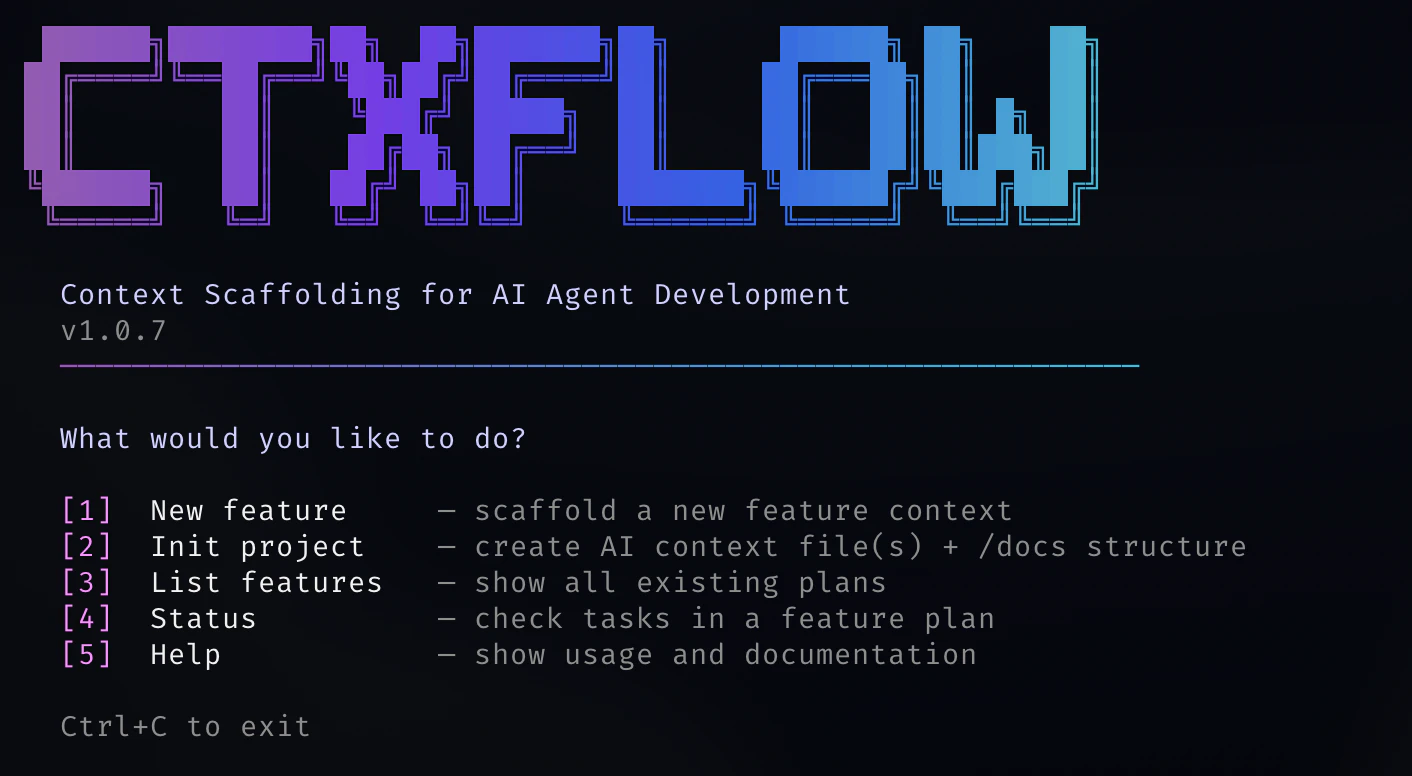 ctxflow▲1
a CLI to scaffold context files for AI coding agents
Jun 2026 · npmjs.com · its alternatives →
- 23OS
Hello HN, I’ve been building AI agents lately and ran into a common "Context Bloat" problem. When an agent has 20+ skills, stuffing every system prompt, reference doc, and tool definition into a single request quickly hits token limits and degrades model performance (the "lost in the middle" problem). To solve this, I built OpenSkills, an open-source SDK that implements a Progressive Disclosure Architecture for agent skills. The Core Concept: Instead of loading everything upfront, OpenSkills splits a skill into three layers: Layer 1 (Metadata): Light-weight tags and triggers (always loaded…
Jan 2026 · its alternatives →
- 24
 Promposer.AI▲10
Recently I found myself spending too much time testing edge cases when building LLM agents. Re-running the same case over and over again really kills the vibe and takes the fun out of building. As Andrej Karpathy (and others) have said, it should really be called “context engineering” rather than prompt engineering. Writing instructions is the easy part. The hard part is providing the right context and tools while staying within context window limits. And evaluation is the slowest step. That’s the main purpose of Promposer: to handle evaluations for you, so you can focus on improving prompts…
2025 · promposer.ai · its alternatives →
Also compare
Ranked by how close each launch is in meaning, then by votes. Prices were read from each product’s own site when checked and can change. Refine with your own description →