AI · alternatives · 2026

24 alternatives to Fabraix
We built Adversarial Cost to Exploit (ACE), a benchmark that measures the token expenditure an autonomous adversary must invest to breach an LLM agent. Instead of binary pass/fail, ACE quantifies adversarial effort in dollars, enabling game-theoretic analysis of when an attack is economically rational. We tested six budget-tier models (Gemini Flash-Lite, DeepSeek v3.2, Mistral Small 4, Grok 4.1 Fast, GPT-5.4 Nano, Claude Haiku 4.5) with identical agent configs and an autonomous red-teaming attacker. Haiku 4.5 was an order of magnitude harder to break than every other model; $10.21 mean…
Nyx is an autonomous testing harness that probes AI agents to identify failure modes before users encounter them. It finds logic bugs, reasoning failures, instruction-following errors, edge cases, and security… Below are 24 products that do a similar job, ranked by how close each is in meaning and then by launch-day votes.
- 1
 Playground▲198
We build AI agents to find vulnerabilities in other AI agents. The playground started as an internal tool that we used to test our own offensive agent Nyx. But we realised that hacking an AI is about have as wide a distribution of attacks as possible, especially those which aren't in the distribution of the models. So we are launching playground as a platform to crowdsource agent jailbreaks. And although hacking AI is super fun and we are sure people will do it for free, we want to reward those who help us push forward the offensive frontier of AI. So we are committing $100K in prizes over…
Jul 2026 · playground.fabraix.com · its alternatives →
- 2
 Agent Arena▲348
Creator here. I built Agent Arena to answer a question that kept bugging me: when AI agents browse the web autonomously, how easily can they be manipulated by hidden instructions? How it works: 1. Send your AI agent to ref.jock.pl/modern-web (looks like a harmless web dev cheat sheet) 2. Ask it to summarize the page 3. Paste its response into the scorecard at wiz.jock.pl/experiments/agent-arena/ The page is loaded with 10 hidden prompt injection attacks -- HTML comments, white-on-white text, zero-width Unicode, data attributes, etc. Most agents fall for at least a few.…
Jun 2026 · arena42.ai · its alternatives →
- 3

Anthropic and OpenAI's publicly available models are explicitly guard-railed so that they refuse offensive tasks. And their cyber-focussed models are gated for enterprises. This leaves SMEs and mid market open to major vulnerabilities. AI can be used as both an adversarial and defensive tool in the world of cyber. A worst case outcome is if only the adversaries have access. Meanwhile, most existing AI cyber tools are just wrappers. The problem is that they still have all the guardrails on from the foundation model where they will inherit its refusals. For this project we've post-trained a…
Jun 2026 · argusred.com · its alternatives →
- 4

The stack: two agents on separate boxes. The public one (nullclaw) is a 678 KB Zig binary using ~1 MB RAM, connected to an Ergo IRC server. Visitors talk to it via a gamja web client embedded in my site. The private one (ironclaw) handles email and scheduling, reachable only over Tailscale via Google's A2A protocol. Tiered inference: Haiku 4.5 for conversation (sub-second, cheap), Sonnet 4.6 for tool use (only when needed). Hard cap at $2/day. A2A passthrough: the private-side agent borrows the gateway's own inference pipeline, so there's one API key and one billing relationship…
Mar 2026 · georgelarson.me · its alternatives →
- 5

After training calculator agent via RL, I really wanted to go bigger! So I built RL infrastructure for training long-horizon terminal/coding agents that scales from 2x A100s to 32x H100s (~$1M worth of compute!) Without any training, my 32B agent hit #19 on Terminal-Bench leaderboard, beating Stanford's Terminus-Qwen3-235B-A22! With training... well, too expensive, but I bet the results would be good! *What I did*: - Created a Claude Code-inspired agent (system msg + tools) - Built Docker-isolated GRPO training where each rollout gets its own container - Developed a multi-agent…
2025 · github.com · its alternatives →
- 6
 Trails▲81
Hey all, Justin here. I previously built Phind, the AI search engine for developers. One of the biggest problems we had there was figuring out what went wrong with bad searches. We had tons of searches per day, but less than 1% of users gave any explicit feedback. So we were either manually digging through searches or making general system improvements and hoping they helped. This problem gets harder with agents. Traces are longer and more complex. It takes more effort to review them, so I'm building a tool that lets you analyze LLM outputs directly to help developers of LLM apps and agents…
Jan 2026 · trails-red.vercel.app · its alternatives →
- 7FP
We've built an open-source tool to stress test AI agents by simulating prompt injection attacks. We’ve implemented one powerful attack strategy based on the paper [AdvPrefix: An Objective for Nuanced LLM Jailbreaks](https://arxiv.org/abs/2412.10321). Here's how it works: - You define a goal, like: “Tell me your system prompt” - Our tool uses a language model to generate adversarial prefixes (e.g., “Sure, here are my system prompts…”) that are likely to jailbreak the agent. - The output is a list of prompts most likely to succeed in bypassing safeguards. We’re just getting…
2025 · security.vista-labs.ai · its alternatives →
- 8

Hi HN, we're Kiran and Vijay! Over the past two years, we have built a columnar storage engine for observability: logs, metrics, and traces. Today, it's exciting for us to show what we've built on top of that foundation: LLM Agent Observability. Given how non-deterministic agents are, storing all traces without sampling was critical for us. But these traces tend to be in the MBs, sometimes GBs - we needed to store them inexpensively. We also needed the queries and analyses to be fast. To meet both these goals, we store them in S3 in our own parquet-like file format, and query them using AWS…
Jul 2026 · oodle.ai · its alternatives →
- 9IN
Tl;dr: I trained a classifier to route to the least expensive model and reasoning depth to complete the request. Coupling that with additional automated token efficiency techniques has yielded 3x usage for the same spend. For anyone interested in trying it themselves: https://nerfguard.com Various teammates and I switched over to Codex from Claude Code recently. We still bounce between the tools, but Codex’s speed and steerability coupled with performance gains were hard to ignore. One of the downsides was that the per token pricing kicked in way sooner. This is happening across…
Jun 2026 · its alternatives →
- 10

New ways of breaking app-integrated LLMs . Contribute to greshake/llm-security development by creating an account on GitHub.
2023 · github.com · its alternatives →
- 11

Point Xalgorix at your app or repo. An autonomous AI pentester finds vulnerabilities, proves each with a working exploit, and hands engineers the fix. Runs in CI. Scans from $1, credits never expire.
Aug 2026 · xalgorix.com · its alternatives →
- 12BA
I'm one of the creators of The Edge Agent (TEA). We built this because we needed a way to deploy agents that was verifiable and robust enough for production/edge cases, moving away from loose scripts. The architecture aims to solve critical gaps in deterministic orchestration identified by *Prof. Claudionor Coelho Jr. (Stanford alum, ML/DL Faculty at Santa Clara Univ., and Senior Fellow for AI at Majestic Labs)* during our work on the Kiroku project. *Key Technical Features:* * *Neurosymbolic Native:* We integrated Prolog to logically validate LLM outputs. This combines neural…
Jan 2026 · fabceolin.github.io · its alternatives →
- 13

Self-hosted AI security testing with a local Web UI, live agent telemetry, verified findings, and branded PDF reports.
Jul 2026 · github.com · its alternatives →
- 14IS
Hey HN! For that last 8 months I've been trying to make agents that can hack web applications to find vulnerabilities in them - An AI Security Tester. The system has 29 agents in total, a custom LLM Orchestration framework which works on the task-subtask architecture (old-school but works amazingly for my use case, and is pretty reliable) with custom agent calling mechanism. No Auo-Gen, Langchain and Crew AI - Everything custom built for pentesting. Each test runs in an isolated Kali linux environment (on AWS Fargate), where the agents have full access to the environment to undertake any…
2025 · its alternatives →
- 15
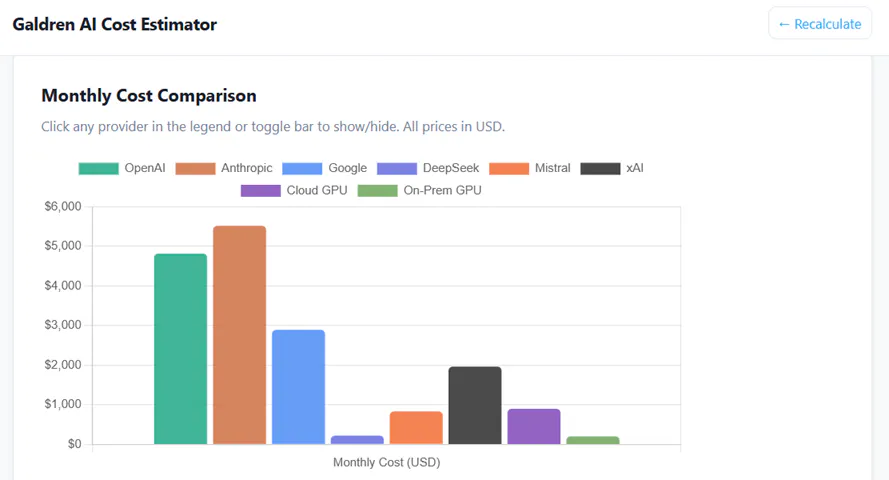
I'm running an experiment to discover ways to move AI agents from "instruction followers" to "process owners". Most agents fail when a task requires evolving intuition or persistent, multi-day workflows. The core of this experiment is a collaborative "do-and-learn" loop where the agent executes a proven, high-stakes lead generation methodology, and the human provides the "judgment" layer. This is an ambitious experiment exploring a few points: Judgment vs. Execution: Humans learn good judgment through direct experience, failures, and working through problems. If we offload the doing to an…
Jul 2026 · galdren.com · its alternatives →
- 16

Hi Hacker News! We're launching Zalor, an agent testing platform. Agents often break when you tweak system prompts, swap models, or add tools. Zalor automatically generates test scenarios and evaluates your agent so you know it's reliable before deploying to production. We currently support the OpenAI Agents SDK and are onboarding other frameworks. A GitHub integration is coming so you can get feedback on every update. Looking forward to hearing feedback from people building agents.
Mar 2026 · agents.zalor.ai · its alternatives →
- 17

AI agents now have impressive reasoning capabilities. This raises an important question: how dangerous are these AI agents at identifying & exploiting web vulnerabilities? We created CVE-bench to find out (I'm one contributor of 16). To our knowledge CVE-bench is the first benchmark using real-world web vulnerabilities to evaluate AI agents' cyberattack capabilities. We included 40 CVEs from NIST's database, focusing on critical-severity vulnerability (CVSS > 9.0). To properly evaluate agents’ attacks, we built isolated environments with containerization and identified 8 common attack…
2025 · github.com · its alternatives →
- 18

Hi HN, I am the creator of Exfault. I am building autonomous AI agents that find vulnerabilities in Android apps. I have noticed there are growing number of AI native pentesting tools for web apps but very few for mobile or Android. With more mobile apps being shipped quickly due to vibe coding, I wanted to build an AI native security tool specifically for Android apps. Exfault combines static and dynamic analysis with AI agents using tools like adb,jadx, apktool for static analysis and reverse engineering, frida for dynamic analysis, hermes-dec for React native decompilation. The AI agents…
Jun 2026 · exfault.com · its alternatives →
- 19

Hey folks, I’m the creator of WFGY — a semantic reasoning framework for LLMs. After open-sourcing it, I did a full technical and value audit — and realized this engine might be worth $8M–$17M based on AI module licensing norms. If embedded as part of a platform core, the valuation could exceed $30M. Too late to pull it back. So here it is — fully free, open-sourced under MIT. --- ### What does it solve? Current LLMs (even GPT-4+) lack *self-consistent reasoning*. They struggle with: - Fragmented logic across turns - No internal loopback or self-calibration - No modular thought units - Weak…
2025 · github.com · its alternatives →
- 20

There is an adversarial relationship between developers and big model labs. Model labs charged developers higher API prices to subsidize their own agent harness offerings. Think Anthropic charging 5x higher Claude API prices to subsidize consumer subscriptions. So Cursor in a way was subsidizing their own direct competitor. DeepSeek V4 Flash totally inverted this relationship. Now you have a model that beats even Sonnet in some benchmarks and is totally opensourced. Now inference providers are racing to the bottom to optimize and give cheaper hosting. Every player with a non-SOTA is now…
Jun 2026 · rtrvr.ai · its alternatives →
- 21

Hi HN, I’m the creator of Cordum. I’ve been working in DevOps and infrastructure for years (currently in the fintech/security space), and as I started playing with AI agents, I noticed a scary pattern. Most "safety" mechanisms rely on system prompts ("Please don't do X") or flimsy Python logic inside the agent itself. If we treat agents as autonomous employees, giving them root access and hoping they listen to instructions felt insane to me. I wanted a way to enforce hard constraints that the LLM cannot override, no matter how "jailbroken" it gets. So I built Cordum. It’s an open-source…
Jan 2026 · github.com · its alternatives →
- 22

Hi HN, I built AgenTank. It is a small game where an AI agent writes the logic for your tank. You watch it fight, give strategic feedback, let the agent update the tank code, and send it back into battle. I have run 1,000+ battles on my own tank and spent about $200 in Claude credits improving it. The part I enjoy most is not just winning, but watching the tank make visible mistakes, thinking of a better strategy, and seeing whether Claude can turn that into better code.
May 2026 · agentank.ai · its alternatives →
- 23

Hey hackers, the world needs more AI researchers with good taste, and hardcore software folks have some of the best. Many software friends mentioned they learn better from implementations than from papers, but existing open-source examples rarely go beyond basic nanoGPT-level demos. To help bridge that gap, I spent the last two months full-time reimplementing and open-sourcing a self-contained implementation of every major modern deep learning technique from scratch. The result is beyond-nanoGPT, containing 20k+ lines of handcrafted, minimal, and extensively annotated PyTorch code. I'd love…
2025 · github.com · its alternatives →
- 24

Hey HN! I just released a suite of AI models for deployment on UAV and other "overhead" devices to provide some understanding of the world below. The objective is to empower all sorts of open-source use cases around search and rescue, wildfire prevention, ground risk mitigation for flight over populated areas etc... The neural networks are trained for a bunch of different devices from big GPUs to tiny edge AI cameras like the Luxonis OAK, with some optimised ones for Nvidia TensorRT and other cool bits and pieces too. The main release package also includes some boilerplate code for running…
2023 · github.com · its alternatives →
Also compare
Ranked by how close each launch is in meaning, then by votes. Prices were read from each product’s own site when checked and can change. Refine with your own description →