Alternatives
Products that do what Hedgemony does
Find the exact line where your AI started making things up
- 1

- 2

- 3

- 4

- 5

- 6

- 7

- 8

- 9

- 10

- 11

- 12CT
I come from a machine learning background - PyTorch code, leaving a training job running overnight, and Jupyter Notebooks. I hadn't touched much frontend before diving deep into start-ups. It was similar for my co-founder Nick, who spent time working on semiconductors. I started building, and noticing patterns in AI outputs. Enough to be able to understand how a hook works, how to manage state and why Typescript is great. But whenever it came to optimising a piece of code, debugging state issues or designing a codebase from scratch, my mind went blank. I went to ChatGPT Study Mode to seek…
Apr 2026 · chestnut.so
- 13

- 14
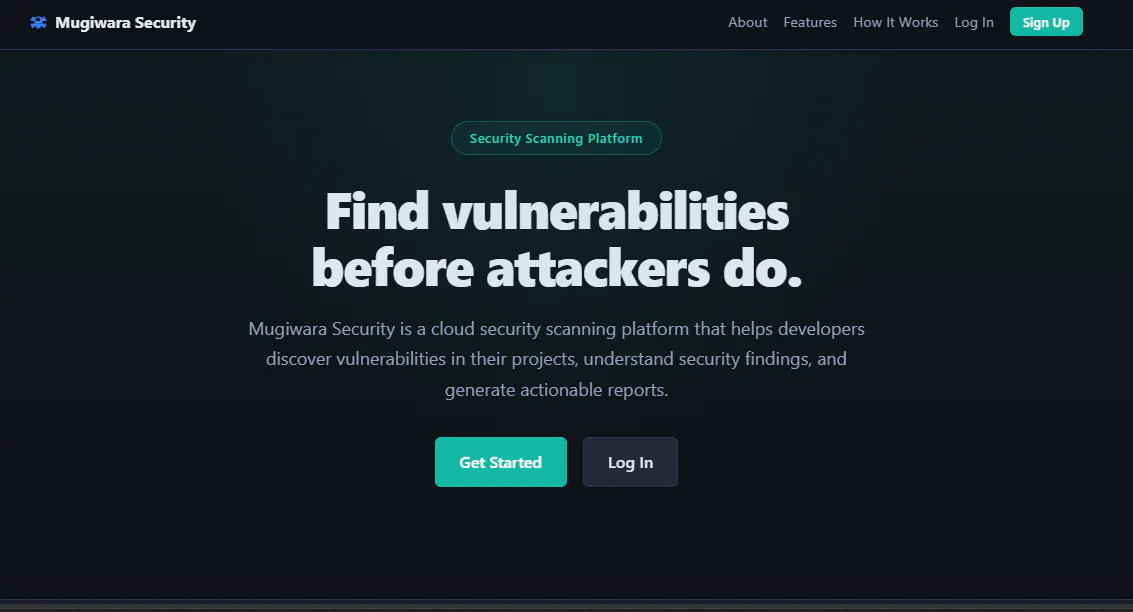
Proves vulnerabilities before reporting them.
8d ago · dashboard-seven-self-13.vercel.app
- 15FB
Hi HackerNews, It’s Etienne CTO of dev-tools.ai. We are launching our product today and wanted to share because we think it might help folks here. Do you ever have broken selectors in your UI tests? Are you tired of maintaining them? We have thought about this issue and come up with a solution. We have created a Python SDK for Selenium that allows you to visually identify elements (using machine learning under the hood). Since our technology uses the visual appearance of elements and ML, it is more resilient than XPaths or pixel perfect match and should help you get rid of broken selectors.…
2022 · dev-tools.ai
- 16TT
Hey HN, this is deepan from trulytyped (https://trulytyped.com). I am building a document writing app which makes it extremely easy to figure out how a document was created. Now that any text can be AI generated, how do you tell if something was actually generated or composed. It is impossible to detect AI after a piece of text has been generated. No amount of watermarking, linguistic checks or vibe checks work consistently. The AI detectors that schools and journals use are easy to bypass. Why do we need to solve this problem - First of all, this is not an anti-AI stance. I have…
May 2026 · trulytyped.com
- 17AA
Hey HN! I really like local apps for their simplicity and privacy and hate paying Saas bills and I wanted a way to start automating my life with AI so I started building Anything. Anything is built on Tauri so the front end is React and the "backend" is Rust. It's 100% local & 100% doesn't ask you to spin up docker to use. Another core goal of the app is to get away from "package bloat" you see in other general purpose AI oss projects where they have a package.json that is 300 lines long ( more on that later. ) Oh btw I suck at Rust! I learned Rust while building this so the code is _not…
2024 · github.com
- 18

- 19CA
I built this because I was tired of creating pull requests in 20 repositories just to change a single line of workflow job version. With Infra as AI, just mention the change. Agents work on all repos in parallel, read the docs, make a bunch of PRs and fill in the description. You can see the demo of the actual dashboard in the landing. Let me know your thoughts :) It means a lot to me!
Sep 2025 · infrastructureas.ai
- 20AD
While reading Agentic Design Patterns by Antonio Gulli, I wanted to see how these patterns look in real code. I cloned the OpenAI Codex repo (the open-source AI coding assistant that recently trended on HN) — but it was in Rust. So, I used an Cursor to help me extract and translate 18+ agentic patterns from Codex’s codebase into Python. That small experiment turned into a full open-source guide: GitHub: Codex Agentic Patterns https://github.com/artvandelay/codex-agentic-patterns Each pattern comes with: A short explanation and code sample A runnable exercise and agent…
Oct 2025 · artvandelay.github.io
- 21IC
Hey HN, I built ShadowGit a while back to automatically commit code every minute to a hidden git repo (.shadowgit.git). Original goal was to easily rollback when AI tools break things. But I discovered something interesting: this minute-by-minute history is perfect context for AI assistants. So I built an MCP server that lets Claude/Cursor query this history using native git commands. The results surprised me: Before: Claude would read my entire codebase repeatedly, burning 15,000+ tokens to debug issues. After: Claude runs `git log --grep="drag"` finds when drag-and-drop worked,…
2025 · shadowgit.com
- 22

- 23BL
I once managed a small team and hired an intern to develop the backend services for a software system. He used AI tools to write the entire project; while it ran correctly and produced the right results, the directory structure was atrocious upon review. Typically, a FastAPI service is organized into components like routers and services, but he had created an unnecessarily deep, multi-layered structure within the service layer—logic that should have simply been split across two or three files. The code lacked elegance. Recalling concepts from books on software project management, code…
Jun 2026 · github.com
- 24RC
The magic in AI coding assistants isn't the code -- it's the prompts. I studied the externally observable behavior of Claude Code and recreated it from scratch in Python with the exact same behaviors. It works with any model -- OpenAI, Gemini, Claude. What's surprising: 1. You can keep the core agent really simple, just 280 lines of Python. As long as it supports hooks, custom sub-agents and Model Context Protocol (MCP), then all the rest of the coding-assistant-specific behavior and tools can be factored out into a separate MCP server. 2. The magic is in the prompts (1200 lines of…
2025 · github.com
Ranked by how close each launch is in meaning, then by votes. Refine with a description →