AI · alternatives · 2026

24 alternatives to ProveDone
Prove your agent actually did the work
Below are 24 products that do a similar job, ranked by how close each is in meaning and then by launch-day votes. Prices are shown for the 1 we have checked on their own sites, 1 of them free or with a free tier.
- 1
 Replicas▲239
Hey HN! I'm Connor, creator of Replicas. I'm a heavy Codex/Claude Code user, and I wanted to hand off tasks to agents like I would to an engineer - kick something off before work, let it scaffold while I'm at lunch, even come back to a ready PR. The problem: existing alternatives use workspace VMs that are black boxes. I have no access to any of them - they can't run tests, read logs, or use tools like the Playwright MCP (which I use to verify agents actually fixed what they claim to fix). Replicas gives agents real cloud workspaces where they can: - Run your test suite and read the…
Jun 2026 · replicas.dev · its alternatives →
- 2
 FetchSandboxfree tier, from $5/mo▲348
API integration testing that remembers what breaks
Jul 2026 · fetchsandbox.com · its alternatives →
- 3
 Tracea▲80
Datadog for AI agents with traces, RCA, and team memory
May 2026 · tracea.dev · its alternatives →
- 4
 Mockphine▲87
Mock blocked APIs, passthrough ready routes, see live source
Mar 2026 · mockphine.com · its alternatives →
- 5

Hi HN! We’re the team behind Fiddler, and we recently built an Agent Cache feature. It works by capturing an LLM request/response pair and, once caching is enabled, serving subsequent matching calls locally so duplicate requests never hit the provider. It’s meant to reduce three pains that show up together in agent development: token cost, feedback-loop latency, and output non-determinism. We’d love to hear your thoughts.
Aug 2026 · telerik.com · its alternatives →
- 6

- 7
 TestRelic AI▲84
Ask your Playwright tests why they failed
Apr 2026 · testrelic.ai · its alternatives →
- 8

We now write most of our code with agents. For a while, PRs piled up, causing review fatigue, and we had this sinking feeling that standards were slipping. Consistency is tough at this volume. I’m sharing the solution we found, which has become our main product. Continue (https://docs.continue.dev) runs AI checks on every PR. Each check is a source-controlled markdown file in `.continue/checks/` that shows up as a GitHub status check. They run as full agents, not just reading the diff, but able to read/write files, run bash commands, and use a browser. If it finds…
Feb 2026 · docs.continue.dev · its alternatives →
- 9
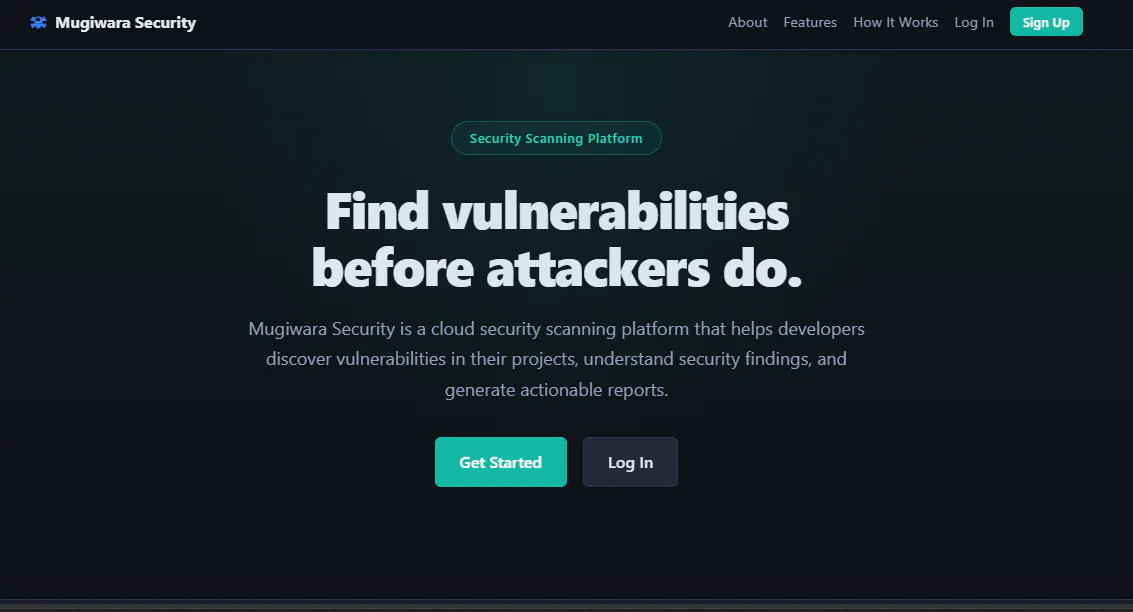
Proves vulnerabilities before reporting them.
Aug 2026 · dashboard-seven-self-13.vercel.app · its alternatives →
- 10

A cross-language, zero-copy coroutine observability framework based on the cTP shared-memory protocol, utilizing lock-free ring buffers for ultra-low overhead state tracing. - lixiasky-back/coroTracer
Mar 2026 · github.com · its alternatives →
- 11
 SBIX Certify▲13
✨ Instant legal proof-of-existence for any document.
Dec 2025 · certify.sbix.io · its alternatives →
- 12

Before Proof of Work, study Proof of Failure.
Jan 2026 · proofoffailure.works · its alternatives →
- 13
 Kaval▲19
Verify what your AI agent believes before it takes action
Jul 2026 · usekaval.com · its alternatives →
- 14

ZK-powered vault for anonymous payouts and state snapshots.
Jan 2026 · its alternatives →
- 15
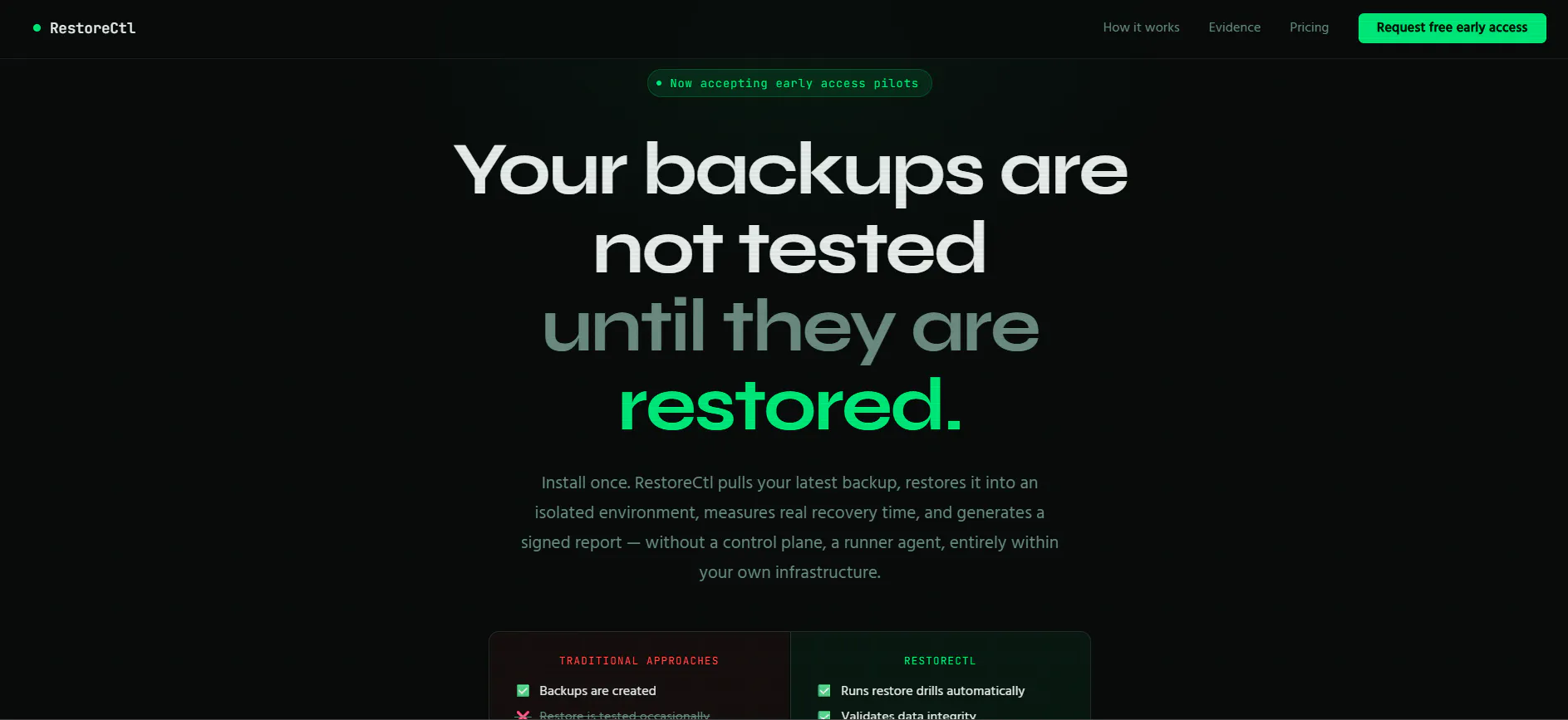
Prove your PostgreSQL backups will actually work
Jul 2026 · restorectl.com · its alternatives →
- 16
 Antifailure▲11
A disposable copy of your production stack for every pull request: masked Postgres, contained third-party APIs, and agents that use your app like people.
Sep 2026 · antifailure.dev · its alternatives →
- 17

Agent runs often fail after expensive model calls and executing tools that have real-world side effects. This problem is made even worse by how common it is to deploy agents to serverless environments. When your agent dies, it needs to be restarted, but doing so safely isn't easy and everyone building agents has to solve this same problem of durability. The stack you're running probably already has half of what you need for durable execution already though, ie, a queue or job runner that can invoke work at least once. kassette gives you the other half by journaling completed steps to object…
Jul 2026 · github.com · its alternatives →
- 18

Block bad npm and pip packages. Before they download.
May 2026 · veln.sh · its alternatives →
- 19

One run: bug found, ticket written, fix prompt ready
Aug 2026 · optics-qa.com · its alternatives →
- 20
 Carto▲3
The problem : AI agents fail systematically above 10k LOC. The failure mode are same wrong file, partial completion, tool thrashing, context overflow. Carto fixes this by giving AI agents what they are missing - Domain Map (automatic, no config), blast radius before any change, cross domain violation detection, Agents md for instant codebase context, 16+ mcp tools etc. AI knowing what could break before it start editing code. Feels like most tools are focus on generating code faster. Maybe the next step is helping AI understand systems better. MIT licensed , Runs entirely local , No data…
May 2026 · github.com · its alternatives →
- 21
 Tracely▲9
Production failures become regression tests for AI agents
Aug 2026 · tracely-ai.com · its alternatives →
- 22

Hi HN, Over the past two years I’ve built and debugged a fair number of production pipelines—mainly retrieval‑augmented generation stacks, agent frameworks, and multi‑step reasoning services. A pattern emerged: most incidents weren’t outright crashes, but silent structural faults that slowly compromised relevance, accuracy, or stability. I began logging every recurring fault in a shared notebook. Colleagues started using the list for post‑mortems, so I turned it into a small public reference: 16 distinct failure modes (semantic drift after chunking, embedding/meaning mismatches,…
2025 · github.com · its alternatives →
- 23

AI Agents: Stop guessing why they fail. Rewind memory.
Jan 2026 · blickstate.com · its alternatives →
- 24ME
We are building a VM that helps you simulate realistic production conditions, model latencies, different interleaving, user requests, and find bugs. Every non-deterministic property is turned into a knob you or a coding agent can control. We have helped teams perfectly reproduce support incidents and found bugs in some of the world's most well tested software (including a database).
Jun 2026 · workers.io · its alternatives →
Also compare
Ranked by how close each launch is in meaning, then by votes. Prices were read from each product’s own site when checked and can change. Refine with your own description →