Alternatives
Products that do what STABLE AI does
Detect when AI goes wrong
- 1

Trace, evaluate, and improve AI agents in production
Aug 2026 · telerik.com
- 2

- 3

- 4
- 5

- 6

- 7

- 8
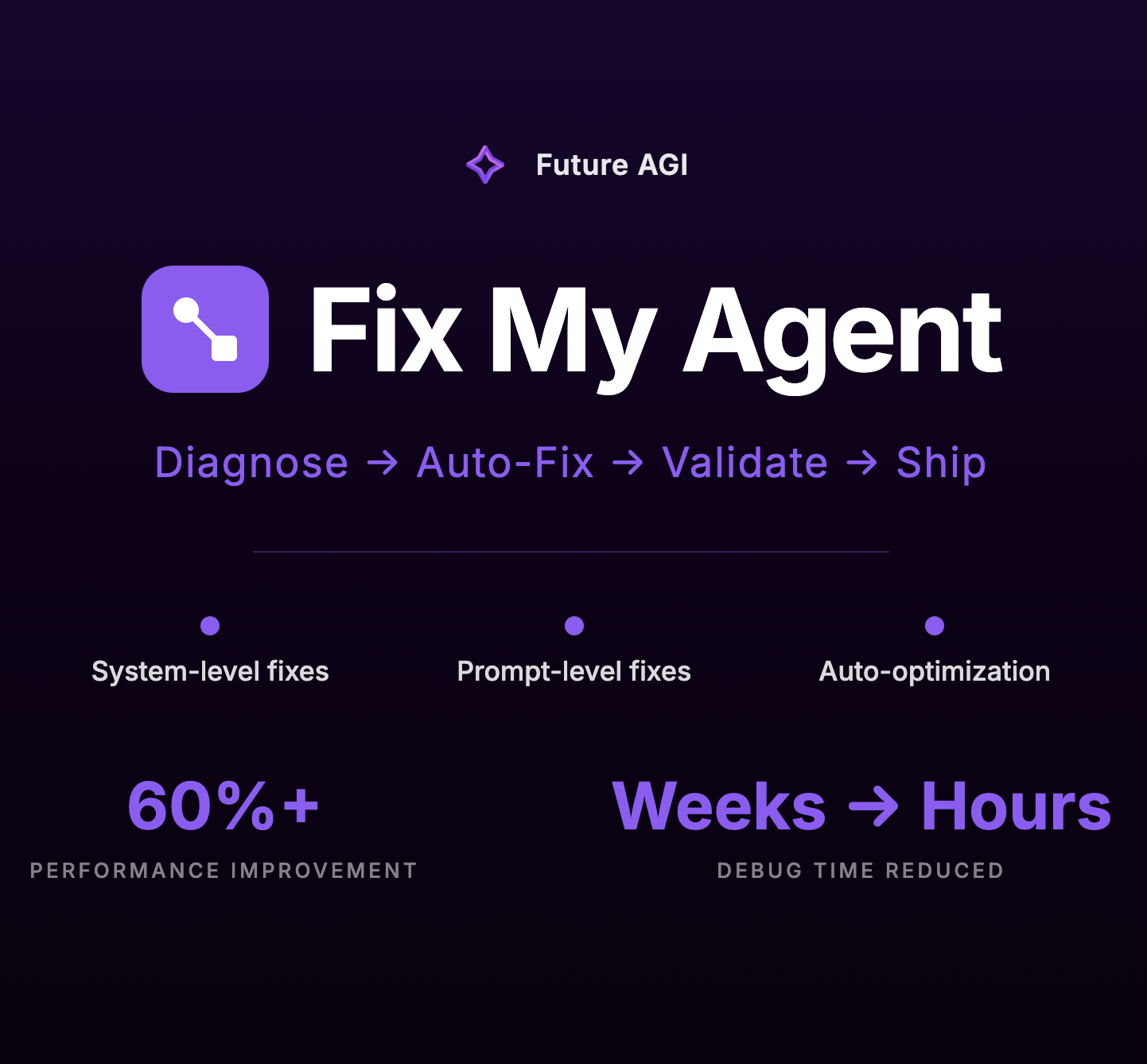
See what breaks your AI agent and fix it automatically
Jan 2026 · docs.futureagi.com
- 9

- 10

- 11
- 12

- 13

- 14

- 15BB
Jun 2026 · resources.kusho.ai
- 16

- 17

- 18
- 19SF
Hi HN, Over the past two years I’ve built and debugged a fair number of production pipelines—mainly retrieval‑augmented generation stacks, agent frameworks, and multi‑step reasoning services. A pattern emerged: most incidents weren’t outright crashes, but silent structural faults that slowly compromised relevance, accuracy, or stability. I began logging every recurring fault in a shared notebook. Colleagues started using the list for post‑mortems, so I turned it into a small public reference: 16 distinct failure modes (semantic drift after chunking, embedding/meaning mismatches,…
2025 · github.com
- 20

AI bug detection and security for developers
Jul 2026 · code-healing-ai-plat-fz8j.bolt.host
- 217D
hi all. i’ve been shipping a small open project that tries to answer that question with evidence, not vibes. in 70 days it reached \~800 stars. the core claim is simple: many AI failures are not noise. they repeat because the geometry and ordering underneath are stable. if so, we should be able to name each failure mode, set acceptance targets, and stop shipping the same bug twice. ### what it is * a compact Problem Map of 16 reproducible failure modes in RAG and agents. * each item has a minimal fix and measurable gates. examples: * Semantic ≠ Embedding: metric and normalization mismatch.…
2025 · github.com
- 22

- 23

- 24

Ranked by how close each launch is in meaning, then by votes. Refine with a description →