
Context Plugins – API context for AI coding assistants
Hi, we're Sohaib and Hannan from APIMatic. We built Context Plugins: given an OpenAPI spec, we generate SDKs and an MCP server that exposes structured API context to AI coding assistants. This gives tools like Cursor access to comprehensive, up-to-date API context (including SDK documentation and API integration patterns), instead of relying on outdated training data or code scraped from GitHub. We've just launched a pilot with PayPal, it's live on the PayPal Developer Portal https://developer.paypal.com/serversdk/java/getting-started/.... In our benchmarks for…
Context Plugins – API context for AI coding assistants launched on March 26, 2026 with 8 votes, #1,340 of 23,380 launches that month and more than 75% of that year's launches.
What it does
API integration typically demands significant development overhead : context switching, SDK exploration, and boilerplate that has nothing to do with what your developers are actually building. AI coding agents make this faster but introduce a new problem: they guess. They approximate your SDK from stale training data and sanitised web results, producing code that compiles but fails in production. Context Plugins fix this at the source. One click installs authoritative, version-aligned API context directly into the developer's IDE, so the agent stops guessing and starts integrating correctly. Every app below was built with a single prompt. Pick an API and try it yourself in your IDE.…from apimatic.io
In the maker’s words, at launch
Hi, we're Sohaib and Hannan from APIMatic. We built Context Plugins: given an OpenAPI spec, we generate SDKs and an MCP server that exposes structured API context to AI coding assistants. This gives tools like Cursor access to comprehensive, up-to-date API context (including SDK documentation and API integration…
Does a similar job
all alternatives → Context.devJul 2026 · context.dev · ▲814
Hello, My name is Yahia, I've been working on scraping products for a long time and maintain a couple of free sites in my spare time (E.g. knifegeek.io) What prompted this is i've rebuilt scraping infra at every company I've started and finally just made it a product. Pass a URL, get clean markdown, html, images, sitemap or pass a domain, get logos, colors, socials, industry data. Goal is to offer a better service than VC funded competitors at a fraction of the cost. Stealth is included and automatic at no additional cost (normally an upcharge by alternatives). Would love your honest thoughts.
 Context GatewayMar 2026 · github.com · ▲220
We built an open-source proxy that sits between coding agents (Claude Code, OpenClaw, etc.) and the LLM, compressing tool outputs before they enter the context window. Demo: https://www.youtube.com/watch?v=-vFZ6MPrwjw#t=9s. Motivation: Agents are terrible at managing context. A single file read or grep can dump thousands of tokens into the window, most of it noise. This isn't just expensive — it actively degrades quality. Long-context benchmarks consistently show steep accuracy drops as context grows (OpenAI's GPT-5.4 eval goes from 97.2% at 32k to 36.6% at 1M…
- IBI built a more productive way to manage AI chats2025 · contextch.at · ▲162
I released ContextChat, an AI chat designed to be context-centric, helping you stay focused and productive by giving you control over the information your AI sees. You can import websites, files, and public/private GitHub repos to give the AI full knowledge of your projects. Unlike other chatbots, ContextChat lets you easily switch between project contexts, so you get relevant answers and avoid the noise. It's pay-per-use, giving you flexibility and control over costs and free models are available so you can try it for free with no monthly subscriptions. Let me know your feedback!
 A Context Registry for AI coding agentsSep 2026 · context.apimatic.io · ▲9
A directory of Context Plugins, one per API. Each one grounds your coding agent in the API’s real specification, so what it writes is ready for production.
- MGMCP Generator for Your API2025 · mcp.liblab.com · ▲17
Hey HN, Sagiv from liblab is here. We've been deep in the world of API tooling for years at liblab, primarily focusing on generating SDKs and documentation from OpenAPI specs. Recently, we kept running into a recurring frustration: connecting AI tools to existing APIs is way more complex than it should be. You start with a simple goal – let an LLM talk to your API – and suddenly you're neck-deep in spinning up infrastructure, wrestling with authentication, and writing a ton of custom glue code just to translate natural language into structured API calls. Then you have to maintain it all. To…
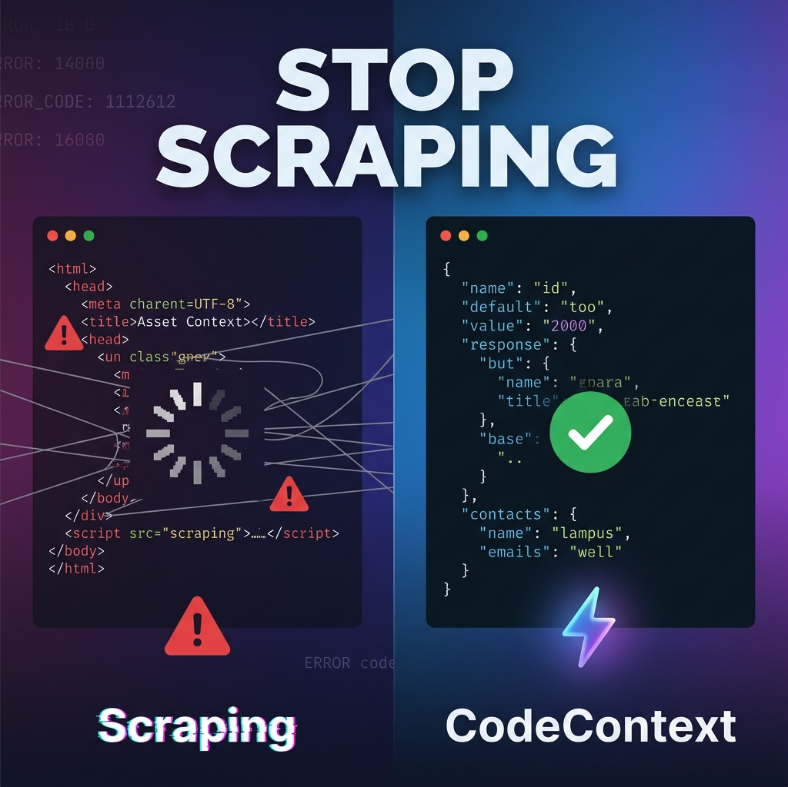 CodeContext APIDec 2025 · codecontext-api-production.up.railway.app · ▲3
The Documentation Layer for AI Agents (RAG in 1 Click)
More ai this month
the category →


Paintings by AI models: programs run through a simulation of oil paint.
AI · 20d ago · stillwet.art

 PixVerse R2▲381
A real-time world model you can explore and change
AI · 28d ago · world.pixverse.video
Source: Show HN post ↗ · launch text quoted in part
Launched alongside, March 2026
the whole month →


Switch from ChatGPT to Claude with import memory feature
AI · Mar 2026 · claude.com
 Littlebird▲709
Littlebird remembers everything across your meetings, messages, docs, and apps, then takes action so you can recall any detail and never lose context.
AI · Mar 2026 · littlebird.ai

