LookTake – Try anyone's makeup, outfit, or hairstyle on your photo
Hi HN, I'm Taemin. I built LookTake, a social platform where users share beauty, fashion, and hair looks, and anyone can "Take" that look onto their own photo using AI. I worked at a game company in Korea doing AI research — graphics, vision, and image generation. I built the in-house image gen service there. While reading generative AI papers, I came across virtual try-on research and had a realization: people will eventually shop by seeing products on themselves, not just browsing photos of models. I started experimenting on weekends. The early results were rough, but promising enough that…
LookTake – Try anyone's makeup, outfit, or hairstyle on your photo launched on February 24, 2026 with 7 votes, #1,385 of 16,627 launches that month and more than 75% of that year's launches.
What it does
In the maker’s words, at launch
Hi HN, I'm Taemin. I built LookTake, a social platform where users share beauty, fashion, and hair looks, and anyone can "Take" that look onto their own photo using AI. I worked at a game company in Korea doing AI research — graphics, vision, and image generation. I built the in-house image gen service there. While…
Does a similar job
all alternatives →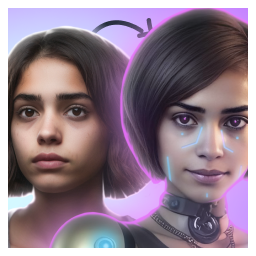
 MyPicNow2025 · mypicnow.com · ▲17
Most LoRA trainings for person specific generation hit quality issues that make results look artificial. The breakthrough came from rethinking how lighting and expressions are handled during training and adjusting generation parameters. Here are some examples: - Corporate photo in office: https://imgur.com/a/kUQtMZr - TedX speaker: https://imgur.com/a/KOC6eCy - Rockstar performer: https://imgur.com/a/B2YaUHj - Sunset portrait: https://imgur.com/a/d4rEANW Using Flux as base model. Has aynone pushed realism to this…
 BestPick - Pick your best photo2025 · bestpick.online · ▲12
Hi HN, I’m Saad and I built BestPick.online. We made this because your profile picture is often your first impression — whether you're on a dating app, LinkedIn, Instagram or building a personal brand. :contentReference[oaicite:1]{index=1} Here’s what it does: - Upload 2-3 photos of yourself. :contentReference[oaicite:2]{index=2} - Choose the goal (dating app, professional, social, etc.). :contentReference[oaicite:3]{index=3} - The AI instantly rates them and shows which one works best for that goal. :contentReference[oaicite:4]{index=4} We believe: - Different platforms need different kinds…
 Try Fashion - AI Photo Editor2025 · play.google.com · ▲9
Your Ultimate AI-Powered Photo Editor & Virtual Try-On
 AI HairstyleApp2024 · haircutai.app · ▲12
Hey HN, I always have have found really difficult to see how to style my hair and thanks to LLM's that task is now possible. So I built this free tool where you can upload your selfie (client side, we don't store anything) and we suggest you hairstyle that would suit you according to your face shape and features. Hope you enjoy it! Any feedback is highly appreaciate :)

More ai this month
the category →


Paintings by AI models: programs run through a simulation of oil paint.
AI · 22d ago · stillwet.art

 FastRouter.ai▲364
Route requests to the right LLM for cost, latency & quality
AI · 23d ago · fastrouter.ai
Source: Show HN post ↗ · launch text quoted in part
Launched alongside, February 2026
the whole month →


 Lovon AI Therapy▲801
Feel closer and have more fun with your partner every day!
AI · Feb 2026 · lovon.app

Hello my name is Ben Ward for the past 3 years I have been remastering the financial game Wall Street Raider created by Michael Jenkins originally on DOS in 1986. It has been a rough journey but I finally see the light at the end of the tunnel. I just recently redid the website and thought maybe the full story of how this project came to be would interest you all. Thank you for reading.
Work · Feb 2026 · wallstreetraider.com