AI · alternatives · 2026

24 alternatives to 6DoF Object detection and tracking in web browser – WebAR.rocks.train
6DoF Object Detection and Tracking in JavaScript/WebGL. A neural network is trained in the web browser using a 3D model rendered with ThreeJS. Then, the trained model is used for augmented reality with React Three Fiber. WebAR.rocks.train is released under the MIT License on GitHub.
WebAR.rocks.train enables 6DoF object detection and tracking directly in web browsers using JavaScript and WebGL. Users can train a neural network by rendering 3D models with ThreeJS, then deploy the trained model for… Below are 24 products that do a similar job, ranked by how close each is in meaning and then by launch-day votes.
- 1

End-to-end deep dive of the project, spanning a large GPU cluster, distributed RocksDB, and terabytes of sharded HNSW.
2025 · blog.wilsonl.in · its alternatives →
- 2GA
2016 · erkaman.github.io · its alternatives →
- 3UD
2018 · modeldepot.github.io · its alternatives →
- 4

In browser PPO training demo, made possible by tinygrad: TinyJit -> WebGPU kernels. Requires WebGPU.
May 2026 · ppo.gradexp.xyz · its alternatives →
- 5

Neural network 3D visualization framework, build interactive and intuitive model in browsers, support pre-trained deep learning models from TensorFlow, Keras, TensorFlow.js - GitHub - tensorspace-team/tensorspace: Neural network 3D visualization framework, build interactive and intuitive model in br
2018 · github.com · its alternatives →
- 6AT
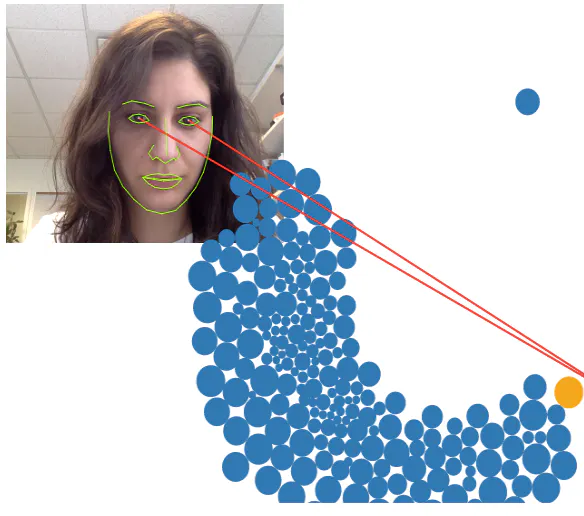
2019 · tehnokv.com · its alternatives →
- 7
- 8

Web Augmented Reality. Image Tracking, Face Tracking. Tensorflow.js - hiukim/mind-ar-js
2021 · github.com · its alternatives →
- 9

Multi-object trackers in Python. Contribute to adipandas/multi-object-tracker development by creating an account on GitHub.
2019 · github.com · its alternatives →
- 10RT
2023 · antimatter15.com · its alternatives →
- 11

This is a GPU "software" raytracer (i.e. using manual ray-scene intersections and not RTX) written using the WebGPU API that renders glTF scenes. It supports many materials, textures, material & normal mapping, and heavily relies on multiple importance sampling to speed up convergence.
2024 · github.com · its alternatives →
- 12

A repository for running Azure Tensorflow JS Pose Estimation - TensorflowJS4Azure/README.md at master · aribornstein/TensorflowJS4Azure
2018 · github.com · its alternatives →
- 13

Hi HN, author here. SHARP is Apple's recent single-image 3D Gaussian splatting model (https://arxiv.org/abs/2512.10685). Their reference code is PyTorch + a pretty heavy pipeline; I wanted to see if it could run in a browser with no server hop, so I exported the predictor to ONNX and ran it via onnxruntime-web with the WebGPU EP. What works: drop in an image, get a .ply you can download or preview live, all on your machine — your image never leaves the tab. The model is large (~2.4 GB sidecar) so first load is slow on a cold cache, but inference itself is a few seconds on…
May 2026 · github.com · its alternatives →
- 14

- 15

A library for object detection and seamless YOLO model integration in Elixir - poeticoding/yolo_elixir
2024 · github.com · its alternatives →
- 16MF
2011 · demoseen.com · its alternatives →
- 17

:cat: Take kemono pictures and lines up 3, then tanoshii - icoxfog417/kemono_puyo
2017 · github.com · its alternatives →
- 18OO
2018 · medium.com · its alternatives →
- 19

Voxel-engine in Javascript. Contribute to Lallassu/voxelengine3 development by creating an account on GitHub.
2017 · github.com · its alternatives →
- 20TD
Hey HN! We're the creators of Sieve API (https://www.sievedata.com) and we recently built this fun site that folks can play around with. Frontend is built with NextJS + Tailwind UI and backend is our API. It uses ffmpeg in the browser to transcode an uploaded video, chop it to 5 seconds, and then send it to our API endpoint which detects and tracks objects in the video. You can then "select" any object and track it over the video. We thought it'd be a fun thing for the community to play around with while also showing the power of video object tracking!
2022 · trackobject.xyz · its alternatives →
- 21

AI4Animation in javascript & three.js. Contribute to sneha-belkhale/AI4Animation-js development by creating an account on GitHub.
2019 · github.com · its alternatives →
- 22
 Annot8▲140
The fastest way to tag images for object detection datasets
2025 · apps.apple.com · its alternatives →
- 23

I’ve been experimenting with Rust lately and wanted a project that would help me explore some of its lower-level and performance-oriented features. Inspired by Sebastian Lague’s videos, I decided to implement my own ray tracer from scratch. The initial goal was just to render a simple 3D scene in the browser at a reasonable frame rate. It evolved into a small renderer that can: • Run locally or on the web using wgpu and WebAssembly • Perform mesh rendering with a Bounding Volume Hierarchy (BVH) for acceleration • Simulate both direct and indirect illumination for photorealistic results • Be…
Nov 2025 · github.com · its alternatives →
- 24

The machine learning API for non-experts
2022 · nyckel.com · its alternatives →
Also compare
- Building a web search engine from scratch with 3B neural embeddings alternatives
- GPU-Accelerated Digit Recognition with WebGL alternatives
- Using deep learning to detect objects from your webcam alternatives
- Watch a neural net learn to play Snake alternatives
- TensorSpace.js – Neural network 3D visualization framework alternatives
- A tiny JS library for real-time localization of eye pupils alternatives
Ranked by how close each launch is in meaning, then by votes. Prices were read from each product’s own site when checked and can change. Refine with your own description →