Dev tools · alternatives · 2026

24 alternatives to Decant – Understand how you spend tokens
Hey HN - there are lots of tools to understand how many tokens you use and how much it costs, but we haven't found any that tell you where those tokens are going! Decant helps you understand what you are spending tokens on (context gathering, planning, code, chat, etc), so you can optimize it.
Decant is a local-first analysis tool that breaks down token spending across Claude Code and Codex sessions, showing developers exactly where tokens go—whether to context gathering, planning, code generation, or chat.… Below are 24 products that do a similar job, ranked by how close each is in meaning and then by launch-day votes.
- 1

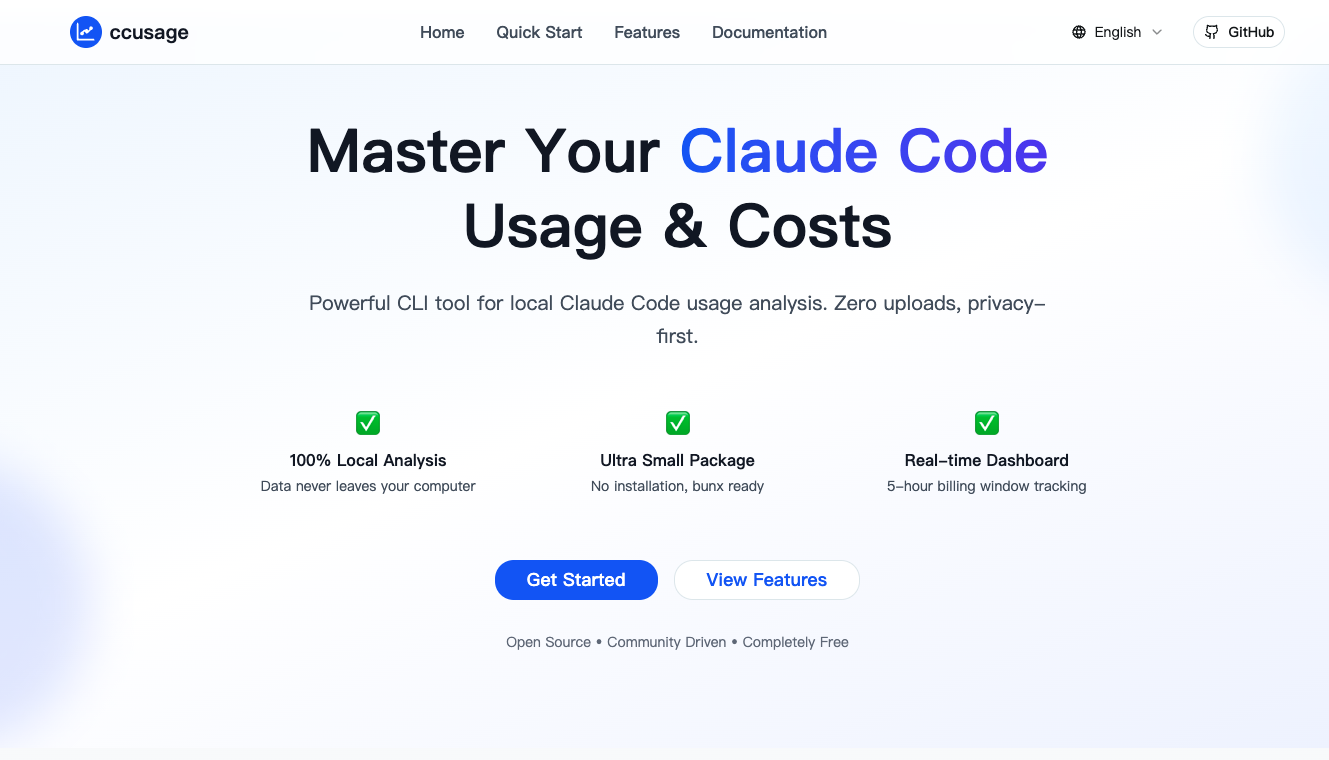
Built this after realizing I was spending ~$1400/week on Claude Code with almost no visibility into what was actually consuming tokens. Tools like ccusage give a cost breakdown per model and per day, but I wanted to understand usage at the task level. CodeBurn reads the JSONL session transcripts that Claude Code stores locally (~/.claude/projects/) and classifies each turn into 13 categories based on tool usage patterns (no LLM calls involved). One surprising result: about 56% of my spend was on conversation turns with no tool usage. Actual coding (edits/writes) was…
Apr 2026 · github.com · its alternatives →
- 2

See exactly how much you spend on Claude, across every tool
Mar 2026 · github.com · its alternatives →
- 3

See what your Claude Code sessions actually cost
Jul 2026 · langwatch.ai · its alternatives →
- 4
- 5

Hey HN! Tokencost is a utility library for estimating LLM costs. There are hundreds of different models now, and they all have their own pricing schemes. It’s difficult to keep up with the pricing changes, and it’s even more difficult to estimate how much your prompts and completions will cost until you see the bill. Tokencost works by counting the number of tokens in prompt and completion messages and multiplying that number by the corresponding model cost. Under the hood, it’s really just a simple cost dictionary and some utility functions for getting the prices right. It also accounts for…
2024 · github.com · its alternatives →
- 6
 Context.dev▲814
Hello, My name is Yahia, I've been working on scraping products for a long time and maintain a couple of free sites in my spare time (E.g. knifegeek.io) What prompted this is i've rebuilt scraping infra at every company I've started and finally just made it a product. Pass a URL, get clean markdown, html, images, sitemap or pass a domain, get logos, colors, socials, industry data. Goal is to offer a better service than VC funded competitors at a fraction of the cost. Stealth is included and automatic at no additional cost (normally an upcharge by alternatives). Would love your honest thoughts.
Jul 2026 · context.dev · its alternatives →
- 7

Ask Claude Code where your usage went. Token audit, limit diagnosis and usage forensics — built from the session logs already on your machine, nothing leaves it. - kelviq/tare
Aug 2026 · github.com · its alternatives →
- 8

See where Claude Code burns tokens. Hit your limits less.
May 2026 · latitude.so · its alternatives →
- 9

I kept slamming into Claude Code limits mid-session and couldn’t find a quick way to see how close I was getting, so I hacked together a tiny local tracker. Streams your prompt + completion usage in real time Predicts whether you’ll hit the cap before the session ends Runs 100 % locally (no auth, no server) Presets for Pro, Max × 5, Max × 20 — tweak a JSON if your plan’s different GitHub: https://github.com/Maciek-roboblog/Claude-Code-Usage-Monitor It’s already spared me a few “why did my run just stop?” moments, but it’s still rough around the edges. Feedback, bug…
2025 · github.com · its alternatives →
- 10

- 11

Track your AI spend and connect it to business outcomes
Aug 2026 · rippling.com · its alternatives →
- 12

- 13

- 14

I wanted to share a project I’ve been working on called Frugal Tokens. I originally built it because I was curious to see how much all of my sessions cost and how much cache misses affected that spend. I’d noticed people had widely different spend profiles and wanted to better understand what might contribute to that. As I’ve worked on this, the tool has grown to show more usage patterns across all of your sessions. It shows overall usage, estimated working time and overlapping sessions, and where your spend is coming from across models and cache misses. I also have a few session level…
Aug 2026 · demo.frugaltokens.com · its alternatives →
- 15
 TokenCounter▲117
Count tokens and estimate costs for any AI model
2024 · tokencounter.co · its alternatives →
- 16
 toktrack▲68
Did you know Claude Code deletes your session data after 30 days? I found out the hard way when I tried to check my spending history. My session files hit 3GB (2000+ files) and existing tools took 40+ seconds. Rewrote it in Rust with simd-json + rayon. - First run: ~1s (vs 40s+) - Daily use: ~0.04s (1000x faster, cached) - TUI dashboard with daily/weekly/monthly breakdown - Supports Claude Code, Codex CLI, Gemini CLI - Persistent cache — history survives even after CLI deletes files GitHub: https://github.com/mag123c/toktrack Feedback welcome!
Feb 2026 · github.com · its alternatives →
- 17

I use multiple AI tools for work and also my side projects, and the annoying part was to track my costs and token usage across tools. Everytime I had to visit each tool and its respective usage setting to check it and I was losing patience and also was getting hit by surprise limits Now I know that there are already free/open-source trackers for Cursor or Claude usage, and they are useful if that is all you need. My problem is broader as I wanted one small place to see tokens, spend, subscriptions and limits across the AI tools I actually use. I was really tired of switching tabs and…
Jul 2026 · lifehacksgermany.com · its alternatives →
- 18

Small codebases were always a good thing. With coding agents, there's now a huge advantage to having a codebase small enough that an agent can hold the full thing in context. Repo Tokens is a GitHub Action that counts your codebase's size in tokens (using tiktoken) and updates a badge in your README. The badge color reflects what percentage of an LLM's context window the codebase fills: green for under 30%, yellow for 50-70%, red for 70%+. Context window size is configurable and defaults to 200k (size of Claude models). It's a composite action. Installs tiktoken, runs ~60 lines of inline…
Feb 2026 · github.com · its alternatives →
- 19

Hi HN! Token cost has started to become a high topic of concern to all of us. I tried a few (awesome) tools such as rtk, caveman, and the recent (hillarious but effective) ponytail. What they usually do, is in-line token reduction, e.g. try to compress requests / responses as much as possible. But then it hit me (and I’m sure others had similar ideas) - just like we have routers that pick the right model, why not have something that will also narrow down the amount of available tools, skills and mcps based on repo/context? People usually accumulate skills, agents, MCP servers,…
Jun 2026 · github.com · its alternatives →
- 20

I built a small Chrome extension for people who write long conversations in Claude and don’t want to unexpectedly hit the 200,000-token limit. Context Compass automatically counts words and estimates token usage as you write. It updates in real time, gives you a visible percentage bar, and helps power users manage sprawling chats without losing work or flow. I built it because I kept getting the “max context” error and realized there was no way to track usage in Claude. No signups, no tracking, just a simple install. Would love any feedback or ideas for improvements. Thanks!
2025 · chromewebstore.google.com · its alternatives →
- 21

Easily calculate the token count and cost of your GPT Prompt.
2023 · gptcalculator.xyz · its alternatives →
- 22

Your customized plugin to cut token waste, up to 50% savings
May 2026 · analyzer.spec-kitty.ai · its alternatives →
- 23

I use Claude Code, Codex and Cursor (and sometimes Antigravity) basically every day, and could never tell how much I was actually consuming across all of them. So I built TokenMaxxer. A small CLI reads the files these tools already write locally and puts it all in one dashboard, broken out by tool, model, provider and day. It covers 18 tools now, and you get a profile page with your daily activity, cost estimates, and your top models and tools. There's also a global leaderboard if you want to compete against other TokenMaxxers! I'd love to see if anyone can beat the first place (currently…
Aug 2026 · tokenmaxxer.xyz · its alternatives →
- 24TC
Also compare
Ranked by how close each launch is in meaning, then by votes. Prices were read from each product’s own site when checked and can change. Refine with your own description →