Dev tools · alternatives · 2026

24 alternatives to Token Saving Analyzer
Your customized plugin to cut token waste, up to 50% savings
Below are 24 products that do a similar job, ranked by how close each is in meaning and then by launch-day votes. Prices are shown for the 1 we have checked on their own sites, 1 of them free or with a free tier.
- 1

- 2

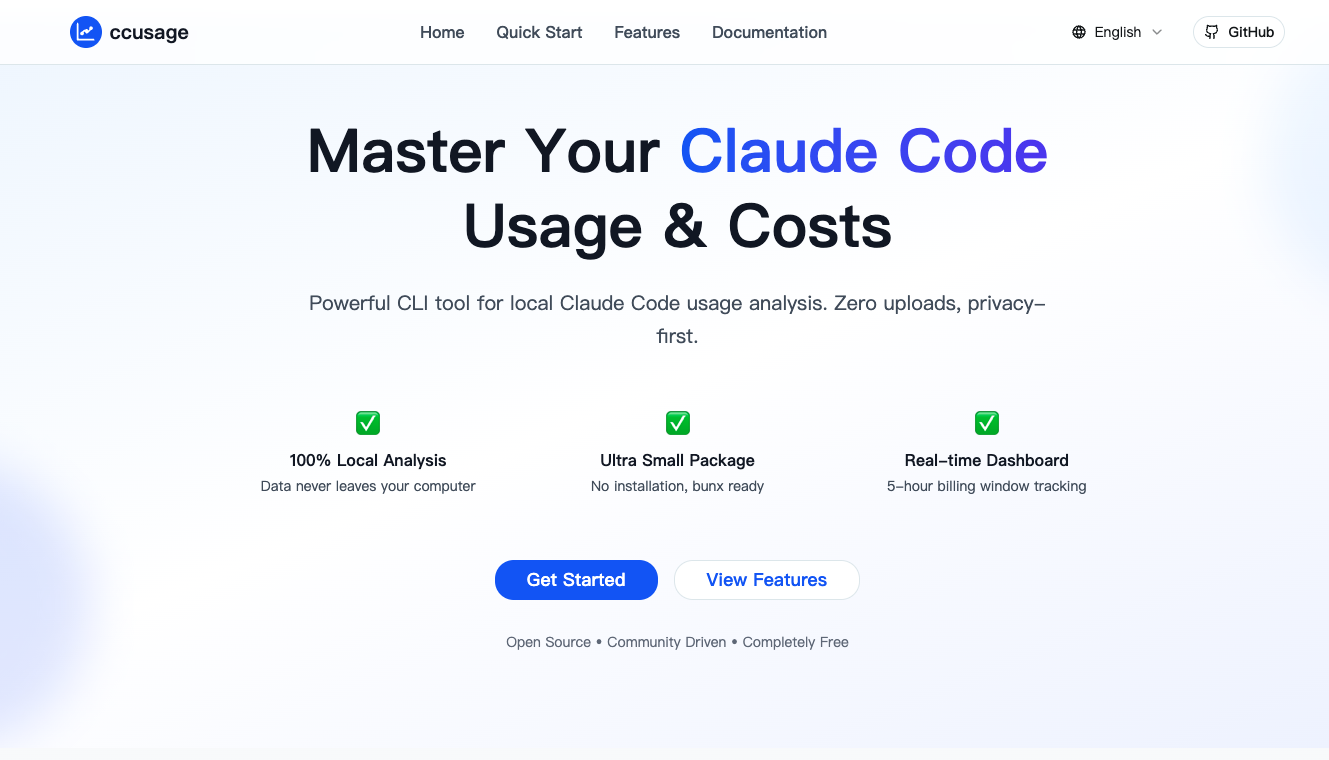
Built this after realizing I was spending ~$1400/week on Claude Code with almost no visibility into what was actually consuming tokens. Tools like ccusage give a cost breakdown per model and per day, but I wanted to understand usage at the task level. CodeBurn reads the JSONL session transcripts that Claude Code stores locally (~/.claude/projects/) and classifies each turn into 13 categories based on tool usage patterns (no LLM calls involved). One surprising result: about 56% of my spend was on conversation turns with no tool usage. Actual coding (edits/writes) was…
Apr 2026 · github.com · its alternatives →
- 3

Ask Claude Code where your usage went. Token audit, limit diagnosis and usage forensics — built from the session logs already on your machine, nothing leaves it. - kelviq/tare
Aug 2026 · github.com · its alternatives →
- 4
 Diet Claudefree▲433
Diet Claude — a usage meter for Claude that drains as you go and refills when your session resets. Crack open the can — free on the Chrome Web Store.
Aug 2026 · dietclaude.com · its alternatives →
- 5

- 6

See exactly how much you spend on Claude, across every tool
Mar 2026 · github.com · its alternatives →
- 7
 Paritok▲258
Spend up to 85% less and run 3× longer coding agent sessions
Aug 2026 · paritok.com · its alternatives →
- 8
- 9

A pre-execution guard for AI coding agents. It blocks destructive Git and file system commands, plus common attempts to access sensitive files, before a tool call runs. Supports Amp Code, Antigravity CLI, Claude Code, Codex, Cursor, Gemini CLI, GitHub Copilot CLI, Grok Build, Hermes Agent, Kimi Code
Dec 2025 · github.com · its alternatives →
- 10

I wanted to share a project I’ve been working on called Frugal Tokens. I originally built it because I was curious to see how much all of my sessions cost and how much cache misses affected that spend. I’d noticed people had widely different spend profiles and wanted to better understand what might contribute to that. As I’ve worked on this, the tool has grown to show more usage patterns across all of your sessions. It shows overall usage, estimated working time and overlapping sessions, and where your spend is coming from across models and cache misses. I also have a few session level…
Aug 2026 · demo.frugaltokens.com · its alternatives →
- 11
 CodeBurn▲103
See where your AI coding spend actually goes
Aug 2026 · codeburn.app · its alternatives →
- 12

Hey HN - there are lots of tools to understand how many tokens you use and how much it costs, but we haven't found any that tell you where those tokens are going! Decant helps you understand what you are spending tokens on (context gathering, planning, code, chat, etc), so you can optimize it.
Aug 2026 · github.com · its alternatives →
- 13

Understand your design system at a glance
2025 · figma.com · its alternatives →
- 14

I use Claude Code, Codex and Cursor (and sometimes Antigravity) basically every day, and could never tell how much I was actually consuming across all of them. So I built TokenMaxxer. A small CLI reads the files these tools already write locally and puts it all in one dashboard, broken out by tool, model, provider and day. It covers 18 tools now, and you get a profile page with your daily activity, cost estimates, and your top models and tools. There's also a global leaderboard if you want to compete against other TokenMaxxers! I'd love to see if anyone can beat the first place (currently…
Aug 2026 · tokenmaxxer.xyz · its alternatives →
- 15

Helps teams notice repeated AI usage before token get usedup
Jun 2026 · github.com · its alternatives →
- 16

- 17
 Aneirin▲5
Cut your Claude Code & Copilot token bill, losslessly
Jul 2026 · github.com · its alternatives →
- 18

See exactly what your Claude and ChatGPT conversations cost
Jun 2026 · chromewebstore.google.com · its alternatives →
- 19

Turbocharge Claude Code, Cursor, Codex, Gemini & every coding agent: faster, cheaper, with contextual understanding specific to your codebase. - trailhq/Graft
Aug 2026 · github.com · its alternatives →
- 20TC
- 21

Local, cross-client token savings with built-in evidence
Aug 2026 · vic-e.com · its alternatives →
- 22

Save 89% of wasted tokens on your AI coding agent
Mar 2026 · rtk-ai.app · its alternatives →
- 23

- 24

Track Claude costs, tokens, context & model switches
Jun 2026 · chromewebstore.google.com · its alternatives →
Also compare
Ranked by how close each launch is in meaning, then by votes. Prices were read from each product’s own site when checked and can change. Refine with your own description →