AI · alternatives · 2026

24 alternatives to Mnemosyne
Semantic AI with Zero-Knowledge Encryption Absolute Privacy
Below are 24 products that do a similar job, ranked by how close each is in meaning and then by launch-day votes.
- 1

Gomaa — Autonomous Agent Memory OS. Persistent memory system for AI agents with Obsidian vault integration, hybrid RRF search, knowledge graphs, security gates, and MCP server. - M4F-S/gomaa
Aug 2026 · github.com · its alternatives →
- 2

Local-first AI memory layer for any LLM. Persistent knowledge graph, entity extraction, semantic retrieval. Works with Ollama, OpenAI, Anthropic, or any OpenAI-compatible backend. - zaydmulani09/mnemo
Jun 2026 · github.com · its alternatives →
- 3

An open-source memory engine born from Hermes. Sub-ms recall
Jun 2026 · mnemosyne.site · its alternatives →
- 4

- 5

Cognitive Memory OS for AI Agents — persistent, self-improving, multi-agent memory - 28naem-del/mnemosyne
Feb 2026 · github.com · its alternatives →
- 6

A Fully Homomorphic Encryption Brainfuck virtual machine - f-prime/arcanevm
2019 · github.com · its alternatives →
- 7
- 8ZK
2019 · zkwasm.kobi.one · its alternatives →
- 9

I've built this to make it easy to host your own infra for lightweight VMs at large scale. Intended for exec of AI-generated code, for CICD runners, or for off-chain AI DApps. Mainly to avoid Docker-in-Docker dangers and mess. Super easy to use with CLI / Python SDK, friendly to AI engs who usually don't like to mess with VM orchestration and networking too much. Defense-in-depth philosophy. Would love to get feedback (and contributors: clear & exciting roadmap!), thx
2025 · github.com · its alternatives →
- 10
 Velane▲95
n8n is built for humans dragging nodes on a canvas. That breaks down at B2B scale (embedding in a product, multi-tenant scalability, etc). n8n does have an MCP server so agents can create workflows too, but it outputs raw JSON. That's fine for n8n's engine, but painful for a coding agent (or a human reviewing its output) to read, write, diff, or debug. I'm building an alternative where workflows are authored by a coding agent in [a more dev-legible format] instead of JSON blobs, and execute it at scale.
Jul 2026 · velane.sh · its alternatives →
- 11
 0pirate▲7
The zero-knowledge engineer that fixes code without seeing
Nov 2025 · 0pirate.com · its alternatives →
- 12
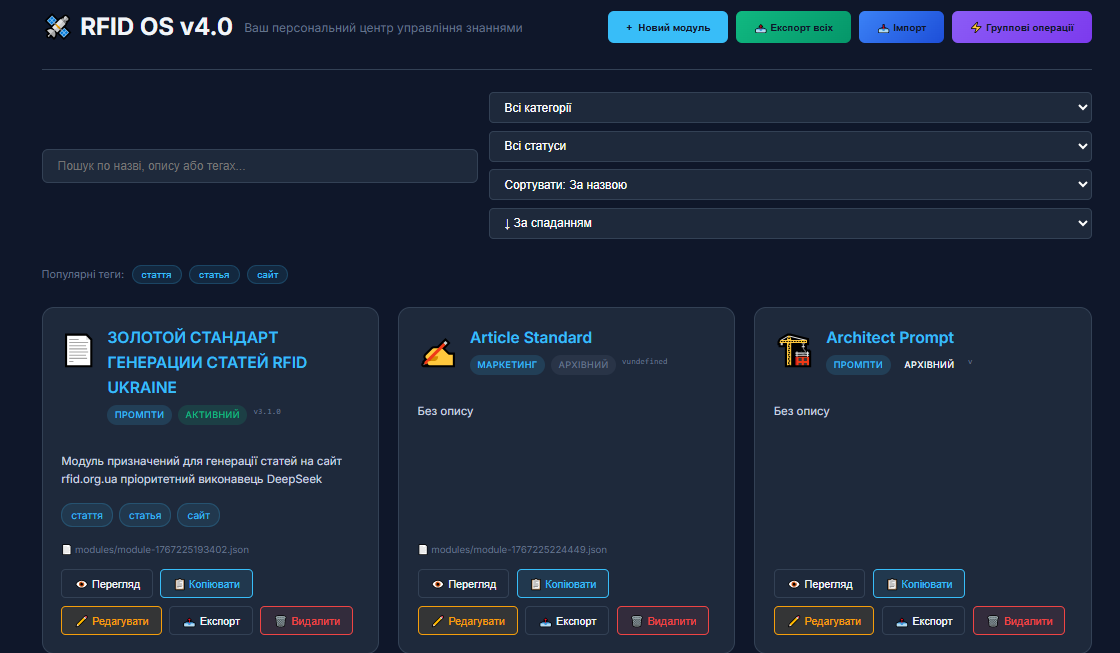
Personal offline knowledge hub. JSON-based. Completely free
Jan 2026 · yurakas-netizen.github.io · its alternatives →
- 13

The Semantic Wiki For Human + AI Collaboration
2025 · app.intelligraphs.com · its alternatives →
- 14

Eradicate Shadow AI with zero-trust semantic governance.
Apr 2026 · zerocostautomation13.gumroad.com · its alternatives →
- 15

Hey HN, We’ve been heads-down building MOSS - a semantic memory layer that brings AI-powered search and personalization fully on-device (No cloud | No latency | No data leaving the user’s device) We just launched a live demo showing MOSS running entirely in-browser, performing lightning-fast semantic search over local in-browser VectorDB. This unlocks a new class of privacy-first, hybrid AI experiences that work even without a server connection. If you’re curious about: - how to run AI search right inside the browser - the technical challenges behind on-device vector search - why we believe…
2025 · twitter.com · its alternatives →
- 16

Turn the internet into a multiplayer territory game.
Jul 2026 · chromewebstore.google.com · its alternatives →
- 17

Search, archive, and recall your AI conversations. ChatGPT, Claude, Gemini, Grok, Kimi. Local-first, MIT licensed. - egroup-labs/kept
May 2026 · github.com · its alternatives →
- 18

There's been some interesting work lately with BrowserAI (runs LLMs in the browser using WebGPU) enabling local, private AI processing. Now, the team has released BrowserAgent - a no-code tool built on top of it. BrowserAgent lets you create custom AI workflows using a drag-and-drop interface, all within your browser. This means personalized web summarizers, research assistants, or content generators can all run locally with no cloud costs and full data privacy. Check it out here - https://browseragent.dev Key features include: - No-Code Workflow Builder: Design custom AI agents…
2025 · browseragent.dev · its alternatives →
- 19

Here's something I realized: the most AI-native knowledge base isn't a SaaS product with an API. It's a folder of markdown files on your disk. Obsidian stores everything as plain .md files. That means Claude Code (or any AI tool) can grep, read, write, and traverse your entire knowledge base with zero setup. No API keys. No OAuth. No middleware. Just local file I/O. The only missing piece was sync. I wanted my vault on iPhone (iCloud), on Mac (local), and on GitHub (backup + version history) — without paying $4/mo for Obsidian Sync. cc-md is ~400 lines of bash. iCloud handles Apple…
Feb 2026 · github.com · its alternatives →
- 20

Your mind, encrypted. AI that never leaves your phone.
Mar 2026 · apps.apple.com · its alternatives →
- 21

A Fully Homomorphic Encryption Brainfuck virtual machine - f-prime/arcanevm
2021 · github.com · its alternatives →
- 22

- 23

Tamper-evident evidence and verification layer for AI agents. Verify any agent's session offline with just openssl. No cloud, no lock-in. - radotsvetkov/akmon
May 2026 · github.com · its alternatives →
- 24

Hey HN! Alex and Zack from Nexa AI here. We are excited to share a project our team has been passionately working on recently, in collaboration with Jiajun from Meta, Qun from San Francisco State University, and Xin and Qi from the University of North Texas. Running AI models on edge devices is becoming increasingly important. It's cost-effective, ensures privacy, offers low-latency responses, and allows for customization. Plus, it's always available, even offline. What's really exciting is that smaller-scale models are now approaching the performance of large-scale closed-source models for…
2024 · github.com · its alternatives →
Also compare
- Mnemosyne Local hierarchical memory engine for AI agents (MCP Native) alternatives
- Mnemo – local-first AI memory layer for any LLM (Rust, SQLite,petgraph) alternatives
- Mnemosyne alternatives
- Mnemosyne alternatives
- Mnemosyne – Cognitive memory OS for AI agents (zero LLM calls) alternatives
- ArcaneVM – A Fully Homomorphic Encryption Brainfuck Virtual Machine alternatives
Ranked by how close each launch is in meaning, then by votes. Prices were read from each product’s own site when checked and can change. Refine with your own description →