Work · alternatives · 2026

24 alternatives to MusiPhi
Sacred geometry meets music in real-time visualization
Below are 24 products that do a similar job, ranked by how close each is in meaning and then by launch-day votes. Prices are shown for the 1 we have checked on their own sites, 1 of them free or with a free tier.
- 1

- 2
 I built a synthesizer based on 3D physicsfree tier, from $99/mo▲512
I've been working on the Anukari 3D Physics Synthesizer for a little over two years now. It's one of the earliest virtual instruments to rely on the GPU for audio processing, which has been incredibly challenging and fun. In the end, predictably, the GUI for manipulating the 3D system actually ended up being a lot more work than the physics simulation. So far I am only selling it direct on my website, which seems to be working well. I hope to turn it into a sustainable business, and ideally I'd have enough revenue to hire folks to help with it. So far it's been 99% a solo project, with…
2025 · anukari.com · its alternatives →
- 3

2018 · muzoti.com · its alternatives →
- 4

A modern BBS. Contribute to ansiwave/ansiwave development by creating an account on GitHub.
2021 · github.com · its alternatives →
- 5

I'm enthralled with using pen plotters to make generative art. Last August at SIGGRAPH, I built an interactive experience for others to see how code can be used to make visual art. The linked blog post is my trials and tribulations of linking a MIDI controller to one of these algorithms and sending its output to a plotter, so that people may witness the end-to-end experience.
2024 · lostpixels.io · its alternatives →
- 6
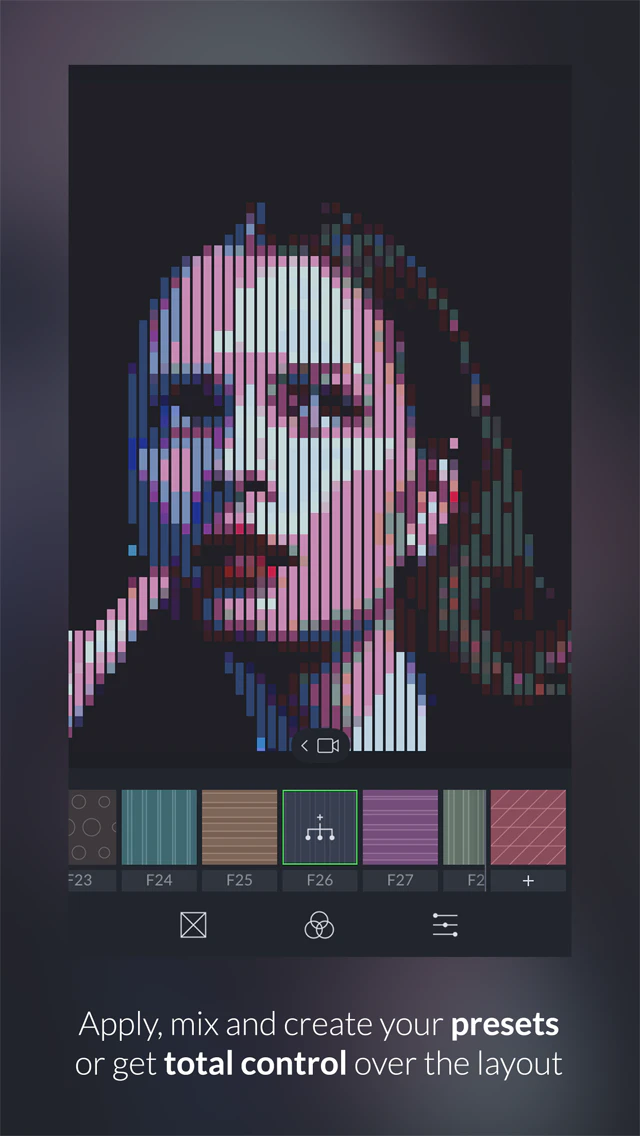 GeometriCam▲109
Abstract geometric design in real-time.
2015 · geometricamapp.com · its alternatives →
- 7
 ChordViz▲75
Build your own music visualizer for MIDI & audio
Aug 2026 · chordviz.ca · its alternatives →
- 8

Generate high-quality triangulated and polygonal art from images. - rh12503/triangula
2021 · github.com · its alternatives →
- 9

Hi HN, I built Eigendrum, a web tool that solves the 2D wave equation for arbitrary shapes so you can hear what they sound like as drums. How it works: * Solves -∇²u = λu using finite element analysis (Kφ = λMφ) on a triangle mesh. * Validated to <0.1% error against closed-form solutions for circles (Bessel zeros) and rectangles. * Sound model factors in strike location, Rayleigh damping, and mallet width. * Includes Kac drums I & II to demonstrate identical sound spectra from different geometries. * No frameworks, build steps, or dependencies. Repo and tests:…
Aug 2026 · baselashraf81.github.io · its alternatives →
- 10IM
I'm developing Hyperstep[0], a spatial language for music production. I find using existing DAWs frustrating because they don't allow me to navigate and operate intuitively on the latent spaces behind my musical ideas. This is why I've decided to build my own set of "seeing tools".(Bret Victor)[1]. I'm also convinced that by framing music as processes and interactions in the 3D world, spatialization and mixing should become fairly pain-free. I'm still early in development and I would love to build this into an actual product that can be integrated into existing DAWs or even turn it into a…
2022 · a-sumo.github.io · its alternatives →
- 11
 Origami▲109
A free design prototyping toolkit for Quartz Composer
2013 · facebook.github.io · its alternatives →
- 12

This is an web audio experiment I've been wanting to do for a long time. Basically an ambient music composition, but all the sound elements are laid out in space, and that musical space can be explored freely. It's definitely inspired by in-world music that sometimes appears in games. I basically took that concept, keeping the music aspect, and dropping the entire "game" aspect. I also turned it into a more "traditional" non-interactive album, but since I started with code, why not program the whole thing? Had a blast making the entire album from code, the complete source for the album is…
2024 · ambient.garden · its alternatives →
- 13

The latest 3Blue1Brown video [1] about the M. C. Escher print gallery effect inspired me to re-implement the effect as WebGL fragment shader on my own. [1]: https://www.youtube.com/watch?v=ldxFjLJ3rVY
Apr 2026 · static.laszlokorte.de · its alternatives →
- 14
 Reaktr▲190
Generate beautiful audio-reactive video easily
2022 · reaktr.vercel.app · its alternatives →
- 15
- 16

- 17

- 18

- 19
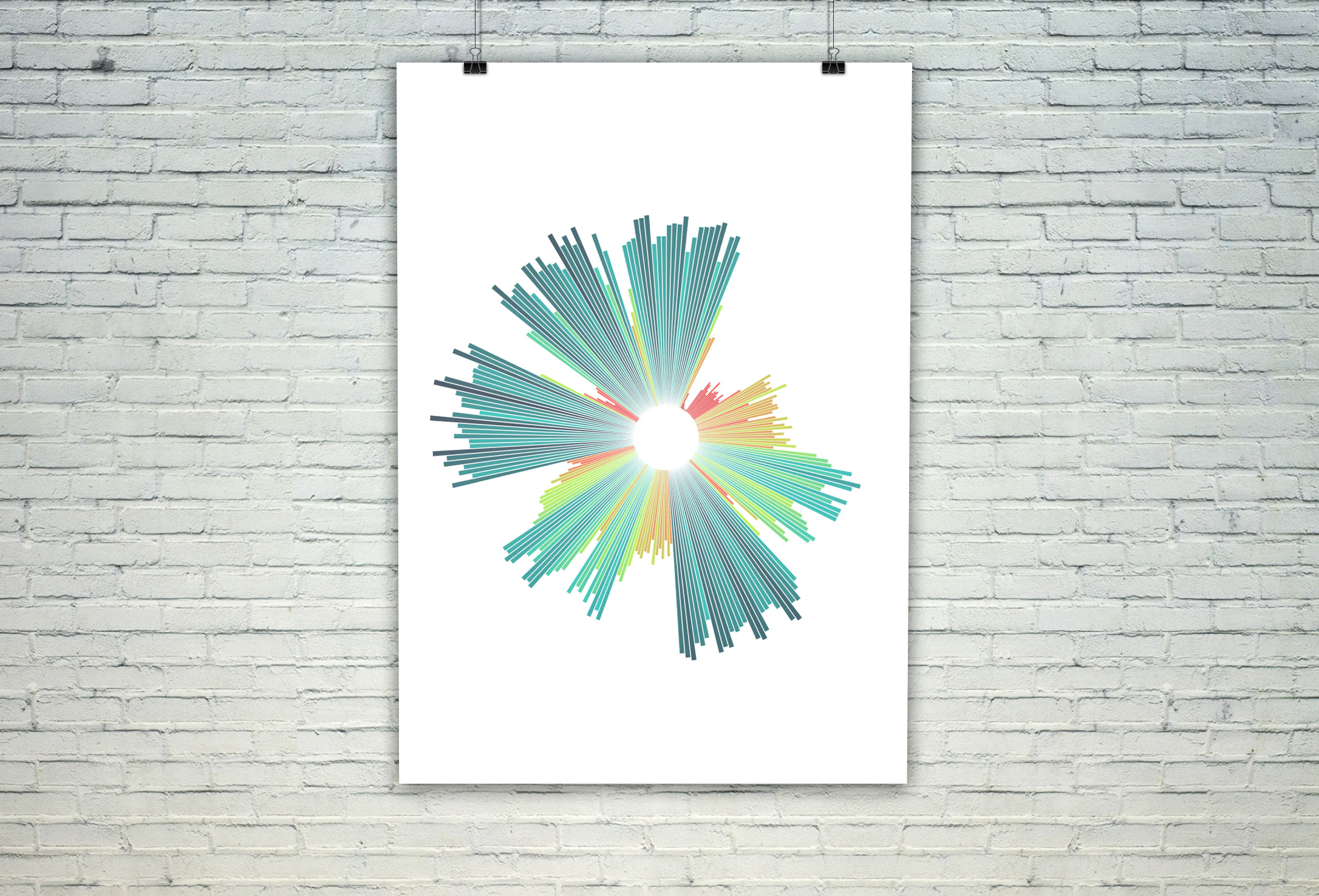
A fresh new take on sound wave art
2016 · soundviz.com · its alternatives →
- 20
 Vectary Photon▲181
One-click photorealistic rendering for 2D designers
2019 · vectary.com · its alternatives →
- 21AM
Bring your music to life.
2021 · hyperchroma.app · its alternatives →
- 22

- 23
 Specdrums▲70
App-connected rings that turn color into sound
2017 · kickstarter.com · its alternatives →
- 24

I designed a relative piano-roll-based music notation. I used 12 colored arranged in a specific way to make visible the main effects and oppositions of Western tonal harmony. The tonic is always white, so a manual annotation/interpretation is required for each MIDI file. All chords are flags of three to four colors. Minor mode is darker, major mode is lighter. Colors are arranged in thirds. I sorted the pieces from simple complex harmony. I also wrote a bit of text to explain what you may see. There's also a corpus of structures: hyperlinks of tags that allow you to find similar…
Nov 2025 · rawl.rocks · its alternatives →
Also compare
- doodooc Music Visualizer alternatives
- I built a synthesizer based on 3D physics alternatives
- Muzoti – Algorithmic Music with Web Audio/Midi and VueJS alternatives
- Ansiwave, an ANSI art and MIDI music mashup alternatives
- I built an interactive plotter art exhibit for SIGGRAPH alternatives
- GeometriCam alternatives
Ranked by how close each launch is in meaning, then by votes. Prices were read from each product’s own site when checked and can change. Refine with your own description →