AI · alternatives · 2026

24 alternatives to Torqon
Persistence Context for LLMs with inbuilt Token Reduction
Below are 24 products that do a similar job, ranked by how close each is in meaning and then by launch-day votes.
- 1
- 2
 Context Gateway▲220
We built an open-source proxy that sits between coding agents (Claude Code, OpenClaw, etc.) and the LLM, compressing tool outputs before they enter the context window. Demo: https://www.youtube.com/watch?v=-vFZ6MPrwjw#t=9s. Motivation: Agents are terrible at managing context. A single file read or grep can dump thousands of tokens into the window, most of it noise. This isn't just expensive — it actively degrades quality. Long-context benchmarks consistently show steep accuracy drops as context grows (OpenAI's GPT-5.4 eval goes from 97.2% at 32k to 36.6% at 1M…
Mar 2026 · github.com · its alternatives →
- 3

I got tired of Claude Code forgetting all my context every time I open a new session: set-up decisions, how I like my margins, decision history. etc. We built a shared memory layer you can drop in as a Claude Code Skill. It’s basically a tiny memory DB with recall that remembers your sessions. Not magic. Not AGI. Just state. Install in Claude Code: /plugin marketplace add https://github.com/mutable-state-inc/ensue-skill /plugin install ensue-memory # restart Claude Code What it does: (1) persists context between sessions (2) semantic & temportal search (not just…
Dec 2025 · github.com · its alternatives →
- 4
 Agentmemory▲310
Persistent memory for Claude Code, Codex & coding agents
May 2026 · agent-memory.dev · its alternatives →
- 5RG
Hey HN! I'm José, and I built Recall to solve a problem that was driving me crazy. The Problem: I use Claude for coding daily, but every conversation starts from scratch. I'd explain my architecture, coding standards, past decisions... then hit the context limit and lose everything. Next session? Start over. The Solution: Recall is an MCP (Model Context Protocol) server that gives Claude persistent memory using Redis + semantic search. Think of it as long-term memory that survives context limits and session restarts. How it works: - Claude stores important context as "memories" during…
2025 · npmjs.com · its alternatives →
- 6

- 7

Shared persistent memory across all your LLMs.
2025 · teamlayer.xyz · its alternatives →
- 8

Persistent memory for Claude, ChatGPT & Cursor. Free.
May 2026 · github.com · its alternatives →
- 9

I keep running in the same problem of each AI app “remembers” me in its own silo. ChatGPT knows my project details, Cursor forgets them, Claude starts from zero… so I end up re-explaining myself dozens of times a day across these apps. The deeper problem 1. Not portable – context is vendor-locked; nothing travels across tools. 2. Not relational – most memory systems store only the latest fact (“sticky notes”) with no history or provenance. 3. Not yours – your AI memory is sensitive first-party data, yet you have no control over where it lives or how it’s queried. Demo video:…
2025 · github.com · its alternatives →
- 10

Local persistent memory store for LLM applications including claude desktop, github copilot, codex, antigravity, etc. - CaviraOSS/LongMemory
Dec 2025 · github.com · its alternatives →
- 11

Built this for my LLM workflows - needed searchable, persistent memory that wouldn't blow up storage costs. I also wanted to use it locally for my research. It's a content-addressed storage system with block-level deduplication (saves 30-40% on typical codebases). I have integrated the CLI tool into most of my workflows in Zed, Claude Code, and Cursor, and I provide the prompt I'm currently using in the repo. The project is in C++ and the build system is rough around the edges but is tested on macOS and Ubuntu 24.04.
2025 · github.com · its alternatives →
- 12

Hey HN! I built Retain as the evolution of claude-reflect (github.com/BayramAnnakov/claude-reflect). The original problem: I use Claude Code/Codex daily for coding, plus claude.ai and ChatGPT occasionally. Every conversation contains decisions, corrections, and patterns I forget existed weeks later. I kept re-explaining the same preferences. claude-reflect was a CLI tool that extracted learnings from Claude Code sessions. Retain takes this further with a native macOS app that: - Aggregates conversations from Claude Code, claude.ai, ChatGPT, and Codex CLI - Instant full-text…
Jan 2026 · github.com · its alternatives →
- 13
 DeltaMemory▲104
Most AI agents forget everything between sessions. We built DeltaMemory to fix that. It's a cognitive memory layer that gives agents persistent recall, automatic fact extraction, and temporal reasoning — via a single SDK call. Key numbers: - 89% accuracy on LoCoMo long-term conversation benchmark - 50ms p50 retrieval latency - 97% cost reduction vs raw token re-processing Open source SDKs, works with any LLM stack. Currently in early access. Happy to answer questions about the architecture, benchmark methodology, or how we handle knowledge graphs.
Feb 2026 · deltamemory.com · its alternatives →
- 14
 Bindly▲76
Hi HN, I’m a product designer by background, not a traditional software engineer. Over the last year, tools like Claude and ChatGPT completely changed how I work. I started with small internal tools, and now I’m “vibe coding” multiple highly personalized apps. As I iterated between Claude Code (implementation) and ChatGPT (ideation / thinking), I kept running into the same problem. To think clearly, I had to repeatedly re-explain: - what the code currently does, - what changed recently, - and why certain decisions were made. That re-summarization step became a real bottleneck. So I…
2016 · bind.ly · its alternatives →
- 15
 GPS▲83
Memory layer for LLMs that stores repo rules + past lessons
May 2026 · github.com · its alternatives →
- 16

I vibe-coded a terminal tool called Pluqqy (I had a dormant domain on hand) to help me keep LLM context organized while coding with AI. It’s my first time writing Go and my first terminal app, built almost entirely with Claude Code. • What it does: Pluqqy lets you manage prompts, rules, and context as small building blocks, then stitch them together into a single file (like AGENT.md or CLAUDE.md) that your coding agent can consume. It’s meant to reduce context drift and make iteration easier. • Why I built it: I was losing track of my agent context between sessions and wanted something…
2025 · github.com · its alternatives →
- 17

I have a proposal that addresses long-term memory problems for LLMs when new data arrives continuously (cheaply!). The program involves no code, but two Markdown files. For retrieval, there is a semantic filesystem that makes it easy for LLMs to search using shell commands. It is currently a scrappy v1, but it works better than anything I have tried. Curious for any feedback!
Apr 2026 · github.com · its alternatives →
- 18

The context manager and skills library for marketing teams
Apr 2026 · promptr.ai · its alternatives →
- 19

Tired of AI coding tools that forget everything between sessions? Every time I open a new chat with Claude or fire up Copilot, I'm back to square one explaining my codebase structure. So I built something to fix this. It's called In Memoria. Its an MCP server that gives AI tools persistent memory. Instead of starting fresh every conversation, the AI remembers your coding patterns, architectural decisions, and all the context you've built up. The setup is dead simple: `npx in-memoria server` then connect your AI tool. No accounts, no data leaves your machine. Under the hood it's TypeScript +…
2025 · github.com · its alternatives →
- 20
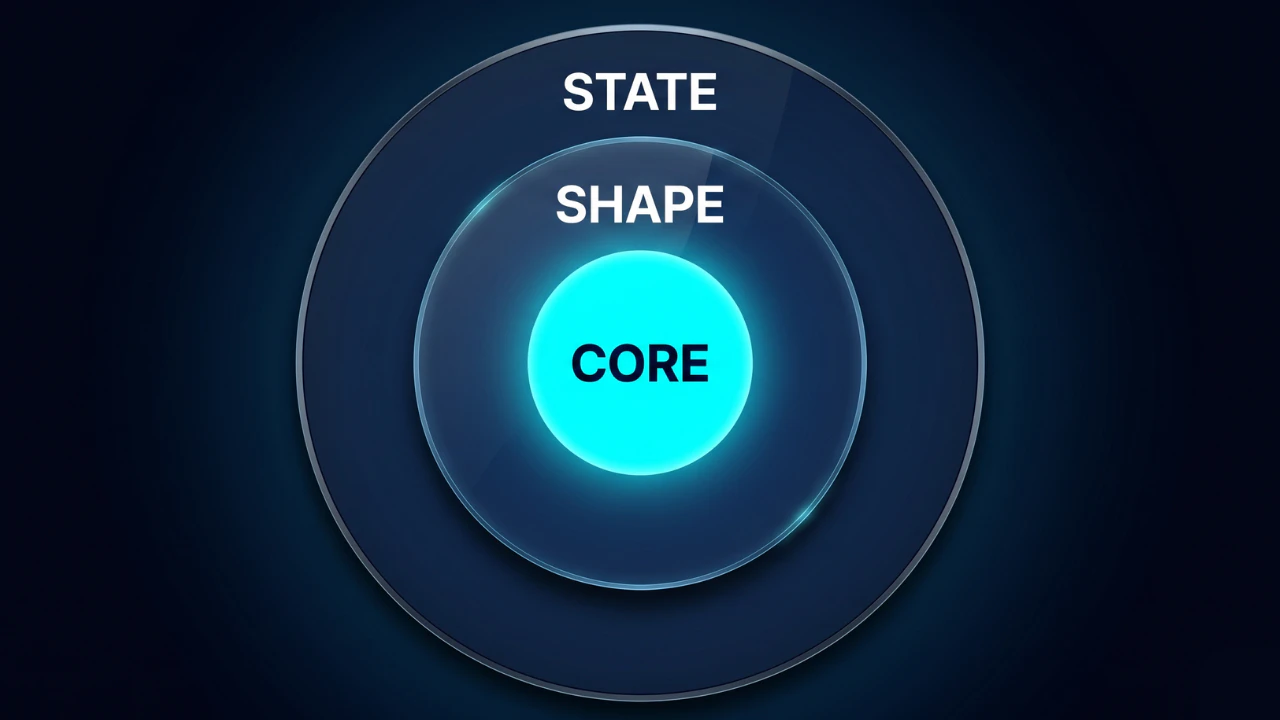
Local, portable, + open source context across all LLMs
Jun 2026 · its alternatives →
- 21

Tell MemorySync a fact, reload the page, then ask for it back in your own words. No signup. Every API call shown in cURL, Python and Node.js.
10d ago · memorysync.io · its alternatives →
- 22

I’d like to use LLMs for remembering all kinds of things: fitness, to-do lists, contacts, bug reports, research links, whatever. But there is no way to do that now. For example, if I find a great coding tutorial in chat, or tell it how much I ran yesterday, it forgets that when I close the chat. Even if I keep the chat history, I still need to scour through lots of messages to find the data I want. Ideally, Claude would remember all this, and I’d be able to find it later with ease. This is what my team built. It is a collaborative database you add to any LLM that supports MCP. (Claude Code,…
2025 · dry.ai · its alternatives →
- 23

I built an MCP server that gives Claude Code long-term memory across sessions, backed by infrastructure you control. Every Claude Code session starts from zero, no memory of previous sessions. This server uses mem0ai as a library and exposes 11 MCP tools for storing, searching, and managing memories. Qdrant handles vector storage, Ollama runs embeddings locally (bge-m3), and Neo4j optionally builds a knowledge graph. Some engineering details HN might find interesting: - Zero-config auth: auto-reads Claude Code's OAT token from ~/.claude/.credentials.json, detects token type (OAT vs…
Feb 2026 · github.com · its alternatives →
- 24ZL
Zep is a long-term memory store designed for conversational AI applications built using modern LLMs. It handles the storage, summarization, embedding, indexing, and enrichment of chat histories, and offers developers a simple, low-latency API to this data. Chat history storage is an infrastructure challenge all developers and enterprises face as they look to move from prototypes to deploying conversational AI applications that provide rich and intimate experiences to users. Key features include long-term memory persistence, auto-summarization, vector search, auto-token counting, and Python…
2023 · its alternatives →
Also compare
Ranked by how close each launch is in meaning, then by votes. Prices were read from each product’s own site when checked and can change. Refine with your own description →