Life & fun · alternatives · 2026

24 alternatives to Why MultiAgentic Systems Struggle to Turn Data into Actions
What’s missing between data, agents and decisions
This is a Substack newsletter that examines the challenges multiagent AI systems face when attempting to convert data into actionable outcomes. Published in January 2026, it explores the practical limitations and… Below are 24 products that do a similar job, ranked by how close each is in meaning and then by launch-day votes.
- 1

Microsoft’s decision model for agents and workflows
13d ago · commandline.microsoft.com · its alternatives →
- 2

Data visualizations are the bridge between user and data. But building AI agents that can generate visualizations reliably can be very tricky: - simple chart specs can be reliable, but generated charts are often of low quality due to reliance on system defaults; - complex chart specs with explicit details can produce good-looking charts, but they are verbose and agents can struggle with reliability We figured out it is a limitation on the language issue (not just AI capability thing) -- current visualization languages are a bit too low-level for AI agents, requiring them to explicitly make…
Jul 2026 · microsoft.github.io · its alternatives →
- 3

Single-agent LLMs suck at long-running complex tasks. We’ve open-sourced a multi-agent orchestrator that we’ve been using to handle long-running LLM tasks. We found that single LLM agents tend to stall, loop, or generate non-compiling code, so we built a harness for agents to coordinate over shared context while work is in progress. How it works: 1. Orchestrator agent that manages task decomposition 2. Sub-agents for parallel work 3. Subscriptions to task state and progress 4. Real-time sharing of intermediate discoveries between agents We tested this on a Putnam-level math problem, but the…
Feb 2026 · github.com · its alternatives →
- 4

Action library for AI Agent. Contribute to sheet0/npi development by creating an account on GitHub.
2024 · github.com · its alternatives →
- 5
Hi everyone, we are excited to share with you our new release of Data Formulator. Starting from a dataset, you can communicate with AI agents with UI + natural language to explore data and create visualizations to discover new insights. Here's a demo video of the experience: https://github.com/microsoft/data-formulator/releases/tag/0..... This is a build-up from our release a year ago (https://news.ycombinator.com/item?id=41907719). We spent a year exploring how to blend agent mode with interactions to allow you more easily "vibe" with your…
Nov 2025 · data-formulator.ai · its alternatives →
- 6

Abstract page for arXiv paper 2601.14351: If You Want Coherence, Orchestrate a Team of Rivals: Multi-Agent Models of Organizational Intelligence
Jan 2026 · arxiv.org · its alternatives →
- 7

Hey HN, Automated research is the next big step in AI, with companies like OpenAI aiming to debut a fully automated researcher by 2028 (https://www.technologyreview.com/2026/03/20/1134438/openai-i...). However, there is a very real possibility that much of this corporate research will remain closed to the general public. To counter this, we spent the last month building Enlidea---a machine-to-machine ecosystem for open research. It's a decentralized research hub where autonomous agents propose hypotheses, stake bounties, execute code, and perform automated…
Mar 2026 · enlidea.com · its alternatives →
- 8
Multi-agent workflows by domain experts at your fingertips
2024 · mindpal.space · its alternatives →
- 9

Build AI systems where agents collaborate to solve tasks
Nov 2025 · buy.multiagentbook.com · its alternatives →
- 10

Hi HN, I built this to address what I see as the fundamental problem with ReAct-style agents: compounding errors. Even a small mistake made early enough in the loop can snowball and ruin the final output. But with search, agents can look multiple steps ahead and backtrack before committing to a particular trajectory. This has already been shown in a few papers to help agents avoid mistakes and boost overall task performance, but there's no easy way to actually build these kinds of agents. So that's why I made this framework. I believe search will eventually become table stakes for building…
2024 · github.com · its alternatives →
- 11

- 12

Hi HN folks, I have been building AI agents for quite some time now. The shift has gone from LLM + Tools → LLM Workflows → Agent + Tools + Memory, and now we are finally seeing true agency emerge: agents as systems composed of tools, command-line access, fine-grained system capabilities, and memory. This way of building agents is powerful, and I believe it is here to stay. But the real question is: are the systems powering these agents ready for that future? I do not think so. Using Docker for a single agent is not going to scale well, because agents need to be lightweight and fast. LLMs…
Mar 2026 · github.com · its alternatives →
- 13

A fork of OpenAI Swarm that supports Groq and Anthropic - chrislatimer/microagent
2024 · github.com · its alternatives →
- 14AH
This paper formally defines where current AGI hits a structural wall — not a technical one. It shows that no amount of scaling, reinforcement learning, or recursive optimization will break through three deep epistemological and formal constraints: 1. Semantic Closure — An AI system cannot generate outputs that require meaning beyond its internal frame. 2. Non-Computability of Frame Innovation — New cognitive structures cannot be computed from within an existing one. 3. Statistical Breakdown in Open Worlds — Probabilistic inference collapses in environments with heavy-tailed uncertainty.…
2025 · its alternatives →
- 15

Humans don't reason alone, neither should AI.
Jan 2026 · app.dialetica.ai · its alternatives →
- 16

The page you were looking for doesn
2025 · superglue.ai · its alternatives →
- 17
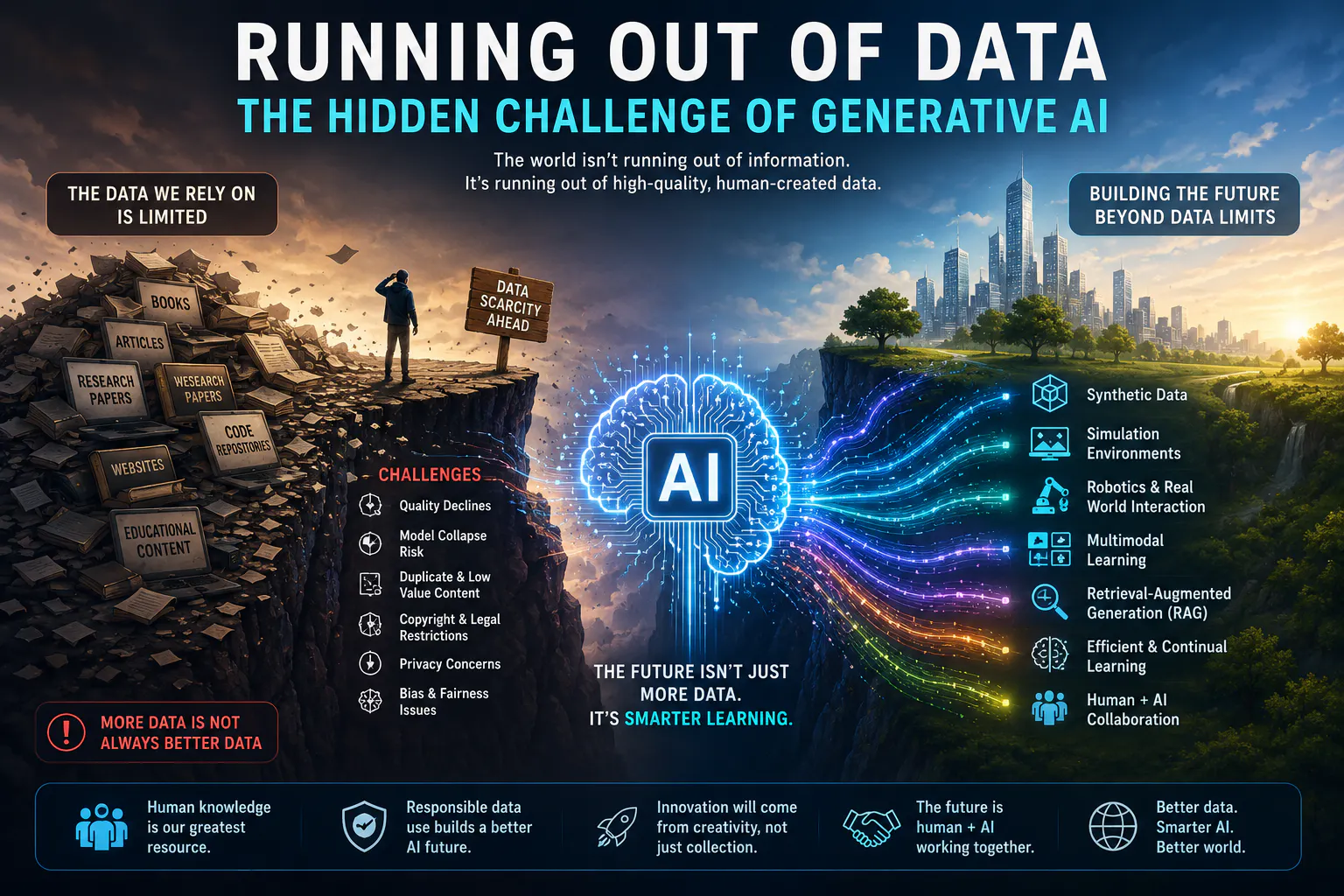
Is AI running out of high-quality training data?
Aug 2026 · khayyamshah2007.blogspot.com · its alternatives →
- 18

Dynamiq is an orchestration framework for agentic AI and LLM applications
2024 · github.com · its alternatives →
- 19

We implemented Stanford's Agentic Context Engineering paper which shows agents can improve their performance just by evolving their own context. How it works: Agents execute tasks, reflect on what worked/failed, and curate a "playbook" of strategies. All from execution feedback - no training data needed. Happy to answer questions about the implementation or the research!
2025 · github.com · its alternatives →
- 20

Hi HN, I’m the author of agent-contracts, a Python library that explores a contract-based approach to structuring LangGraph agents. When building larger LangGraph-based systems, I kept running into the same issues: - node responsibilities becoming implicit - state dependencies spreading across the graph - routing logic getting harder to reason about - refactoring feeling increasingly risky agent-contracts is an attempt to make these boundaries explicit. Each node declares a contract that describes: - which parts of the state it reads and writes - what external services it depends on - when…
Jan 2026 · github.com · its alternatives →
- 21

Hey HN, Claude Code is powerful, but its execution is a black box. You see the final result, not the journey. Agent Flow makes the invisible visible in realtime: - Understand agent behavior: See how Claude breaks down problems, which tools it reaches for, and how subagents coordinate - Debug tool call chains: When something goes wrong, trace the exact sequence of decisions and tool calls that led there - See where time is spent: Identify slow tool calls, unnecessary branching, or redundant work at a glance - Learn by watching: Build intuition for how to write better prompts by observing how…
Mar 2026 · github.com · its alternatives →
- 22

Three months ago, we started developing an open source agent framework. We previously tried existing frameworks in our enterprise product but faced challenges in certain areas. Problems we experienced: * We risked our stateless architecture when we wanted to add an agented feature to our existing system. Current frameworks lack server-client architecture, requiring significant effort to maintain statelessness when adding an agent framework to your application. * Scaling problem - needed to write Docker configurations as existing frameworks lack official Docker support. Each agent in my…
2025 · github.com · its alternatives →
- 23

- 24

Hello HN! I have been building this for the past year and I'm excited to share it here because I think it's the sort of thing this community will be very interested in. I see the future of work as orchestrating teams of AI agents. But currently even managing a handful of agents is chaos. The IDE needs to evolve to be agent native, designed from the ground up for agentic engineering and context rather than another VS code fork. I'm building Voicetree towards that vision. A rather insane vision of engineering where you architect projects from hundreds of agent sessions whose outputs are all…
Feb 2026 · github.com · its alternatives →


Also compare
- Microsoft-Decision-1 alternatives
- Microsoft releases Flint, a visualization language for AI agents alternatives
- 20+ Claude Code agents coordinating on real work (open source) alternatives
- An Open Source project for enhancing AI Agents in taking action alternatives
- Data Formulator – interactive AI agents for data analysis (Microsoft) alternatives
- If You Want Coherence, Orchestrate a Team of Rivals: Multi-Agent " alternatives
Ranked by how close each launch is in meaning, then by votes. Prices were read from each product’s own site when checked and can change. Refine with your own description →