Illustrative – AI pipeline that turns books into graphic novels
I like the idea of taking one thing and turning it into another—very much inspired by NotebookLM and wondered what it might take to generate full graphic novels, with consistent characters, narrative flow, story arc, etc. Developed a 7-pass scripting enrichment system (beat analysis, adaptation filtering, character deep dives) before generating any images. Dual backend: Google Gemini for scripting (2M context window) and either Gemini or OpenAI for image generation with 3-tier model fallback (comparing the performance of both). It's not great. Would love feedback on the pipeline.
Illustrative – AI pipeline that turns books into graphic novels launched on March 26, 2026 with 5 votes, #1,928 of 23,380 launches that month and more than 75% of that year's launches.
What it does
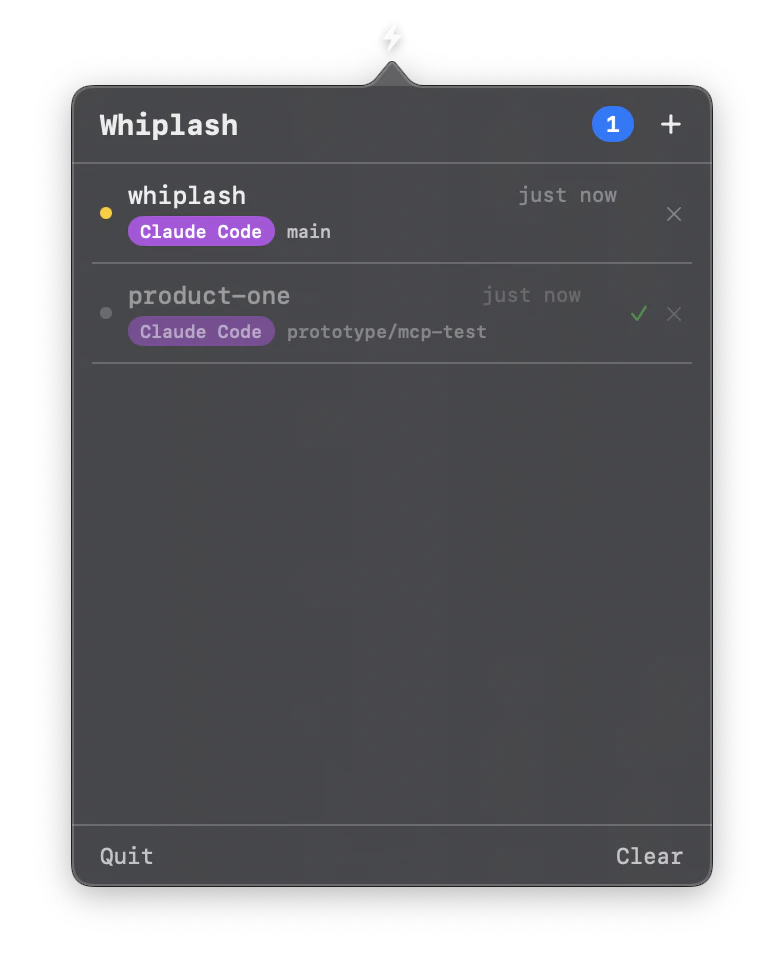
A macOS menu bar utility for tracking CLI agents & tasks across concurrent tabs. Works with Claude, Gemini, and Codex across Terminal, iTerm2, Ghostty. Open source, lightweight, no dependencies.
An open-source AI pipeline that transforms public domain literature into stylistically consistent graphic novels using a 7-pass enrichment pipeline and multi-model image generation.
An open-source AI pipeline that generates 100+ page graphic novels with consistent characters, dynamic layouts, and proper speech bubbles. Batch-first architecture designed for long-form text adaptation. Maintaining consistent diving gear and period-accurate equipment across underwater scenes remains one of the harder consistency challenges. Upload any public domain book as a .txt file. Grab one from Project Gutenberg . Choose from 14 art styles (watercolor, manga, noir, botanical...), 14 narrative tones, page count, and era constraints. The pipeline writes scripts, generates character references, illustrates panels, composes pages, and exports to PDF/EPUB. A 3-agent pipeline with a 7-pass…from arv.in
Does a similar job
all alternatives →

 I made a tiny book using a pen-plotter and AI2025 · muffinman.io · ▲150
Hey HN, I want to share a personal project: I made a tiny pen-plotted book for my wife. I did everything myself—drawings (with some help from Midjourney), plotting, cutting, and binding. I even used a 3D printer to make a helper tool. It's absolutely over-engineered, but I enjoyed it a lot. Multi-disciplinary projects, especially those with a physical output, are a lot of fun for me. The post covers the process in detail, but if you're interested in anything specific, let me know. Cheers!
- ICI co-wrote a novel with GPT-3 in 118 hours2020 · docs.google.com · ▲55
- FTFine-tuned Qwen2.5-7B on 100 films for probabilistic story graphsFeb 2026 · cinegraphs.ai · ▲101
Hi HN, I'm a computer systems engineering student in Mexico who switched from film school. I built CineGraphs because my filmmaker friends and I kept hitting the same wall—we'd have a vague idea for a film but no structured way to explore where it could go. Every AI writing tool we tried output generic, formulaic slop. I didn't want to build another ChatGPT wrapper, so I went a different route. The idea is simple: you input a rough concept, and the tool generates branching narrative paths visualized as a graph. You can sculpt those branches into a structured screenplay format and export to…

More dev tools this month
the category →
Contribute to oosexgang/hackios-xnu-kernel development by creating an account on GitHub.
Dev tools · 2d ago · github.com


open-source IDE for thoughtful software design. Contribute to devdotfast/whiteboard development by creating an account on GitHub.
Dev tools · 30d ago · github.com

Contribute to reladraw/reladraw development by creating an account on GitHub.
Dev tools · 28d ago · github.com
 OpenBot▲362
Grok Bot alternative: free, local, open-source, multiplayer
Dev tools · 25d ago · openbot.run
 Talanoa▲346
Hi HN, I’m a fullstack developer, and honestly, I’ve lost count of how many side projects I’ve worked on over the years. But one idea kept coming back to me: a different kind of email client. It first came to me in 2014: “What if we could handle emails more like conversations?” Every year, I’d revisit this concept in my “Build Notes.” Ten years later, no one had built exactly what I had in mind — so I finally decided to do it myself. That’s how Talanoa was born. I wanted something focused on people, not timelines. I was tired of marking messages as unread just to remember to reply later, or…
Dev tools · 23d ago · talanoa.email
Source: Show HN post ↗
Launched alongside, March 2026
the whole month →


Switch from ChatGPT to Claude with import memory feature
AI · Mar 2026 · claude.com
 Littlebird▲709
Littlebird remembers everything across your meetings, messages, docs, and apps, then takes action so you can recall any detail and never lose context.
AI · Mar 2026 · littlebird.ai

