
We built an open-source social-media simulator for research
Psychology research is currently facing a crisis: A significant amount of published studies cannot be reliably reproduced. Yet these studies will still be used in news headlines, and treated as fact. Research into social media has not been immune to this either, with the problem exacerbated by study designs that don’t match the real world. We built the Misinformation Game to aid in this problem. Our tool allows researchers to design social-media studies that look and feel like social media, while also making sure that each participant has a similar experience. This is really important for…
We built an open-source social-media simulator for research launched on February 7, 2023 with 49 votes, #1,225 of 3,829 launches that month and more than 90% of that year's launches. The site was still online in September 2026, 3 years on.
In plain words
The Misinformation Game is an open-source social-media simulator designed for psychology researchers. It enables researchers to create studies that replicate real social-media experiences while ensuring consistent conditions across all participants. This improves ecological validity and study reproducibility by reducing random variation and allowing study configurations to be shared alongside published research, addressing concerns about irreproducible findings in social-media psychology research.
written from the facts on this page · September 2026
From the sources
The Misinformation Game is a social-media simulator built to study how people interact with information on social-media. It’s also free and open-source!
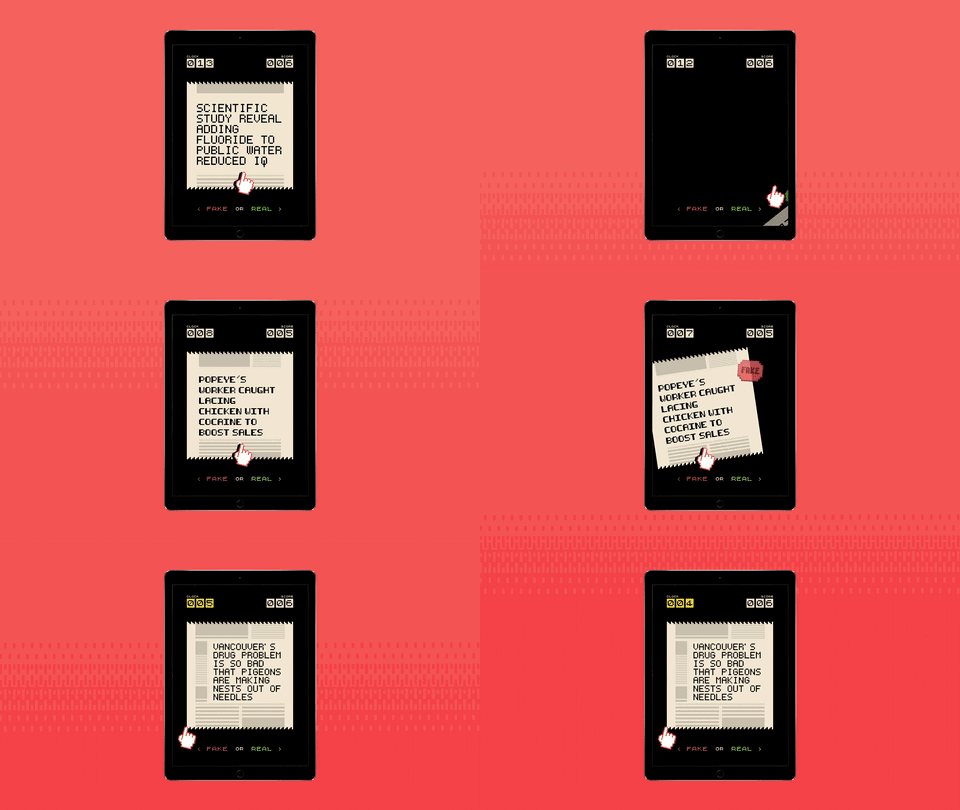
The Misinformation Game is a free and open-source social-media simulator built to study how people interact with information on social-media. To achieve this, The Misinformation Game simulates a social-media feed for research participants. Participants are shown fake social-media posts, either one at a time or in a feed format. Participants may then react to the posts and their comments. The Misinformation Game has been designed to be highly customisable so that a broad range of tightly controlled experiences can be created for participants. This customisability is a core focus of The Misinformation Game, to facilitate the research of a wide array of social-media related questions. Read…from misinfogame.com
In the maker’s words, at launch
Psychology research is currently facing a crisis: A significant amount of published studies cannot be reliably reproduced. Yet these studies will still be used in news headlines, and treated as fact. Research into social media has not been immune to this either, with the problem exacerbated by study designs that…
Does a similar job
all alternatives →




More dev tools this month
the category →

open-source IDE for thoughtful software design. Contribute to devdotfast/whiteboard development by creating an account on GitHub.
Dev tools · 28d ago · github.com

Contribute to reladraw/reladraw development by creating an account on GitHub.
Dev tools · 26d ago · github.com
 OpenBot▲362
Grok Bot alternative: free, local, open-source, multiplayer
Dev tools · 24d ago · openbot.run

Contribute to oosexgang/hackios-xnu-kernel development by creating an account on GitHub.
Dev tools · 13h ago · github.com
 Talanoa▲346
Hi HN, I’m a fullstack developer, and honestly, I’ve lost count of how many side projects I’ve worked on over the years. But one idea kept coming back to me: a different kind of email client. It first came to me in 2014: “What if we could handle emails more like conversations?” Every year, I’d revisit this concept in my “Build Notes.” Ten years later, no one had built exactly what I had in mind — so I finally decided to do it myself. That’s how Talanoa was born. I wanted something focused on people, not timelines. I was tired of marking messages as unread just to remember to reply later, or…
Dev tools · 21d ago · talanoa.email
Source: Show HN post ↗ · launch text quoted in part


