Life & fun · alternatives · 2026

24 alternatives to Deriving Hubble's constant from fundamental constants
This is a computational tool that derives Hubble's constant from fundamental physics constants. Available as a Google Colab notebook, it allows researchers and physicists to explore the mathematical relationships… Below are 24 products that do a similar job, ranked by how close each is in meaning and then by launch-day votes. Deriving Hubble's constant from fundamental constants launched in 2021; newer entries below may have overtaken it.
- 1LN
I was reviewing Dirac's Large Numbers Hypothesis (https://en.wikipedia.org/wiki/Dirac_large_numbers_hypothesis) and decided to give it a second go, now with measurements of fundamental constants more precise than 100 years ago. And I stumbled upon a value for Hubble's constant that's uncannily close. Here are the full calculations. https://colab.research.google.com/drive/1K1qoUFvqZp1fWbpcKJWq63nflgwS0ZHh?usp=sharing Meaningless, or meaningful coincidence?
2021 · its alternatives →
- 2IW
I was playing around with fundamental constants and out popped 13.8 billion light years. What is going on? the wavelength of an electron mass photon / (2pi) * the charge radius of a proton / the black hole radius of a proton = 13.8 billion light years ((h / (m_e * c * 2pi)) * (h / (m_p * c * pi/2)) / (2G * m_p / c^2)) = 13.8 billion light years…
2021 · its alternatives →
- 3RA
A short and sweet textbook on Einstein’s theory of relativity
2021 · ramp-book.com · its alternatives →
- 4CA
Hi everyone, here's a web app I made that generates code for efficiently approximating mathematical functions. This is useful when performance matters more than perfect accuracy, for example in embedded systems. The app uses Chebyshev expansions, which despite their theoretical depth result in suprisingly compact and readable code in practice. This code is generated for you and using it does not require any knowledge of the underlying theory. Source code and more info: https://github.com/stuffmatic/chebyshev-calculator
2024 · stuffmatic.com · its alternatives →
- 5

simple best
2025 · hackercodexxx-gitlab-io-123b1b.gitlab.io · its alternatives →
- 6IR
2021 · htwins.net · its alternatives →
- 7

- 8

- 9

React components for interactive math
2023 · mafs.dev · its alternatives →
- 10

We ported pbrt-v4 to Julia and built it into a Makie backend. Any Makie plot can now be rendered with physically-based path tracing. Julia compiles user-defined physics directly into GPU kernels, so anyone can extend the ray tracer with new materials and media - a black hole with gravitational lensing is ~200 lines of Julia. Runs on AMD, NVIDIA, and CPU via KernelAbstractions.jl, with Metal coming soon. Demo scenes: github.com/SimonDanisch/RayDemo
Feb 2026 · makie.org · its alternatives →
- 11

I've been iterating on a small galaxy visualization project that originally started as a university course assignment, using only provided sample data (no real astronomical distances). Recently, I updated it to include redshift-based distance data, which makes the 3D structure more meaningful and closer to real large-scale galaxy distributions. Repo: https://github.com/Avicted/galaxy_visualization_raylib Demo video (3D navigation + galaxy structures): https://www.youtube.com/watch?v=fC83RDWuPvw Current state: - Written in C (C99 standard) using Raylib -…
2024 · github.com · its alternatives →
- 12

Simple SDF mesh generation in Python. Contribute to fogleman/sdf development by creating an account on GitHub.
2021 · github.com · its alternatives →
- 13HO
3D gravity and space Simulator. Explore and play around with the force of gravity in the context of an array of scenarios from our solar system and beyond. You can add planets, delete the Sun, change the value of the gravitational constant or simply lean back and enjoy the dazzling beauty of the pen
2018 · thehappykoala.github.io · its alternatives →
- 14

Pure C# 3D real time physics simulation library, now with a higher version number. - bepu/bepuphysics2
2019 · github.com · its alternatives →
- 15PA
2014 · montepie.herokuapp.com · its alternatives →
- 16

Hi HN! I’ve spent the summer of the past 2 years building The Atlas, a procedural universe simulator that generates 1 sextillion galaxies (10²¹) from a single mathematical seed. Think No Man’s Sky meets theoretical physics, but running entirely in your browser. Everything is purely deterministic, the universe is calculated from SHA-256 hashed seeds using the golden ratio as primordial constant. There’s no database, no pre-saved data, just pure math. Time itself is treated as a coordinate, so the universe exists as a 4D structure where any moment can be computed on demand. Shut it down for…
2025 · github.com · its alternatives →
- 17

A virtual reality tool for mathematical modeling! Contribute to matryx/calcflow development by creating an account on GitHub.
2017 · github.com · its alternatives →
- 18

2013 · jonls.dk · its alternatives →
- 19

:copyright: Concurrent Programming Library (Coroutine) for C11 - sharow/libconcurrent
2016 · github.com · its alternatives →
- 20
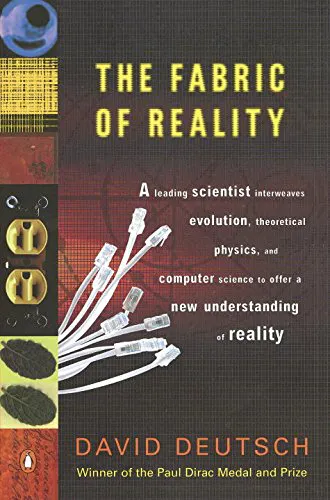
Evolution, Theoretical Physics and Computer Science
2015 · amazon.com · its alternatives →
- 21

finstruments is a Python library designed for modeling financial instruments. It comes with the core financial instruments, such as forwards and options, out of the box, as well as position, trade, and portfolio models. finstruments comes with the basic building blocks, making it easy to extend and build new instruments for any asset class. These building blocks also provide the functionality to serialize and deserialize to and from JSON, enabling the ability to store a serialized format in a document database. This library is ideal for quantitative researchers, traders, and developers who…
2024 · github.com · its alternatives →
- 22

Lean and lucid descriptions of modern physics
2015 · amazon.com · its alternatives →
- 23PP
Here's a simple RAG using MongoDB Atlas and Radiant geared towards plasma physics graduate students. Having been a plasma physicist in a past life my hope is this tool will be useful for anyone new to the field who is heads down reading existing literature. So far I have ingested a few papers I read in grad school, as well as my PhD thesis, but am happy to add more. Just let me know!
2023 · share.streamlit.io · its alternatives →
- 24
Also compare
- Large Numbers Hypothesis Revisited alternatives
- I was playing with fundamental constants and 13.8 b years popped out alternatives
- Relativity: A Modern Primer alternatives
- Chebyshev approximation calculator alternatives
- Cosmic Physics Calculator alternatives
- I rebuilt the Flash app “Scale of the Universe” in WebGL alternatives
Ranked by how close each launch is in meaning, then by votes. Prices were read from each product’s own site when checked and can change. Refine with your own description →