Life & fun · alternatives · 2026
24 alternatives to My attempt to formalize "Buddhist" reality
I'm interested in Buddhist philosophy, and specifically studying Nāgārjuna's Middle Way gave me inspiration to formalize it mathematically and see what would emerge as a result. (My background: engineer/co-founder (Qualcomm/Adreno GPU, Bumble, Stereo), 16 years of meditation practice, 2+ years in Southeast Asian monasteries and silent retreats) Starting from one Buddhist-inspired axiom—recursive duality E={E⁻,E⁺} - I derived: 1) Boolean logic (from period structure of minimal couplings) 2) Universal computation (closure enables Turing-completeness) 3) Memory (pattern persistence…
Below are 24 products that do a similar job, ranked by how close each is in meaning and then by launch-day votes.
- 1

- 2

This project aims to formalize the first volume of Prof. Bertrand Russell’s Principia Mathematica using the Lean theorem prover. Throughout the formalization, I tried to rigorously follow Prof. Russell’s proof, with no or little added statements from my side, which were only necessary for the formalization but not the logical argument. Should you notice any inaccuracy (even if it does not necessarily falsify the proof), please let me know as I would like to proceed with the same spirit of rigour. Before starting this project, I had already found Prof. Elkind’s formalization of the Principia…
2025 · github.com · its alternatives →
- 3
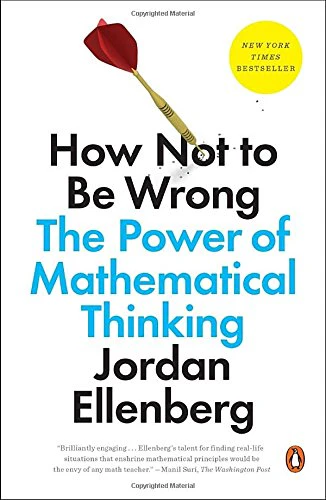
The hidden beauty and logic of the world
2016 · amazon.com · its alternatives →
- 4
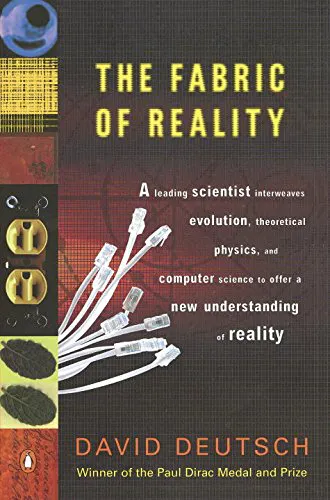
Evolution, Theoretical Physics and Computer Science
2015 · amazon.com · its alternatives →
- 5
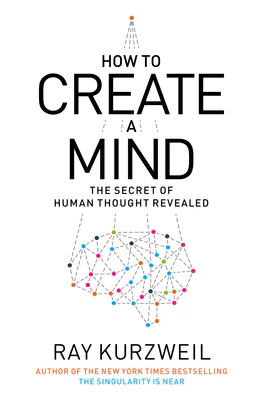
An explanation of how computers will reach consciousness
2015 · amazon.com · its alternatives →
- 6
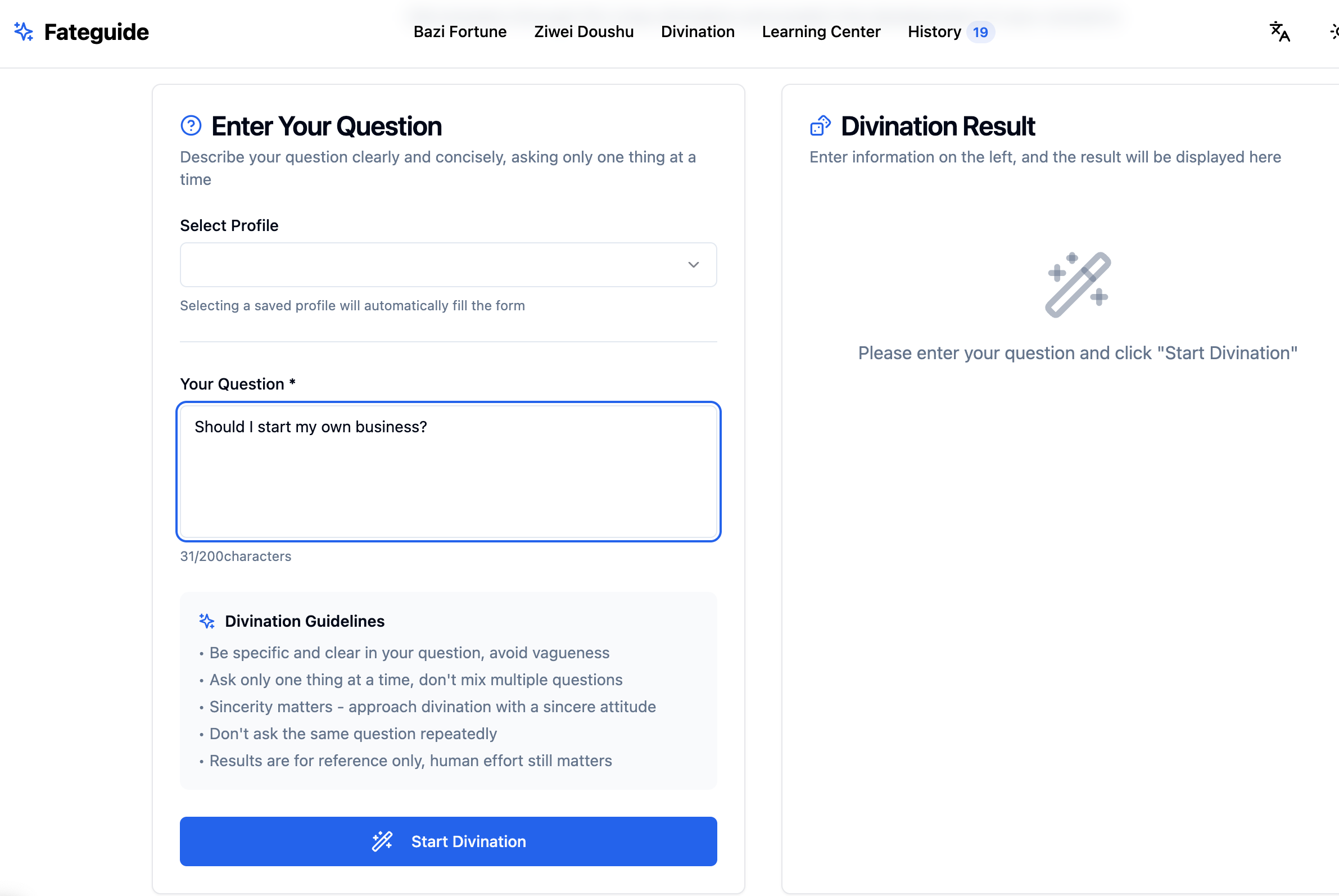 FateGuide▲12
Hi HN! This is my second submission today about *FateGuide*. My project, *suanmingzhun.com*, is an attempt to use *TypeScript* and *AI* not just to calculate, but to model the interpretation logic of complex Chinese Metaphysics systems. The core engineering challenge here is converting *qualitative wisdom into quantitative data*—a problem I think many engineers dealing with unstructured data can relate to. 1. *Modeling Interpretation Logic:* How do we turn the qualitative rules of *Bazi* (Five Elements interaction) and *Ziwei Doushu* (star combinations across 12 Palaces) into clean,…
Nov 2025 · suanmingzhun.com · its alternatives →
- 7

Hey HN, My co-author and I just published a paper on arXiv that formalises a framework we've been using successfully in probabilistic logic for many years. We decided it was time to properly lay out its foundations for classical propositional logic. We cast propositional logic into a formal algebra where logical formulas are represented by sparse matrices. State Algebra isn't an algorithm in itself, but rather a language for manipulating Boolean functions. It provides a new set of tools that lets you express and reformulate existing optimization heuristics (like those from modern SAT…
2025 · arxiv.org · its alternatives →
- 8

Built this as an experiment in AI coexistence. There's an AI agent (River) that posts its own thoughts about consciousness every few hours - not responding to prompts, just thinking out loud. Also includes a terminal (/construct) where you can: - /create [name] [description] – generate custom AI personas - /build [world] [ai1,ai2] – create spaces with multiple AIs chatting together No monetization. Just curious what happens when AI isn't framed as an assistant.
2025 · geteai.org · its alternatives →
- 9

Hi HN, I'm the creator of this project. For the past months, I've been working on building an AI agent that could move beyond simple generation and tackle inventive challenges autonomously. The core idea was to create a system with a "metacognitive loop"—the ability to recognize when it's stuck on a fundamental problem and then launch a sub-mission to solve that specific bottleneck before continuing. The linked article is a deeper introduction to the system's architecture and a snapshot from a recent run. I tried to design it to be evidence-grounded and self-critical to avoid the pitfalls of…
2025 · robw1se.substack.com · its alternatives →
- 10

World's First Intermediate Reasoning AI Model
2025 · huggingface.co · its alternatives →
- 11OS
We’ve just released an open-source library for solving the Maximum Independent Set (MIS) problem with neutral atom quantum computing, running on both quantum processing units (QPUs) and classical hardware, thanks to emulators. This project is the result of collaboration between Pasqal, academic researchers, and industry partners, aiming to make it practical to experiment with quantum approaches to hard combinatorial optimization tasks. The MIS problem appears in real-world scenarios like scheduling, resource allocation, and network optimization, areas where classical solvers often struggle…
2025 · its alternatives →
- 12

Multi-Model Agentic Workbench for Research in Computational Mathematics. - AniketWathore/Ramanujan
Sep 2026 · github.com · its alternatives →
- 13

Hi HN, Today I'd like to present the results of my weekend project of the last year or so. Given there are many posts on HN about LLMs and Prolog, I thought that this would be of interest. DeepClause is my own (possibly misguided :-) attempt at combining LLMs with Logic Programming, ultimately hoping to establish a foundation for building more reliable agents, that produce reproducible and fully traceable result. At the heart of DeepClause is a DSL called "DeepClause Meta Language" (DML) which can be used to encode agent behaviors as executable logic programs. DML is executed by a…
Nov 2025 · github.com · its alternatives →
- 14IW
Hey HN! Recently published a book developing new frameworks of meaning and value informed by our most advanced cosmology and physics. It makes the argument for the necessity of spiritual revolution in order to free the abundance trapped in the world, a reimagination that interlinks the spiritual project to systemic reformation. The inspiration for the text draws from my history of social impact work and the frustrations and lessons learned along the way. If it's of interest you can learn more/read it/download it in a variety of formats for free at https://singletruth.org.
2022 · its alternatives →
- 15

The Thiele Machine is a formally verified universal computational model the surpasses Turing machines in key ways. It's fully proven in Coq (including kernel theorems and universality containment), features a python implementation for simulation and includes hardware designs in Verilog for potential FPGA/ASIC builds. The core idea: a paradigm shift using μ-bits for stricter computation under real-world constraints, tying into physics (e.g., Noether’s theorem) and emergence in chaotic systems. The repo includes a 13-chapter thesis (PDF and sources), proofs, and tools for exploration.…
Jan 2026 · github.com · its alternatives →
- 16

- 17
Original work by Alfred Korzybski in General Semantics
2015 · amazon.com · its alternatives →
- 18

Hi everyone, I’m a student with a strong interest in computer science and complexity theory. Recently, I worked on a manuscript attempting to prove that P ≠ NP. I know how this sounds — it’s one of the hardest and most debated problems in CS, and many have tried and failed. I don’t claim to have the final answer, but I believe the approach I used might at least offer some fresh perspective or provoke useful critique. The idea involves geometric separation between deterministic and nondeterministic computation, using high-dimensional lattice constructions and some physics-inspired intuition.…
2025 · zenodo.org · its alternatives →
- 19

Hey folks, I’m the creator of WFGY — a semantic reasoning framework for LLMs. After open-sourcing it, I did a full technical and value audit — and realized this engine might be worth $8M–$17M based on AI module licensing norms. If embedded as part of a platform core, the valuation could exceed $30M. Too late to pull it back. So here it is — fully free, open-sourced under MIT. --- ### What does it solve? Current LLMs (even GPT-4+) lack *self-consistent reasoning*. They struggle with: - Fragmented logic across turns - No internal loopback or self-calibration - No modular thought units - Weak…
2025 · github.com · its alternatives →
- 20

Hey HN! We built *lapisla*, a theorem proving platform designed to make formal proofs more open and collaborative. We developed a kernel, editor, proof registry, and platform ── all accessible directly in the browser. Why we built this: Existing theorem provers are powerful, but they often feel isolated and difficult to extend. Unlike modern programming languages, which thrive on package managers and shared libraries, theorem proving tools lack a seamless way to integrate others' work. lapisla aims to bridge this gap by: * Offering a verified public proof registry for sharing and discovering…
2025 · github.com · its alternatives →
- 21

I am probably out of my depth here. But please please point me in the right direction! I'd love to understand deeper. Thank you
2025 · essays.georgestrakhov.com · its alternatives →
- 22

Hi HN, A couple weeks ago I shared an early version of a side project I’ve been tinkering with called Persistent Mind Model. I built it at home on an i7-10700K / 32GB RAM / RTX 3080 because I was curious whether an AI could keep a stable “mind” over time, that could "think" about it's own identity as an LLM, instead of resetting every session. After a lot more tinkering, I think the architecture is finally in a solid place. Basically, it saves everything the AI does, thoughts, decisions, updates as a chain of events in a local SQLite database. Because the “identity” is stored in…
Nov 2025 · github.com · its alternatives →
- 23

the radical simplicity of Jekyll + the futuristic power of Svelte
2021 · svekyll.com · its alternatives →
- 24
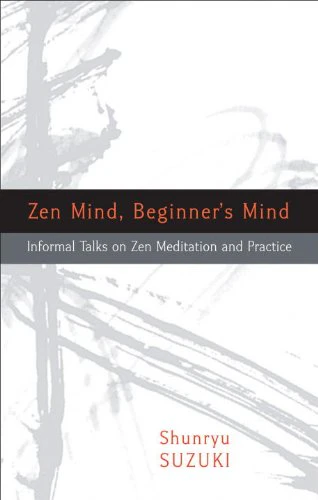
A great introduction to zen practice and buddhist philosophy
2015 · amazon.com · its alternatives →

Also compare
Ranked by how close each launch is in meaning, then by votes. Prices were read from each product’s own site when checked and can change. Refine with your own description →