I made a pictionary game with Stable Diffusion
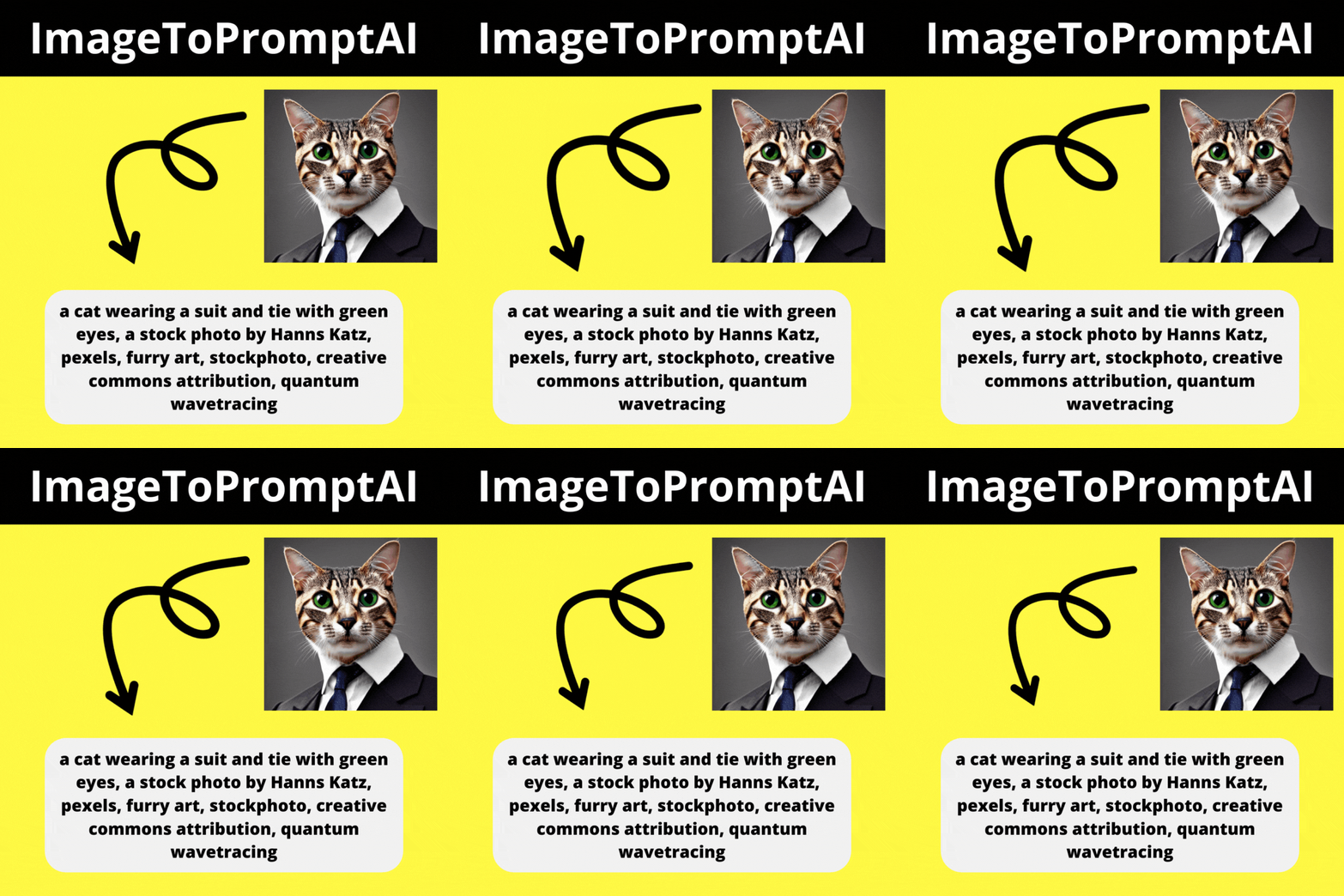
I used lixica.art to get image-prompt pairs. You are asked to guess the prompt. And given a score based on how close you were to the actual prompt.
I made a pictionary game with Stable Diffusion launched on September 4, 2022 with 16 votes, #963 of 3,464 launches that month and more than 75% of that year's launches. The site was not reachable when checked in September 2026.
In plain words
This is a pictionary game powered by Stable Diffusion where players view AI-generated images and guess the original text prompts used to create them. The game scores players based on how closely their guesses match the actual prompts. It uses image-prompt pairs from lixica.art and runs on Streamlit, making it accessible to anyone interested in exploring how text translates to images through AI generation.
written from the facts on this page · September 2026
Does a similar job
all alternatives →
 Stable Diffusion powered level editor for a 2D game2023 · generalrobots.substack.com · ▲395
Hey folks, I’ve been working on using control-net to take in a video game level (input as a depth image) and output a beautiful illustration of that level. Play with it here: dimensionhopper.com or read the blog post about what it took to get it to work. Been a super fun project.

 Stable Diffusion v2 web interface2022 · getimg.ai · ▲72
Design unique visuals with our Text to Image AI tool. Generate beautiful, custom images from your text prompts, with options for various styles.

More ai this month
the category →


Paintings by AI models: programs run through a simulation of oil paint.
AI · 20d ago · stillwet.art

 PixVerse R2▲381
A real-time world model you can explore and change
AI · 28d ago · world.pixverse.video
Source: Show HN post ↗
Launched alongside, September 2022
the whole month →- IM
Life & fun · 2022 · dogbunnypuzzle.com

A couple of years ago, I had an interesting idea. What if there was a marketplace where all the underlying tech was open-source? The order management system, the storefront, customer support, etc. The marketplace would simply connect to the seller’s infra instead of locking them in. If, for some reason, the seller is removed from the marketplace, their software stays with them and they can continue accepting orders directly. This model can be used to disrupt any marketplace from AirBNB to UberEats: building tech for home renters and restaurants and later, leveraging that to build a competing…
Dev tools · 2022 · openship.org