AI · alternatives · 2026

24 alternatives to Simple self-hosted LLM assistant with user-steered compounding context
I built a personal LLM assistant on Cloudflare Workers + Durable Objects. You specify a category and topic when starting a new conversation, so the backend maintains a summary for each category/topic - building up as more conversations happen under the same one. There is no complicated RAG, embeddings, or agentic magic, but the category/topic summaries system just works, and I've genuinely found it super handy and have been using it daily for my life and work. I started it to get familiar with Durable Objects and to test out this idea draft I had buried on my board. After recently…
Below are 24 products that do a similar job, ranked by how close each is in meaning and then by launch-day votes. Prices are shown for the 1 we have checked on their own sites, 1 of them free or with a free tier.
- 1
 Twigg▲157
Hi HN, we’re Jamie and Matti, co-founders of Twigg. During our master’s we continually found the same pain points cropping up when using LLMs. The linear nature of typical LLMs interfaces - like ChatGPT and Claude - made it really easy to get lost without any easy way to visualise or navigate your project. Worst of all, none of them are well suited for long term projects. We found ourselves spending days using the same chat, only for it to eventually break. Transferring context from one chat to another is also cumbersome. We decided to build something more intuitive to the ways humans think.…
2025 · twigg.ai · its alternatives →
- 2

Hi, I was a corporate lawyer for many years working with a lot of financial services and insurance companies. In practicing law, I noticed there was a lot of repetition in the tasks I was working on even as a highly paid attorney that could be automated. I wanted to solve the problem of dealing with a lot information and data in a practical way, using AI. This motivated me to start AI Bloks/LLMWare with my husband, who had a deep background in software and is a very early adopter of AI. We have been on this journey with our open source project LLMWare for the past 4 months, producing a…
2024 · github.com · its alternatives →
- 3

I’ve been building LLM tooling for a small VC fund and found myself explaining the same mental model over and over to non-technical people around me: how a stateless LLM becomes a chatbot, how tool use works, what an agent is mechanically, and why context windows shape all of it. I never found a guide that covered that full chain at the level I wanted, so I wrote one. It’s nine short chapters, each building on the last. Deliberately simplified: the goal is a useful mental model, not a textbook. Feedback, corrections, and contributions welcome: github.com/ymyke/aiaiai
Apr 2026 · aiaiai.guide · its alternatives →
- 4

I’d like to use LLMs for remembering all kinds of things: fitness, to-do lists, contacts, bug reports, research links, whatever. But there is no way to do that now. For example, if I find a great coding tutorial in chat, or tell it how much I ran yesterday, it forgets that when I close the chat. Even if I keep the chat history, I still need to scour through lots of messages to find the data I want. Ideally, Claude would remember all this, and I’d be able to find it later with ease. This is what my team built. It is a collaborative database you add to any LLM that supports MCP. (Claude Code,…
2025 · dry.ai · its alternatives →
- 5

Hi all! We've built our fair share of LLM apps, everything from Shopify agents to real-time clones of "Samantha" from "Her". We started facing a lot of annoyances & issues repetitively with building functional apps. So we sifted through 97K posts from the OpenAI Community to confirm and find people with similar problems (& we did). It turns out that there are a handful of low-level problems that everybody who is building an AI app that works well needs to solve: statefulness to manage conversations interaction interface between multiple agents and multiple users. robust document search…
2024 · github.com · its alternatives →
- 6

I trained the 65b model on my texts so I can talk to myself. It's pretty useless as an assistant, and will only do stuff you convince it to, but I guess it's technically uncensored? I'll leave it up for a bit if you want to chat with it. I posted this to Reddit and had several hundred people talking to it. Salient points from that discussion: LLAMA 1 65b Rank 128 5 epochs Batch size 1, 256 cutoff Trained in the Oobabooga suite using bitsandbytes 4-bit quantization for the lora Loss around 1.5 seems to give the most coherent results Trained on raw text dumps that is then parsed by a crappy…
2023 · airic.serveo.net · its alternatives →
- 7

Hey HN, We’re excited to share PySpur, an open-source tool that provides a graph-based interface for building, debugging, and evaluating LLM workflows. Why we built this: Before this, we built several LLM-powered applications that collectively served thousands of users. The biggest challenge we faced was ensuring reliability: making sure the workflows were robust enough to handle edge cases and deliver consistent results. In practice, achieving this reliability meant repeatedly: 1. Breaking down complex goals into simpler steps: Composing prompts, tool calls, parsing steps, and branching…
2024 · github.com · its alternatives →
- 8CA
Current AI chat assistants face a fundamental challenge: context management in long conversations. While current LLM apps use multiple separate conversations to bypass context limits, a truly human-like AI assistant should maintain a single, coherent conversation thread, making efficient context management critical. Although modern LLMs have longer contexts, they still suffer from the long-context problem (e.g. context rot problem) - reasoning ability decreases as context grows longer. Memory-based systems have been invented to alleviate the context rot problem, however, memory-based…
Nov 2025 · its alternatives →
- 9
 PAI▲9
PAI▲9Hi HN! I've been spending the past month on PAI, a Linux-esque harness for a personal assistant AI for your Mac. Instead of giving a chatbot a bunch of tools, I wanted to just drop the LLM into a terminal and see how it'd fare. I've been using it to manage my calendar, 5+ email accounts, and engaging with / responding to people in a timely manner (casus belli for this entire project). After seeing how other always-on assistants were designed, I thought the Unix / Linux philosophy of system design could be applied to AI harnesses, and I wanted to experiment with how it'd hold up…
Jul 2026 · whitematterlabs.ai · its alternatives →
- 10

Excited to share a project I’ve been building for months! Would love to receive honest feedback :) My motivation: AI is clearly going to be the interface for data. But earlier attempts (text-to-SQL, etc.) fell short — they treated it like magic. The space has matured: teams now realize that AI + data needs structure, context, and rules. So I built a product to help teams deliver “chat with data” solutions fast with full control and observability (agent tracing, quality scores, etc) — am I wrong? The product allows you to connect any LLM to any data source with centralized context…
2025 · github.com · its alternatives →
- 11
 Overbooked▲12
Hi HN, Many people underestimate the importance of context when using LLMs. I used to fire off vague prompts like: “Hey, build me the X tool” or “Generate a long-form article on Global Warming”. and got generic, sloppy responses. Turns out, the problem wasn’t just the prompts, I needed a more systematic solution. So I started building AI capabilities into our agency’s management tool, Overbooked. After hours of iteration, I realized how powerful it is when you combine structured data with the right agent tools. There are two sides to the coin: Using the MCP Server inside the IDE You can…
2025 · overbooked.app · its alternatives →
- 12RA
Hey HN, I'm a founder at Ovlo a supply chain company.I had a problem. After every batch of customer interviews/research/feedback sessions, I'd run ideas through an LLM to help me decide what we should build next. Except it was obvious to my cofounder I wasn't really validating anything. LLMs are incredibly good at agreeing with you in subtle ways, especially when you feed them context that already reflects your thoughts. I'd ask "Does this make sense?" and get a beautifully worded essay about why yes, obviously, this is the best thing ever. I was using AI as an echo chamber without…
Dec 2025 · roundtable.ovlo.ai · its alternatives →
- 13HP
Hi HN. I heard you like dev tools and AI, so we wanted to share our project that we’ve been working on. We’re working on Horizon [1] - a higher level abstraction for LLMs so that developers can spend less time trying to grapple with LLMs to make them work and more time with users. This is the starting feature set which takes an auto-ML approach to identify the optimal LLM model, hyperparameters, and prompt - instead of just giving you the tooling to figure it out yourself. You can read more about it in our documentations. Our view is that as LLMs become increasingly commoditized and prompts…
2023 · gethorizon.ai · its alternatives →
- 14KA
Hey HN! I've spent the past year full-time building Knowing, a tool for interacting with LLMs directly inside hierarchical structures instead of the usual prompt-response format. The idea started because I realized how much more intuitive it felt to build concept hierarchies continuously—no more endless copy-pasting or wondering how everything connects. The journey’s been a struggle. While I see huge potential in structuring AI interactions this way (writing books fast, planning projects, or organizing ideas), it’s been hard to pin down clear use cases in the market. I’m also working in near…
2024 · its alternatives →
- 15

I found myself building a bunch of LLM-backed features that needed to use tool calling, and some of those tools involved doing things that were somewhat high stakes - communicating on my behalf or modifying shared / production data. one example - I wanted to replace a marketing website with a chatbot + vector DB loaded with the previous content, docs, and blog posts. Between hallucinations, missing knowledge base info, and the LLM generally writing like an psuedo-intellectual high schooler, I realized I couldn't trust it to communicate unsupervised with my website visitors. I needed a…
2024 · github.com · its alternatives →
- 16
 Memlayer▲6
The plug-and-play memory layer for smart, contextual agents
Nov 2025 · github.com · its alternatives →
- 17
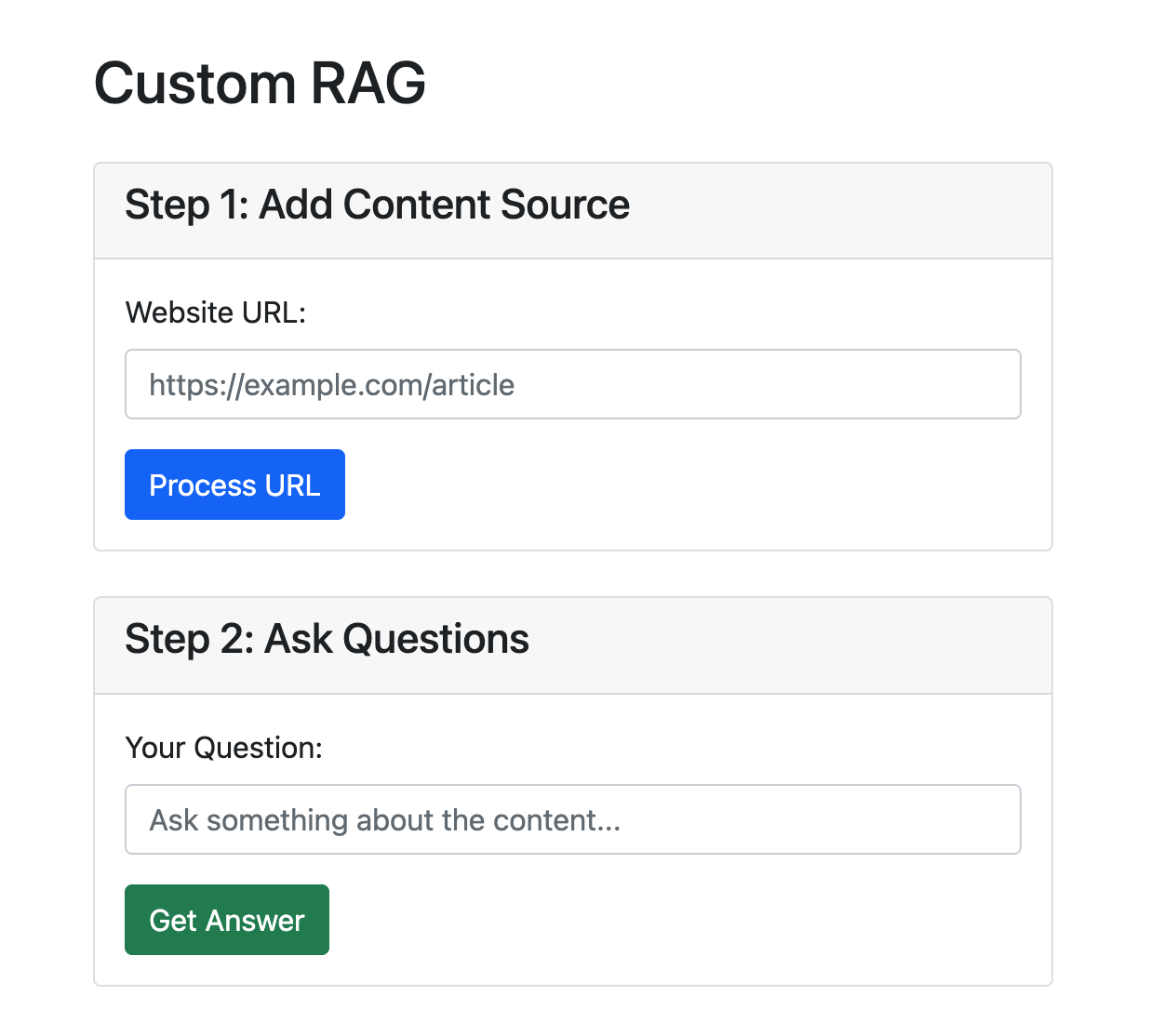 Hanky▲5
Make your own context-aware LLM with ease. Just upload a URL
2025 · curranjrobertson.github.io · its alternatives →
- 18

LLMStack is a low-code platform that can be used to build LLM apps, chatbots and integrate AI experiences into existing products/workflows. It comes with everything out of the box that one needs to build LLM apps locally. It can also be used in a multi-tenant setting, making it available for everyone to use in an enterprise. Some highlights of the platform: - Chain multiple LLM models allowing for complex pipelines - Includes a vector database and necessary connectors to help enrich LLM responses with private data - App templates tailored to specific use cases to quickly build LLM apps…
2023 · github.com · its alternatives →
- 19

Hi all, I threw together a small prototype I am calling “Notepad.ai”. A new take on UIs for interacting with LLMs. While I enjoy using LLM’s in the chat format I wanted to see what it would be like to do it in a more long form style. It let’s you write in a pretty free form, much like Window’s Notepad, but you can choose to hit ctrl+[ to analyze the text with a preset prompt of your choosing. It has a few other small features. It’s WIP and very experimental. I would appreciate any feedback or thoughts. Video: https://youtu.be/ntdlgFmSxQY Live Demo:…
2024 · github.com · its alternatives →
- 20

Hi HN, A couple weeks ago I shared an early version of a side project I’ve been tinkering with called Persistent Mind Model. I built it at home on an i7-10700K / 32GB RAM / RTX 3080 because I was curious whether an AI could keep a stable “mind” over time, that could "think" about it's own identity as an LLM, instead of resetting every session. After a lot more tinkering, I think the architecture is finally in a solid place. Basically, it saves everything the AI does, thoughts, decisions, updates as a chain of events in a local SQLite database. Because the “identity” is stored in…
Nov 2025 · github.com · its alternatives →
- 21LF
I've been building agentic apps for some large Fortune 500 companies (T-Mobile, Twilio, etc.) and developed a mental model that serves as a practical guide in building agentic apps: separate the high-level agent specific logic from low-level platform capabilities. I call it the L-MM: the Logical Mental Model for LLM applications. This mental model has not only been tremendously helpful in building agents but also helping customers think about the development process - so when I am done with a consulting engagement they can move faster across the stack and enable engineers and platform teams…
2025 · its alternatives →
- 22

Hey HN! I built Experiment to solve a common frustration in LLM development: the lack of proper tools for prompt engineering experimentation. Here's what makes it different: Key Features: - Load and edit chat completion logs from CSV files - Fork and modify specific conversation entries - Run inference via Anthropic, Mistral, and OpenAI - Define custom tools using JSONSchema format - Visual tool usage analysis with collapsible, sorted key-value pairs - Full mobile support and available as installable PWA Technical Highlights: - Built with React using custom isomorphic architecture -…
2025 · github.com · its alternatives →
- 23
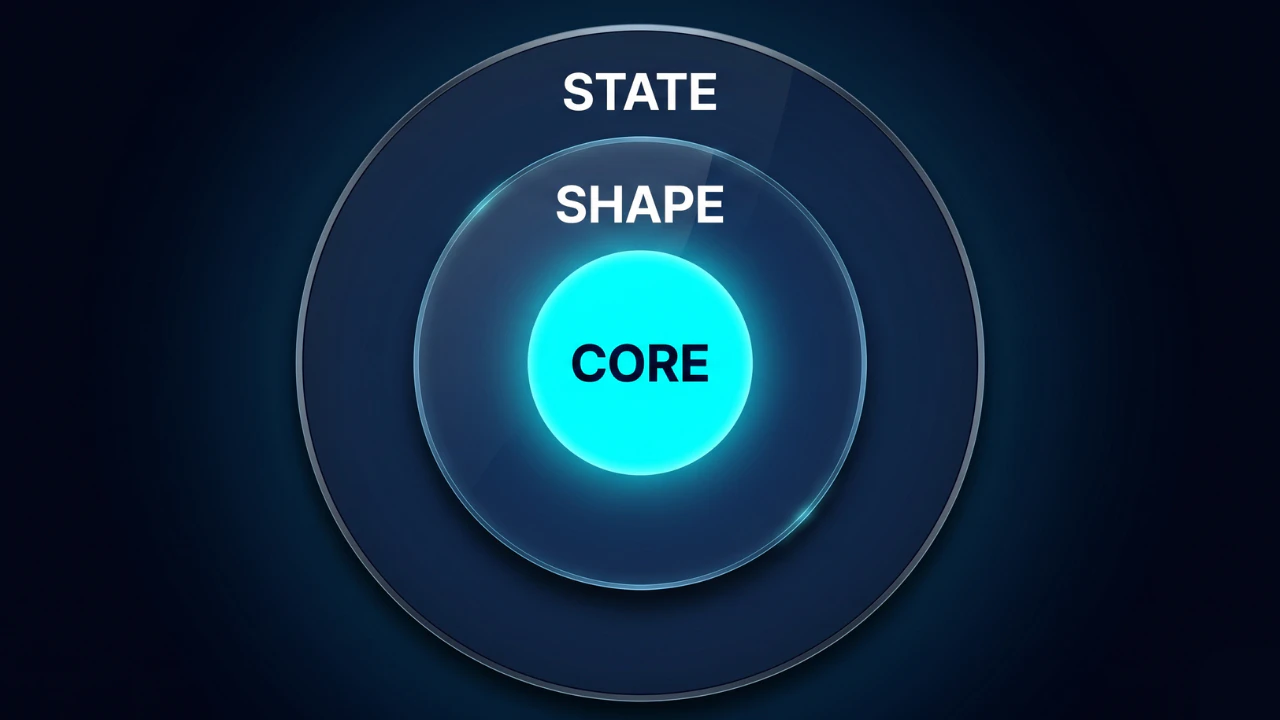
Local, portable, + open source context across all LLMs
Jun 2026 · its alternatives →
- 24LG
Hi there, I've decided to jump on the AI train and put something together with low effort & high reward, to see if it can get any traction. What do you think? Is it a promising area? Do you guys have ideas for me? There is obviously going to be sea of LLM generated content out there and one project adding up to it might not necessarily be what world needs. In the same time there is something intriguing about the area. Well, please play with it and let me know what y'all think. Much appreciated.
2023 · canonica.ai · its alternatives →
Also compare
- Twigg alternatives
- LLMWare – Small Specialized Function Calling 1B LLMs for Multi-Step RAG alternatives
- Aiaiai.guide: Plain-English mental model for LLM apps, tools and agents alternatives
- Object database for LLMs that persists across chats (MCP server) alternatives
- Julep: A platform to manage memories, knowledge and tools for LLM apps alternatives
- I trained a 65B LLM on my texts to talk to myself (details inside) alternatives
Ranked by how close each launch is in meaning, then by votes. Prices were read from each product’s own site when checked and can change. Refine with your own description →