Life & fun · alternatives · 2026
24 alternatives to What if the speed of light was 5 km/h?
Special relativity simulator in which light crawls along at a human speed, so Lorentz contraction, aberration and Doppler shift happen at walking pace.
Relativity Park is a free interactive simulator that slows the speed of light to 5 kilometers per hour, allowing users to observe relativistic effects at human-comprehensible speeds. As users accelerate through the… Below are 24 products that do a similar job, ranked by how close each is in meaning and then by launch-day votes.
- 1IB
I built this because measuring my age in years felt boring—I wanted to see the kilometers. The first version only used Earth's orbital speed (~30km/s), but the number moved too slowly. To get the "existential dread" feeling, I switched to using the Milky Way's velocity relative to the CMB (~600km/s). The math takes some liberties (using scalar sum instead of vector) to make the speed feel "fast," but it gets the point across. Under the hood, it's a single HTML file with zero dependencies. No React, no build step. The main challenge was the canvas starfield—I had to pre-allocate the…
Jan 2026 · cosmic-odometer.vercel.app · its alternatives →
- 2OI
Things orbital and not.
2016 · orbides.org · its alternatives →
- 3PA
We have a black hole at home — with actual relativistic physics, live in your browser. I'm Sasha (Alexander) Plavin, an astrophysicist at Harvard's Black Hole Initiative studying quasars and black hole environments. I work with raytracing/radiative transfer simulations professionally, and wanted to make one anyone can play with — so I built this app. Put the black hole onto your screen (any browser), or directly into your room with AR or VR (requires WebXR, for example Chrome on Android, or any VR headset). When looking around, pay attention to unintuitive relativistic effects: rays…
Jul 2026 · blackhole.plav.in · its alternatives →
- 4GI
Just for fun and self education, I've built this over a weekend to teach myself why orbits exist, not just show planets going around. Something that was never clearly explain to me in school. It opens with a guided tour that builds the idea up step by step: two bodies and the equal/opposite force, inertia (the Sun is removed and Earth just drifts straight), then "an orbit is falling and continuously missing," cosmic velocities with a little rocket, Voyager 1 & 2's real gravity assists (the clock runs the actual 1977–1989 dates so the planets orbit into their grand-tour alignment and the…
Jun 2026 · qunabu.github.io · its alternatives →
- 5

2020 · pakastin.github.io · its alternatives →
- 6RA
A short and sweet textbook on Einstein’s theory of relativity
2021 · ramp-book.com · its alternatives →
- 7AS
I really like the look of the famous album art for Unknown Pleasures [1]. It was originally created by Harold Craft at the Arecibo Observatory from the signals of the first discovered radio pulsar [2]. I made a spectrogram that produces a similar look. It runs FFT in Rust and visualizes it with WebGL. [1]: https://en.wikipedia.org/wiki/File:UnknownPleasuresVinyl.jpg [2]: https://en.wikipedia.org/wiki/PSR_B1919%2B21
2024 · aestuans.github.io · its alternatives →
- 8A2
2017 · htmlpreview.github.io · its alternatives →
- 9

What humans could do in 1s/min/h/week/month/year
2017 · relativityoftime.net · its alternatives →
- 10VJ
Velocity.js: An incredibly fast animation engine for motion designers.
2014 · velocityjs.org · its alternatives →
- 11
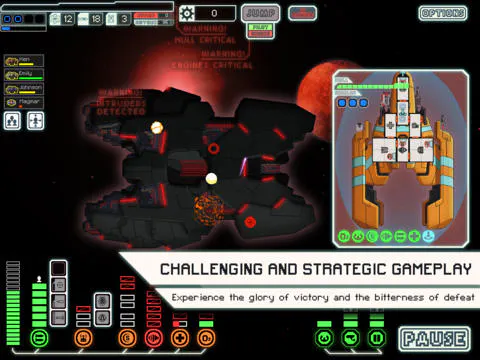
- 12

Gravity WebGL experiment in the Solar System
2016 · github.com · its alternatives →
- 13
 Odyssey 3▲159
A world model that simulates physics in real time
18d ago · odyssey.systems · its alternatives →
- 14
 The Kinetic▲73
Microlight dynamically reacts to your movement (Kickstarter)
2014 · futuristiclights.com · its alternatives →
- 15

100th anniversary of The Theory of Relativity
2015 · its alternatives →
- 16IB
2022 · multiplanetary.website · its alternatives →
- 17HO
3D gravity and space Simulator. Explore and play around with the force of gravity in the context of an array of scenarios from our solar system and beyond. You can add planets, delete the Sun, change the value of the gravitational constant or simply lean back and enjoy the dazzling beauty of the pen
2018 · thehappykoala.github.io · its alternatives →
- 18

Real-time 2D gravity sandbox with causal propagation (finite c), GW-strain heatmaps, and a virtual LIGO probe. Numba JIT, CPU-only. - alessandro-pioli/AstroCausal_Engine
Sep 2026 · github.com · its alternatives →
- 19IB
Mar 2026 · structuredlabs.github.io · its alternatives →
- 20
- 21

How to live your life in "slow-motion" ⏰ - nice concepts!
2016 · benjaminhardy.com · its alternatives →
- 22

A 2D rigid-body dynamics simulator with some cool features for generating beautiful animations. - diegomacario/Dyna-Kinematics
2020 · github.com · its alternatives →
- 23

I started teaching my daughter physics by showing her how things actually work - plucking guitar strings to explain vibration, mixing paints to understand light, dropping objects to see gravity in action. She learned so much faster through hands-on exploration than through books or videos. That's when I realized: what if I could recreate these physical experiments as interactive simulations? Lumen is the result - an interactive physics playground covering sound, light, motion, life, and mechanics. Each module lets you manipulate variables in real-time and see/hear the results…
Jan 2026 · projectlumen.app · its alternatives →
- 24
 Quantum Lake▲67
Drive your cosmic fish shoals through space-time labyrinths
2016 · apps.apple.com · its alternatives →
Also compare
- I built a space travel calculator using Vanilla JavaScript alternatives
- OpenGL in super slow motion – visualising Z-buffering alternatives
- Physically accurate black hole you can put in your room alternatives
- Gravity – Interactive solar-system simulator, from Newton to Einstein alternatives
- Simple 2D car physics with JavaScript alternatives
- Relativity: A Modern Primer alternatives
Ranked by how close each launch is in meaning, then by votes. Prices were read from each product’s own site when checked and can change. Refine with your own description →