Life & fun · alternatives · 2026
24 alternatives to I built an interactive 3D three-body problem simulator in the browser
This interactive browser-based simulator lets users explore the three-body problem, a classical physics concept where three celestial bodies interact gravitationally. Built for physics enthusiasts and students, it… Below are 24 products that do a similar job, ranked by how close each is in meaning and then by launch-day votes. Prices are shown for the 2 we have checked on their own sites, 2 of them free or with a free tier.
- 1

Features include: - Several preset periodic orbits: the classic Figure-8, plus newly discovered 3D solutions from Li and Liao's recent database of 10,000+ orbits (https://arxiv.org/html/2508.08568v1) - Full 3D camera controls (rotate/pan/zoom) with body-following mode - Force and velocity vector visualization - Timeline scrubbing to explore the full orbital period The 3D presets are particularly interesting. Try "O₂(1.2)" or "Piano O₆(0.6)" from the Load Presets menu to see configurations where bodies weave in and out of the orbital plane. Most browser…
Nov 2025 · trisolarchaos.com · its alternatives →
- 2IA
Somewhat inspired by a recent post here, I also made a three-body simulation on a whim, meaning to try out macroquad[0] (verdict: really nice!). Thanks to the engine I could trivially target wasm as well, so others can get mesmerized too. The source is available here: https://github.com/sulami/three-bodies [0]: https://docs.rs/macroquad/latest/macroquad
2024 · three-bodies.sulami.xyz · its alternatives →
- 3IB
2022 · multiplanetary.website · its alternatives →
- 4

I was wondering how I can arrange objects along a spherical helix path, and read some articles on it. I ended up learning about parametric equations again, and make this visualization to document what I learned: https://visualrambling.space/moving-objects-in-3d/ feel free to visit and let me know what you think!
2025 · visualrambling.space · its alternatives →
- 5GI
Just for fun and self education, I've built this over a weekend to teach myself why orbits exist, not just show planets going around. Something that was never clearly explain to me in school. It opens with a guided tour that builds the idea up step by step: two bodies and the equal/opposite force, inertia (the Sun is removed and Earth just drifts straight), then "an orbit is falling and continuously missing," cosmic velocities with a little rocket, Voyager 1 & 2's real gravity assists (the clock runs the actual 1977–1989 dates so the planets orbit into their grand-tour alignment and the…
Jun 2026 · qunabu.github.io · its alternatives →
- 6
 Atlas of Spacefree▲770
Hello HN! Sharing a recent side project of mine, the Atlas of Space, that I built out to explore the Solar System. As a long-time space nerd, I realized recently that I didn't have a good intuition on the scale, speed, and relative orientation of the celestial bodies around us. So over the break I built out a kind of spatial Wikipedia to click around and learn about planets, moons, asteroids, and other bodies orbiting the Sun. The physics is all simulated in the browser using simple Newtonian mechanics. There's a lot left to do from here, including modeling objects in non-Keplerian orbits…
2025 · atlasof.space · its alternatives →
- 7IM
I made this site using R3F (https://github.com/pmndrs/react-three-fiber), a React renderer for 3JS (https://threejs.org/). The celestial bodies are Three.JS meshes. I used loaders (namely 'useLoader' from R3F and 'GLTFLoader' from 3JS) to import 3D models, such as International Space Station. More on loading models in R3F: https://docs.pmnd.rs/react-three-fiber/tutorials/loading-mod... I've future plans for this side project. It would be great to hear from the HN community before diving into them. Enjoy! P.S: Getting an empty…
2022 · spaceinbrowser.com · its alternatives →
- 8OS
2019 · alexanderperrin.com.au · its alternatives →
- 9
 I built a synthesizer based on 3D physicsfree tier, from $99/mo▲512
I've been working on the Anukari 3D Physics Synthesizer for a little over two years now. It's one of the earliest virtual instruments to rely on the GPU for audio processing, which has been incredibly challenging and fun. In the end, predictably, the GUI for manipulating the 3D system actually ended up being a lot more work than the physics simulation. So far I am only selling it direct on my website, which seems to be working well. I hope to turn it into a sustainable business, and ideally I'd have enough revenue to hire folks to help with it. So far it's been 99% a solo project, with…
2025 · anukari.com · its alternatives →
- 10HO
3D gravity and space Simulator. Explore and play around with the force of gravity in the context of an array of scenarios from our solar system and beyond. You can add planets, delete the Sun, change the value of the gravitational constant or simply lean back and enjoy the dazzling beauty of the pen
2018 · thehappykoala.github.io · its alternatives →
- 11
 Odyssey 3▲159
A world model that simulates physics in real time
13d ago · odyssey.systems · its alternatives →
- 12

I went down the rabbit hole on a side project and ended up building this: Strange Attractors(https://blog.shashanktomar.com/posts/strange-attractors). It’s built with three.js. Working on it reminded me of the little "maths for fun" exercises I used to do while learning programming in early days. Just trying things out, getting fascinated and geeky, and being surprised by the results. I spent way too much time on this, but it was extreme fun. My favorite part: someone pointed me to the Simone Attractor on Threads. It is a 2D attractor and I asked GPT to extrapolate it to…
Oct 2025 · blog.shashanktomar.com · its alternatives →
- 13

Interactive notes for algebra based physics with explorable explanations
2020 · landgreen.github.io · its alternatives →
- 14

2020 · pakastin.github.io · its alternatives →
- 15A2
2017 · htmlpreview.github.io · its alternatives →
- 16

- 17VT
Hi everyone! I'm the author of this project. I wrote it because I think that the math that makes characters move in games and movies is incredibly beautiful, and I wanted to give others a glimpse into it. It's crazy to think that quaternions, an abstract mathematical tool discovered by William Rowan Hamilton in 1843, would be so perfectly suited to solve hard problems in the world of 3D character animation more than a hundred years later. The story of how he discovered quaternions is also beautiful. Here's an excerpt from Wikipedia: "Hamilton was looking for ways of extending complex numbers…
2022 · diegomacario.github.io · its alternatives →
- 18AS
I really like the look of the famous album art for Unknown Pleasures [1]. It was originally created by Harold Craft at the Arecibo Observatory from the signals of the first discovered radio pulsar [2]. I made a spectrogram that produces a similar look. It runs FFT in Rust and visualizes it with WebGL. [1]: https://en.wikipedia.org/wiki/File:UnknownPleasuresVinyl.jpg [2]: https://en.wikipedia.org/wiki/PSR_B1919%2B21
2024 · aestuans.github.io · its alternatives →
- 19
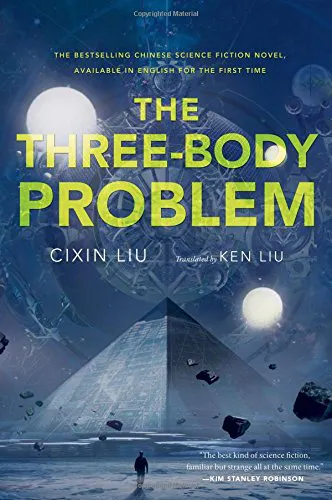
A secret military project sends signals into space
2015 · amazon.com · its alternatives →
- 20IM
A while ago I discovered three.js, a JavaScript library to manipulate 3D objects. It looked really interesting, but I had no real need for it... To change that I recently challenged myself to make one 3D web game per month with three.js. And I just release game #2, a puzzle game called Cuboid, and you can try it here: https://www.thomasfriday.com/cuboid/ Please let me know if you have any questions or feedback. Thanks!
2023 · thomasfriday.com · its alternatives →
- 213M
2019 · urk-3d-multi-space-game.herokuapp.com · its alternatives →
- 22
 AstroGrid▲113
Explore the entire universe in your browser, in real 3D
Apr 2026 · velonspace.com · its alternatives →
- 23NB
2018 · novoselrok.github.io · its alternatives →
- 24

I started teaching my daughter physics by showing her how things actually work - plucking guitar strings to explain vibration, mixing paints to understand light, dropping objects to see gravity in action. She learned so much faster through hands-on exploration than through books or videos. That's when I realized: what if I could recreate these physical experiments as interactive simulations? Lumen is the result - an interactive physics playground covering sound, light, motion, life, and mechanics. Each module lets you manipulate variables in real-time and see/hear the results…
Jan 2026 · projectlumen.app · its alternatives →
Also compare
- Browser-based interactive 3D Three-Body problem simulator alternatives
- I also made a three-body simulation alternatives
- I built a gravity simulator in pure CSS alternatives
- I was curious about spherical helix, ended up making this visualization alternatives
- Gravity – Interactive solar-system simulator, from Newton to Einstein alternatives
- Atlas of Space alternatives
Ranked by how close each launch is in meaning, then by votes. Prices were read from each product’s own site when checked and can change. Refine with your own description →