Life & fun · alternatives · 2026

24 alternatives to Live webcam metal pin toy simulation powered by WebGPU depth estimation
This is a digital recreation of classic metal pin toy gadgets that uses your webcam and WebGPU technology to estimate depth from video feed. The simulation lets users interact with the virtual pins in real-time… Below are 24 products that do a similar job, ranked by how close each is in meaning and then by launch-day votes.
- 1

E-ink bird frame for Raspberry Pi - real-time bird detection by audio, fully local AI, rendered as real, hand-cut 1800s bird illustrations. - arnegiacomo/fugleramme
Sep 2026 · github.com · its alternatives →
- 2

Fun little side project I built after learning about circuit bending in cameras for intentional glitch effect. It is browser based camera toy where you "rewire" CCD pin pairs, turn knobs to get different glitch artefacts in real time to capture as photos. I had fun learning to simulate different pin modes - channel split, hue/phase shifts, horizontal clock delays, colour kill etc. Here are some photos taken: https://glitchycam.com/gallery I intentionally leaned towards skeuomorphic design for nostalgia. I miss the days where I'd spend hours making a button to look like a…
Feb 2026 · glitchycam.com · its alternatives →
- 3

In browser PPO training demo, made possible by tinygrad: TinyJit -> WebGPU kernels. Requires WebGPU.
May 2026 · ppo.gradexp.xyz · its alternatives →
- 4
 ESP32 RC Cars▲335
This is a projected I started that blends both the fun of playing a split screen multiplayer driving game and controlling real rc cars. The cars can also be controlled via bluetooth gamepads and is meant to be easily hackable.
2025 · github.com · its alternatives →
- 5PT
We just released a very excited touch sensor that finally simplifies touch sensing for robotics. Our most exciting result: Learned visuotactile policies for precise tasks like inserting USBs and credit card swiping, that work out-of-the-box when you replace skins! To the best of our knowledge, this has never been shown before with any existing tactile sensor. Why is this important? For the first time, you could now collect data and train models on one sensor and expect them to generalize to new copies of the sensor -- opening the door to the kind of large foundation models that have…
2024 · any-skin.github.io · its alternatives →
- 6

The mooooooost nerdiest enamel pin ever
2025 · newmuseumstore.org · its alternatives →
- 7
 WebGPU Tech Demo▲141
WebGPU tech demo running in modern browsers showcasing various rendering techniques like deferred rendering with 400+ dynamic lights, Hi-Z screen space reflections and cascaded shadow mapping.
2024 · gnikoloff.github.io · its alternatives →
- 8

This is a little toy project of mine that lets you simulate digital logic graphs. It was inspired by Minecraft's Redstone and the Piet esolang. It's got some serious drawbacks-- you write circuits as PNGs and simulate them with a Python interface. It's slow to run and slow to experiment with. And it is certainly difficult to use for people with any kind of color blindness. But despite that, I hope this can still be a fun toy!
2022 · github.com · its alternatives →
- 9

I've been learning all about autostereograms (aka "Magic eye" illusions) recently and had a fun idea: If I can somehow get a depth image of my webcam, I can see myself in a "magic (eye) mirror" on my screen. It turns out that it's actually pretty feasible to get real-time depth estimates, at least on newer hardware and in browsers with WebGPU. To my delight, this worked pretty well, so I decided to polish it somewhat and share it here. To be honest, all the heavy lifting is done by the depth-estimation model [1], otherwise this demo just wouldn't be possible. I will warn you that viewing…
2015 · namuol.github.io · its alternatives →
- 10

Hi HN, author here. SHARP is Apple's recent single-image 3D Gaussian splatting model (https://arxiv.org/abs/2512.10685). Their reference code is PyTorch + a pretty heavy pipeline; I wanted to see if it could run in a browser with no server hop, so I exported the predictor to ONNX and ran it via onnxruntime-web with the WebGPU EP. What works: drop in an image, get a .ply you can download or preview live, all on your machine — your image never leaves the tab. The model is large (~2.4 GB sidecar) so first load is slow on a cold cache, but inference itself is a few seconds on…
May 2026 · github.com · its alternatives →
- 11

Copper is an operating system for robots - build, run, and replay your entire robot deterministically. - Home · copper-project/copper-rs Wiki
2024 · github.com · its alternatives →
- 12

- 13

- 14

I've been trying to make accessible and beautiful GPIO pinouts since I started one for the Raspberry Pi in 2013 [1]. I've since given the Raspberry Pi Pico [2] and Pico 2 [3] microcontrollers the same treatment when they launched. Recently I've updated these with a new "Upside-down" view to complement the rear view, giving a pinout in the right orientation to match your project. The Pico sites are all hand-coded single HTML pages with supporting CSS and minimal JS. They are set up to optionally install as a "Desktop" web app. They also degrade into a somewhat usable table in lieu of CSS and…
2025 · pico2.pinout.xyz · its alternatives →
- 15

I built this game to test out the MediaPipe hand-tracking API. Play brick breaker using your webcam + hand movement -- levels get progressively harder with faster speed / smaller paddle. All processing is done in real-time within your browser. This project is built using javascript, html canvas, and mediapipe hand tracking. This game is free and open source, offered under an MIT license. Github repo: https://github.com/collidingScopes/manual-brick-breaker Hope it's fun for you -- would love to hear feedback and suggestions for improvement.
2025 · collidingscopes.github.io · its alternatives →
- 16

I’ve been experimenting with Rust lately and wanted a project that would help me explore some of its lower-level and performance-oriented features. Inspired by Sebastian Lague’s videos, I decided to implement my own ray tracer from scratch. The initial goal was just to render a simple 3D scene in the browser at a reasonable frame rate. It evolved into a small renderer that can: • Run locally or on the web using wgpu and WebAssembly • Perform mesh rendering with a Bounding Volume Hierarchy (BVH) for acceleration • Simulate both direct and indirect illumination for photorealistic results • Be…
Nov 2025 · github.com · its alternatives →
- 17

This is a GPU "software" raytracer (i.e. using manual ray-scene intersections and not RTX) written using the WebGPU API that renders glTF scenes. It supports many materials, textures, material & normal mapping, and heavily relies on multiple importance sampling to speed up convergence.
2024 · github.com · its alternatives →
- 18

Automatically build parts with computer vision.
2017 · snapeda.com · its alternatives →
- 19OO
2018 · medium.com · its alternatives →
- 20WP
2015 · m1el.github.io · its alternatives →
- 21
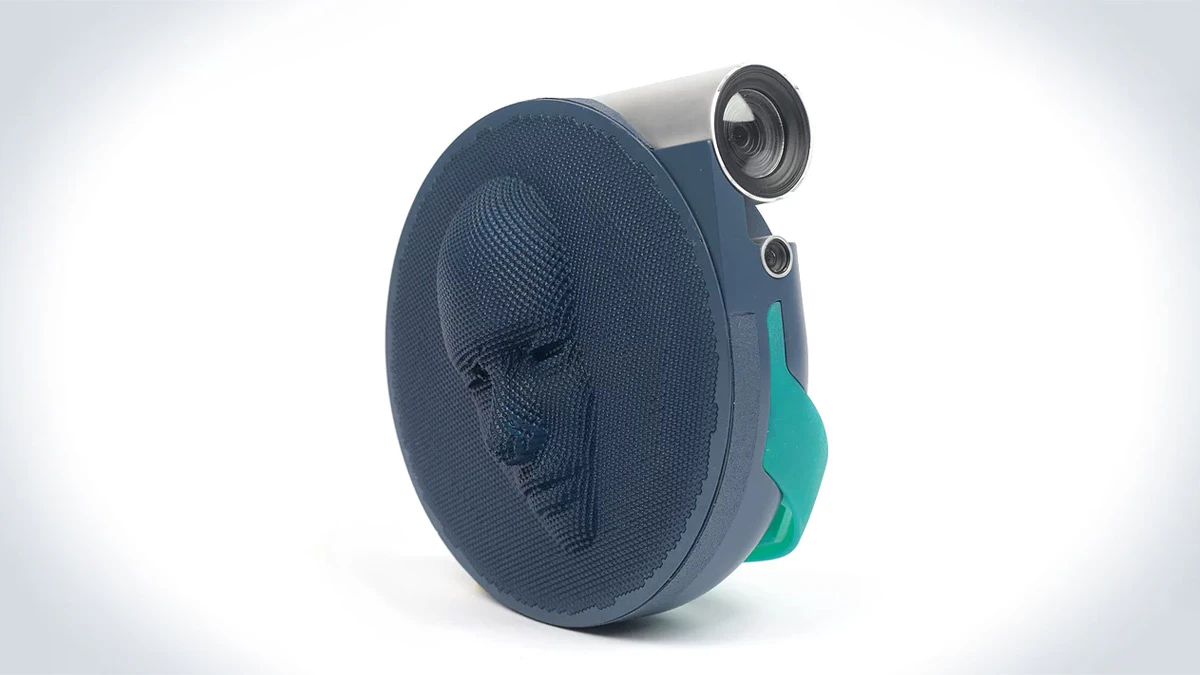
- 22

An experiment to control a photo carousel using getUserMedia to watch for swipes left and right with a hand. - iambrandonn/WebcamSwiper
2012 · github.com · its alternatives →
- 23
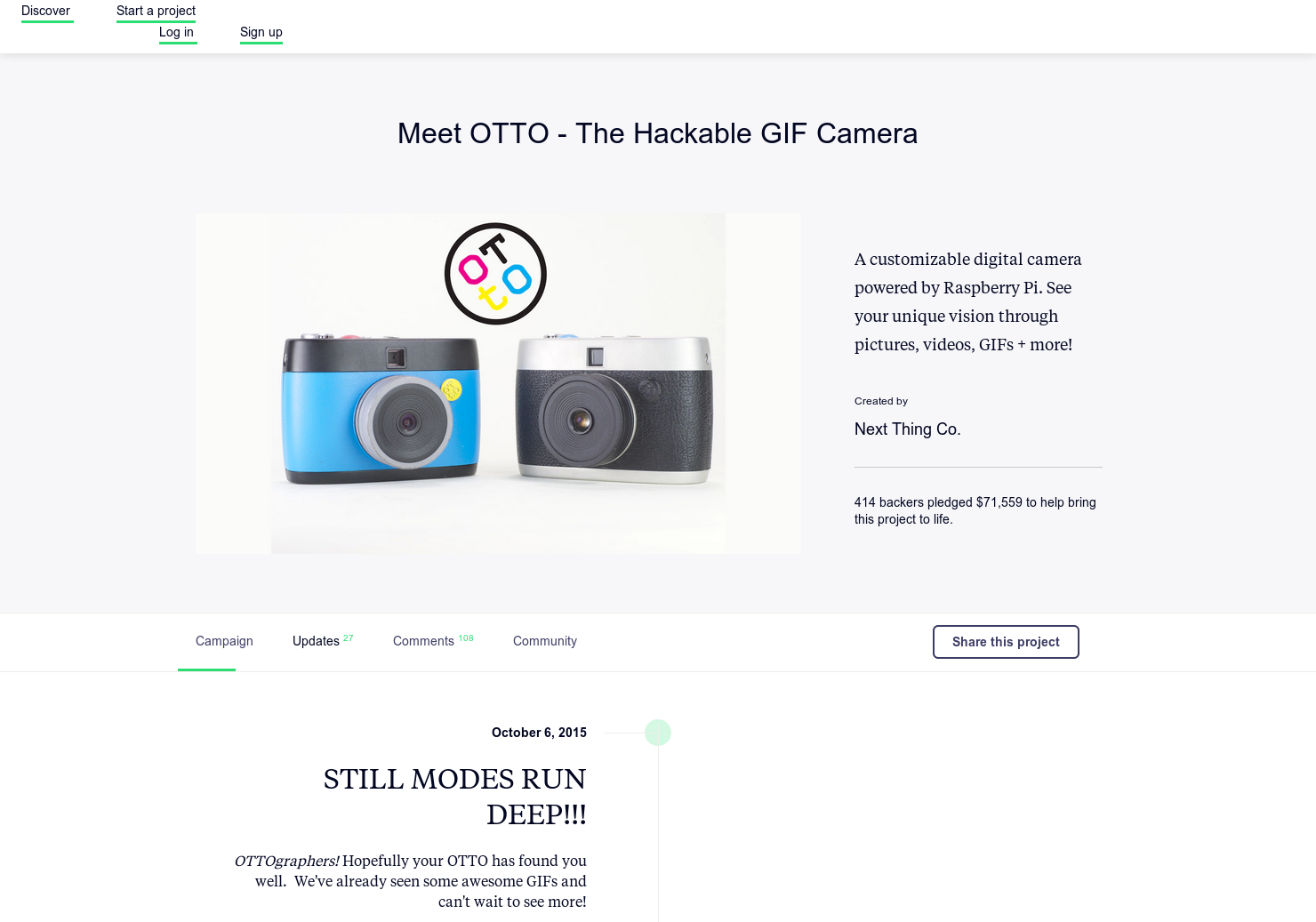
- 24

A prototype implementation of cloth simulation. It uses the soft body dynamics support in ammo.js.
2020 · playcanv.as · its alternatives →
Also compare
- An e-ink frame that hears birds and draws them as 1800s illustrations alternatives
- Glitchy camera – a circuit-bent camera simulator in the browser alternatives
- Watch a neural net learn to play Snake alternatives
- ESP32 RC Cars alternatives
- Put this touch sensor on a robot and learn super precise tasks alternatives
- Computer Vision Pin alternatives
Ranked by how close each launch is in meaning, then by votes. Prices were read from each product’s own site when checked and can change. Refine with your own description →